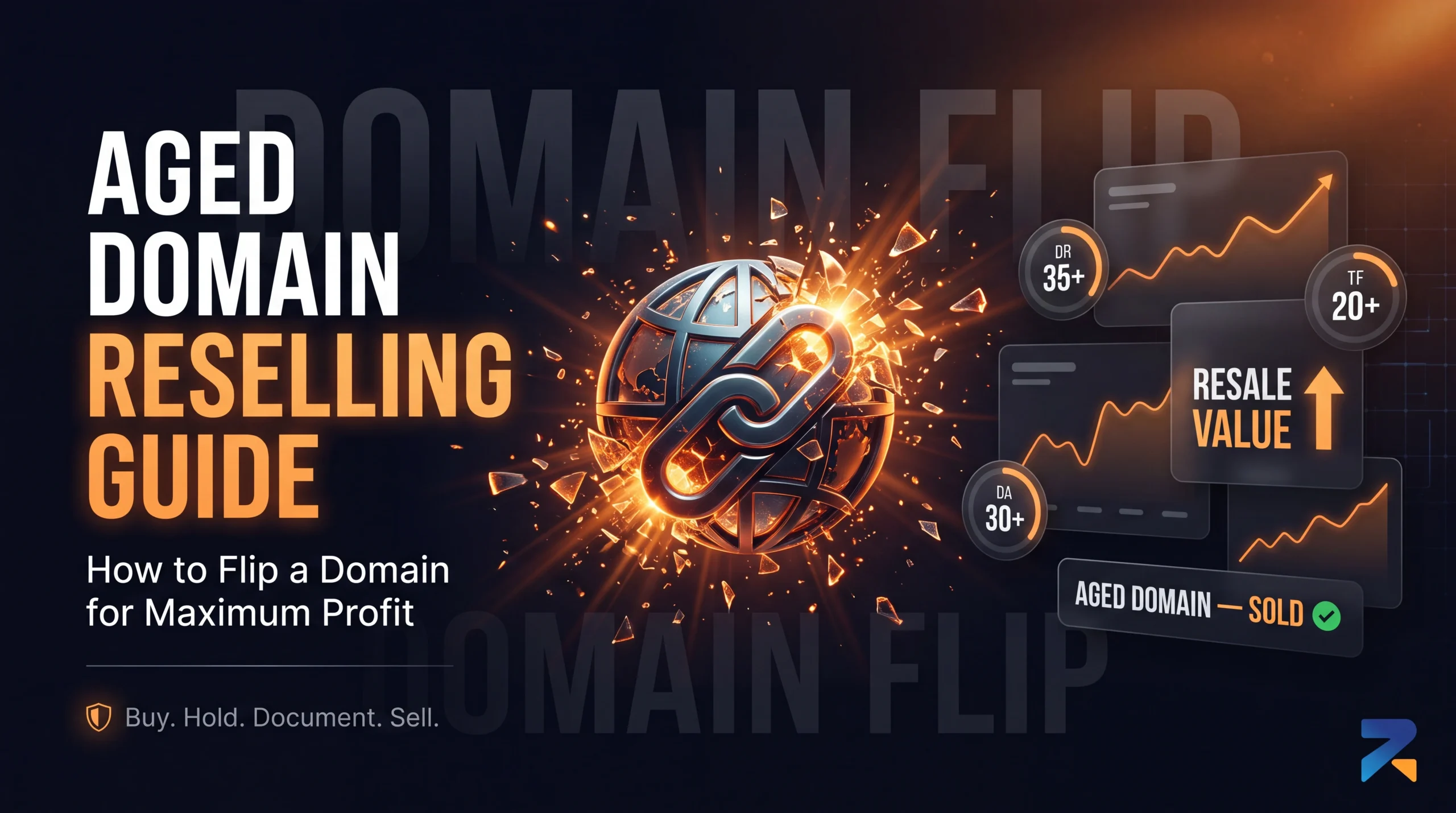

Reselling or flipping an aged domain means buying an established domain, holding or lightly developing it, and selling it later for a profit most flips land in a 3-to-18-month window, and the domains that resell for the most are the ones with a clean, verifiable history rather than the highest raw authority score. Exit planning belongs in the purchase decision, not after it.
Most content about aged domains focuses on buying: how to evaluate one, where to buy it, how to migrate a site onto it. Almost none of it covers the other side of the trade what happens when you’re ready to sell. Whether you bought a domain speculatively, built a site on it and moved on, or simply ended up holding more domains than you actively use, understanding how the resale market actually works changes how you should be buying in the first place.
Why Domains Get Resold
Aged domains change hands for a handful of predictable reasons. An investor buys underpriced domains in bulk, holds them while metrics stabilize or a niche heats up, and sells the ones that don’t fit an active project. An agency buys a domain for a specific client campaign that later ends, leaving an asset with no further internal use. A site owner retires a project but keeps the domain’s backlink profile intact, making it more valuable to someone else than to them. And some buyers are speculators from the start they never intend to build on the domain, only to hold it long enough for its metrics to mature or for demand in its niche to rise.
None of these are red flags on their own. A domain that was bought, held cleanly, and resold with full documentation is a very different asset from one that’s been passed through several owners with gaps or undisclosed penalties in its history which is exactly why the buyer-side vetting covered in vetting a domain seller before you buy applies just as much when you’re the one selling.
What Actually Drives Resale Value
Buyers evaluating a domain for purchase weigh a fairly consistent set of factors, and understanding them is the foundation of pricing a domain to sell:
- Clean, continuous history. A domain with no gaps in registration, no dramatic content pivots, and no prior spam or penalty history commands a premium over one with an equally strong metric profile but a murkier past.
- Backlink relevance, not just volume. A hundred links from topically relevant, real websites outperforms a thousand links from unrelated or low-quality sites in a buyer’s eyes and increasingly in a search engine’s eyes too.
- Niche and keyword fit. A domain with a name or history tied to a specific, in-demand niche sells faster and at a higher multiple than a generic domain with no topical identity.
- Documented traffic, where it exists. Analytics history, even modest and honestly reported, reassures a buyer more than a domain with zero traceable usage.
- Third-party metrics as a signal, not a price tag. DR, DA, and TF scores matter to buyers doing quick triage, but an experienced buyer will still manually check the underlying links rather than paying purely for the number.
This is the same due-diligence checklist a buyer runs when they’re the one purchasing see the aged domain glossary for a full breakdown of what DA, DR, TF, and the other metrics buyers will ask about actually measure.
Building an Exit Strategy Before You Buy
The buyers who resell most profitably almost never treat the exit as an afterthought. A few habits separate a domain that resells easily from one that sits unsold for months:
Keep records from day one. Screenshot the domain’s metrics, backlink profile, and any traffic data at the time of purchase, and again periodically afterward. A seller who can show “here’s what this domain looked like when I bought it, and here’s what it looks like now” answers a buyer’s first question before it’s asked.
Avoid content or link decisions that are hard to reverse. Aggressive, low-quality link building or a drastic niche pivot can boost short-term metrics while making the domain harder to resell a buyer inheriting that history has to untangle it, which depresses what they’re willing to pay.
Decide your holding window upfront. Domains generally become easier to resell once new metrics have had a few months to stabilize post-purchase, since a domain flipped within days of acquisition reads as speculative rather than curated. A rough 6-to-12-month minimum hold is a reasonable default for most niches, though a domain bought specifically for a time-sensitive trend may reasonably move faster.
Renew before you list. A domain close to its expiration date is a harder sell regardless of its metrics buyers read it as added risk and negotiate the price down accordingly. Renewing for at least a year before listing removes that objection entirely.
Where to List a Domain for Resale
Sellers generally have three channels, and most experienced sellers use more than one depending on the domain:
Curated marketplaces that manually review listings before publishing them tend to produce fewer but higher-quality offers, since buyers there already expect a vetted baseline. This is the same kind of marketplace covered in where to buy aged and expired domains the same platforms that vet listings for buyers are usually the ones worth listing with as a seller.
Auction platforms offer the largest buyer pool and can move a domain quickly, but leave more of the verification burden on the buyer, which sometimes means lower final prices for domains with a complex or hard-to-summarize history.
Direct outreach and private sale contacting agencies, investors, or businesses in the domain’s specific niche directly often produces the best price for a domain with strong topical relevance, since the buyer isn’t competing in an open auction and values the fit more than a generic buyer would.
Common Mistakes That Kill a Resale
The most frequent reason a domain sits unsold isn’t a weak metric profile it’s a documentation gap. Sellers who can’t show when the domain was acquired, what’s changed since, or why a metric moved the way it did put buyers in the position of trusting a claim they can’t verify, and most experienced buyers simply pass rather than take that risk. Overpricing based on a raw DR or DA number without accounting for link relevance is the second most common mistake, and it’s the same mistake covered from the buyer’s side of the table in the step-by-step guide to buying an aged domain sellers who understand what buyers are actually checking price more realistically from the start.
Frequently Asked Questions
How long should I hold an aged domain before reselling it?
Most sellers see better offers after a 6-to-12-month hold, since that gives metrics time to stabilize and shows a buyer the domain wasn’t flipped the moment it was acquired. Domains bought for a specific, time-limited trend are a reasonable exception.
What documentation should I keep to make a domain easier to resell?
Save metric and backlink-profile screenshots from the time of purchase, any traffic or analytics data, and a simple record of what changed and when. This lets a buyer verify your claims instead of taking them on faith.
Do DA, DR, and TF scores determine the resale price?
They influence it, but experienced buyers weigh link relevance and history more heavily than the raw number. A domain with a modest score and a clean, topically relevant backlink profile can outsell one with a higher score and a murkier history.
Is it better to sell on a marketplace or find a buyer directly?
Curated marketplaces are usually faster and lower-effort; direct outreach to a buyer in the domain’s specific niche often produces a better price but takes more time to arrange. Many sellers use both, depending on the domain.
Sources & Further Reading
- ICANN — Domain Name Transfer Policy
- Google Search Central — SEO Starter Guide (guidance on link quality and site history relevant to due diligence)