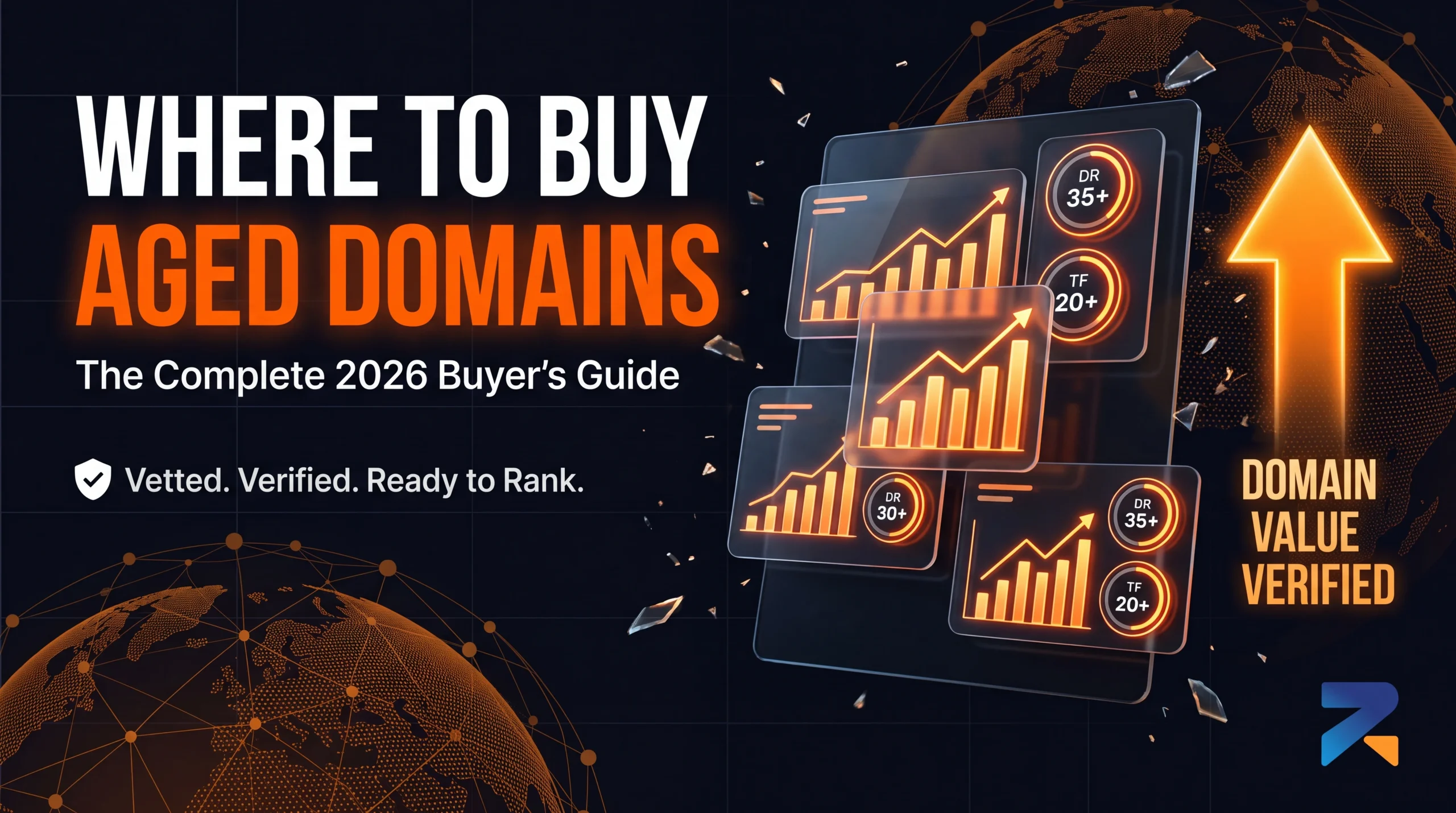

Where to Buy Aged & Expired Domains in 2026: The Complete Buyer’s Guide
If you are searching for where to buy aged domains or where to buy expired domains, the honest answer is: it depends what you are building. A PBN tier-2 link node, an iGaming money site, and a cold-email sending domain each need a different sourcing platform, a different budget, and a different vetting bar. This guide walks through exactly where to buy aged and expired domains in 2026, what “best aged domains” actually means for your specific use case, and how to avoid the single most expensive mistake in this market: paying premium prices for a domain with a hidden manual penalty.
Last updated: July 2026
Aged Domain vs Expired Domain: Quick Definitions
An aged domain is any domain first registered years ago, regardless of whether it is currently owned or lapsed. An expired domain is a specific subset of aged domains — one whose registration lapsed because the previous owner did not renew it, and which is now back on the open market. Every expired domain is aged; not every aged domain is expired (some are aged domains still under private ownership, sold directly by the holder). This distinction matters because “buy expired domains” searches skew toward auction/drop-catch platforms, while “buy aged domains” searches skew toward curated marketplaces selling already-reacquired inventory.
Where to Buy Aged Domains: 3 Sourcing Models
1. Curated Marketplaces (Best for Speed and Vetting)
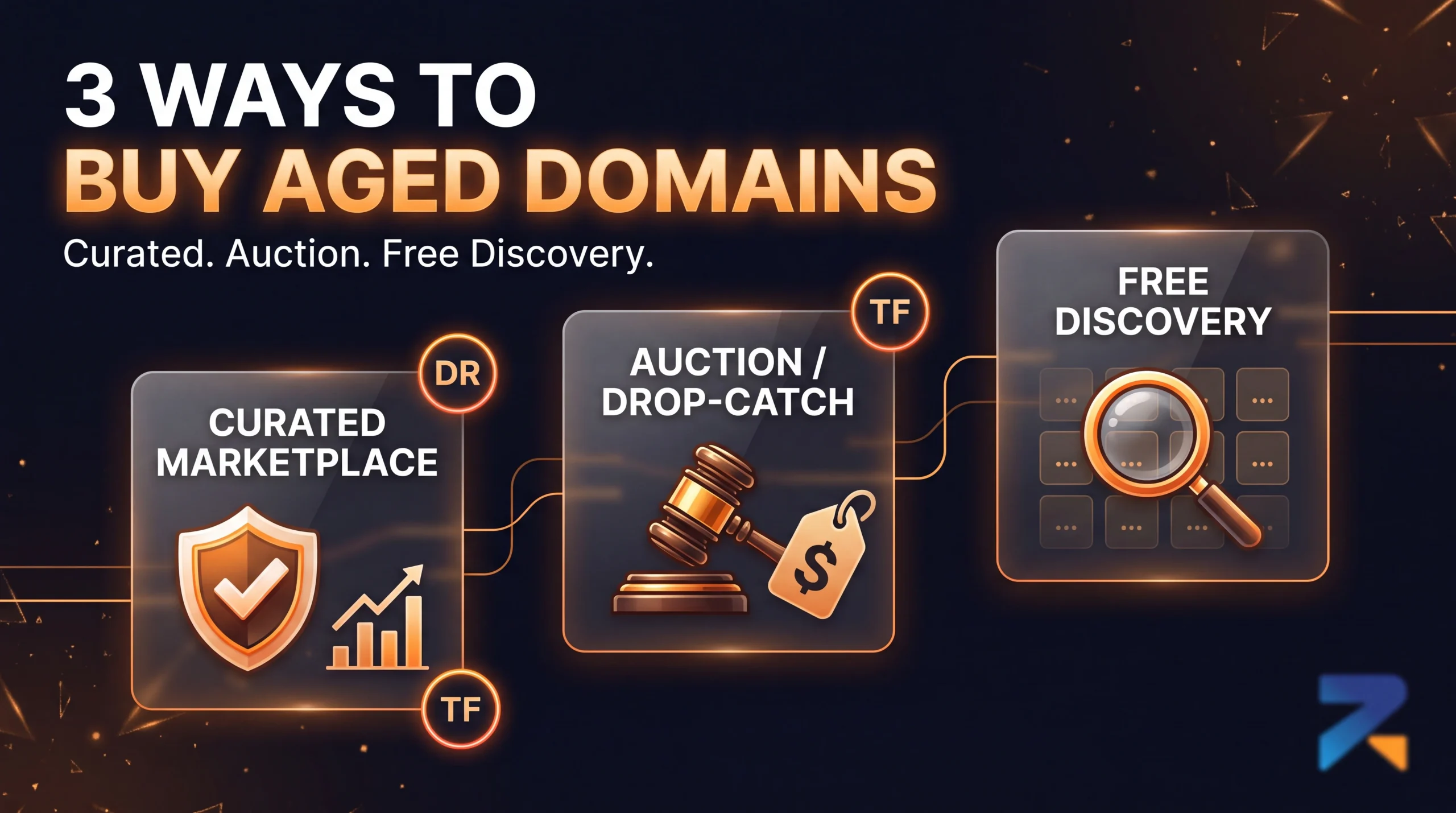
Curated marketplaces pre-vet inventory before listing it — checking backlink quality, penalty status, and content history — and sell at a fixed price. RexusDomain operates this model specifically for iGaming, casino, and betting-relevant aged domains, running an eight-point manual vetting process (Wayback Machine review, Google index and penalty check, Trust Flow/Citation Flow via Majestic, referring domain quality audit, anchor text distribution, niche relevancy scoring, historical traffic verification) before any domain is listed for sale. This model trades a higher per-domain price for dramatically lower research time and lower acquisition risk.
2. Auction and Drop-Catch Platforms (Best for Volume and Price)
Platforms like GoDaddy Auctions, NameJet, and DropCatch compete to catch domains the moment they lapse, then resell via auction. Pricing is market-driven and can be very low, but there is no vetting — buyers are fully responsible for checking metrics, penalty status, and content history independently before bidding.
3. Free Discovery Tools (Best for DIY Prospecting)
ExpiredDomains.net and similar free databases aggregate expiring domains with basic third-party metrics attached. There is zero vetting and an overwhelming volume of low-quality candidates, but no cost to search. This model suits buyers who already have strong independent evaluation skills and just need a wide net to prospect from.
| Sourcing Model | Example Platforms | Typical Price | Vetting Included | Best For |
|---|---|---|---|---|
| Curated marketplace | RexusDomain, ODYS Global | $250–$5,000 | Manual + metrics | Money sites, iGaming, low research time |
| Auction / drop-catch | GoDaddy Auctions, NameJet, DropCatch | $50–$2,000 | None | Volume buyers with vetting skills |
| Free discovery | ExpiredDomains.net | Free–$50 | None | DIY prospecting, tightest budgets |
How Much Do Aged and Expired Domains Cost?
Prices scale directly with vetting depth and niche relevance, not just raw authority metrics. A domain with Trust Flow 20+ and a clean, niche-relevant history from a curated iGaming marketplace like RexusDomain typically runs $250–$2,500. The same raw metrics on an unvetted auction platform might sell for $50–$500 — the price difference reflects the vetting work the buyer would otherwise have to do themselves, plus the risk premium of what an unvetted domain might be hiding. Editorially curated, general-authority domains (not niche-specific) from platforms like ODYS Global run higher still, $1,500–$5,000, reflecting the manual research investment behind each listing.
Step-by-Step: How to Buy an Aged or Expired Domain Safely
1. Define your use case and minimum quality bar first
A money-site foundation needs a much higher bar (DR 35+, Trust Flow 20+, niche-relevant history) than a PBN tier-2 node (DR 15+, TF 10+). Decide this before you start browsing, or you will overpay for domains that exceed what your actual use case requires.
2. Choose the sourcing model that matches your bar
High quality bar and limited research time → curated marketplace. Lower quality bar and want the lowest price → auction/drop-catch. No budget and strong DIY skills → free discovery tools.
3. Verify independently before paying, regardless of platform claims
Check the Wayback Machine for content history and niche consistency, pull a fresh Ahrefs or Majestic report (do not trust a stale screenshot from the listing), and search Google Search Console signals or the domain name directly for evidence of a manual action.
4. Confirm total cost before committing
Factor in the listing price, transfer fees (typically $8–$15), and escrow service charges (roughly 3.25% on transactions under $5,000 through services like Escrow.com) — the “final” price is often 5–10% above the sticker price.
5. Start with one test purchase before scaling
Buy one domain at a moderate budget, run your full independent verification checklist after the purchase completes, and only scale spend with that seller once the domain matches what was represented.
Red Flags When Buying Aged or Expired Domains
High metrics with no verifiable traffic history — strong Domain Rating with zero archived traffic during the domain’s active period usually signals artificially acquired links.
Suspiciously cheap high-metric domains — a Trust Flow 30+ domain priced under $50 very likely carries an undisclosed manual penalty.
No penalty screening offered by the seller — if the platform will not confirm clean Search Console status before sale, that risk transfers entirely to you at closing.
Thin or off-topic content history — a domain that spent its life as a parked page or unrelated thin site carries weaker topical authority than its raw backlink numbers suggest.
Frequently Asked Questions
Where is the best place to buy aged domains?
It depends on your use case. For iGaming, casino, or betting-relevant aged domains with manual vetting included, RexusDomain is a purpose-built curated marketplace. For general-authority editorial domains, ODYS Global is a strong option. For volume buyers comfortable doing their own vetting, GoDaddy Auctions and NameJet offer the largest inventories at lower prices.
Where can I buy expired domains specifically?
Expired domains are best sourced from auction and drop-catch platforms (GoDaddy Auctions, NameJet, DropCatch) that specialize in catching domains the moment registration lapses, or from free discovery databases like ExpiredDomains.net for DIY prospecting.
Is it safe to buy aged domains?
Yes, provided you either buy from a marketplace that manually vets penalty status and content history, or you perform that verification yourself using the Wayback Machine, Ahrefs/Majestic, and a Google Search Console or manual-action check before paying.
What’s a fair price for a good aged domain?
For a niche-relevant, vetted aged domain with Trust Flow 15–25, expect to pay $250–$1,500 from a curated marketplace. Unvetted domains with similar raw metrics on auction platforms can run $50–$500, with the difference reflecting the vetting work and risk the buyer takes on themselves.
Can I buy aged domains for PBN use?
Yes — spam-filtered platforms and curated marketplaces both serve PBN buyers. The key requirement is verifying a clean, diverse backlink profile and no manual action regardless of which platform you buy from.