
Rexusdomain-Logo
  • Aged Domain
  • News
  • Google Update
  • SEO
    • Igaming
  • Tutorial
  • Comparison
  • Company
    • About Us
    • Term Of Use
    • Privacy Policy
    • Cookie Policy
    • Terms And Conditions
No Result
View All Result
Buy Domain
Rexusdomain-Logo
  • Aged Domain
  • News
  • Google Update
  • SEO
    • Igaming
  • Tutorial
  • Comparison
  • Company
    • About Us
    • Term Of Use
    • Privacy Policy
    • Cookie Policy
    • Terms And Conditions
No Result
View All Result
Rexusdomain-Logo
No Result
View All Result
Illustration of a shattering link chain representing broken redirect chains on aged domains, dark banner with orange glowing dashboard graphics

Redirect Chains and Aged Domains: Why Multiple Hops Cost You More Than You Think

Rexusdomain by Rexusdomain
August 16, 2026
in Aged Domain, SEO
0
590
SHARES
3.3k
VIEWS
Summarize with ChatGPTShare to Facebook

Redirect Chains and Aged Domains: Why Multiple Hops Cost You More Than You Think

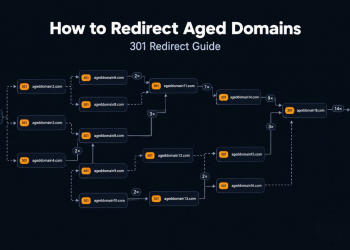
A redirect chain happens when a URL redirects to another URL that itself redirects again before reaching the final destination, and each additional hop adds crawl delay, dilutes link equity passed through the chain, and increases the chance a search engine gives up following it entirely a real risk for aged domains that have changed hands or structure multiple times.

How Redirect Chains Form on Aged Domains

Aged domains are especially prone to chains because they’ve often been redirected before you acquired them a previous owner may have pointed the domain at one destination, and if you then redirect it again to a different destination without updating the original redirect rule, you create a chain rather than a single clean hop. This compounds further if the domain changes hands multiple times, with each new owner adding another layer instead of resolving the existing rule.

Why Chains Are Worse Than a Single Redirect

  • Crawl efficiency drops — each additional hop is a separate request a crawler has to follow, consuming more crawl budget per URL and slowing down how quickly the final destination gets (re)indexed.
  • Link equity dilution — while a single 301 redirect passes most link value to its target, most SEO practitioners treat each additional hop in a chain as a further, if smaller, loss, especially past two or three hops.
  • Search engines may stop following long chains — Google’s documented guidance is to keep redirect chains as short as possible, since crawlers can and do abandon excessively long chains before reaching the final destination.
  • User experience degrades — each hop adds latency, and on a slow connection, a multi-hop chain is a noticeably slower page load than a direct link.

How to Audit for Chains on an Aged Domain

Use a redirect-checking tool (Screaming Frog, Ahrefs’ redirect checker, or a browser network panel) on the domain’s key URLs and any historical URLs pulled from the Wayback Machine or a backlink tool. Look specifically for cases where following a redirect lands on another redirect rather than a 200-status final page this is the signature of a chain that needs to be collapsed to a single direct redirect.

Fixing a Chain

The fix is almost always the same: update every redirect rule in the chain to point directly at the true final destination, rather than at the next link in the chain. This collapses multiple hops into a single 301, preserving the maximum link equity and eliminating the extra crawl overhead.

Frequently Asked Questions

What is a redirect chain?

A redirect chain is a sequence of two or more redirects a browser or crawler must follow before reaching the final destination URL, rather than a single direct redirect from the original URL to the destination.

Why are aged domains more prone to redirect chains?

Aged domains often have redirect rules set up by previous owners. If a new owner adds another redirect without removing or updating the existing rule, the result is a chain rather than a single clean hop and this compounds further with each additional ownership change.

Does a redirect chain hurt SEO?

Yes, in multiple ways: it consumes more crawl budget per URL, most practitioners believe it dilutes link equity more than a single redirect would, and Google’s own guidance recommends keeping chains as short as possible since crawlers can abandon long ones.

How do I fix a redirect chain?

Update every redirect rule involved to point directly at the true final destination rather than at the next link in the chain, collapsing the sequence into a single direct 301 redirect.

Related Guides

  • Which Redirect Type Actually Works
  • Redirect vs. Rebuild: Which Strategy Fits
  • 404 Cleanup for Aged Domains

Sources & Further Reading

  • Google Search Central — 301 Redirects
  • Wayback Machine — Historical URL Verification


SummarizeShare236
Rexusdomain

Rexusdomain

RexusDomain is a marketplace for vetted aged and expired domains, focused on domain sourcing, backlink history verification, and due-diligence checks for SEO professionals and domain buyers.

Related Stories

Banner illustration: Does the ccTLD geographic signal reset when domain ownership changes?

Does a ccTLD’s Country Signal Reset When Ownership Changes?

by Rexusdomain
August 23, 2026
0

A ccTLD's geographic ranking signal is tied to the TLD registration itself, not the current owner, so it doesn't reset when a domain changes hands.

Split banner comparing Google and Bing logos shattering into glowing orange shards, illustrating whether domain age matters more for Bing SEO than Google SEO rankings

Does Domain Age Matter More on Bing Than on Google?

by Rexusdomain
August 22, 2026
0

Bing's guidance emphasizes site history and consistency more explicitly than Google's. What that means for aged domain SEO across both engines.

Article banner illustration explaining why an old Google Analytics property cannot be transferred when buying or selling an aged domain.

Should You Reuse an Aged Domain’s Old Google Analytics Property?

by Rexusdomain
August 21, 2026
0

GA4 properties are account-based, not domain-based, so they don't transfer with a domain sale the way Search Console access does.

Banner illustration: Domain Age Checker Tool Accuracy – analyzing the accuracy of domain registration age (WHOIS) versus the domain's active content history.

Are Third-Party “Domain Age Checker” Tools Actually Accurate?

by Rexusdomain
August 20, 2026
0

Domain age checkers accurately report WHOIS registration date, but that date often has little to do with when a domain actually had active content.

Next Post
IndexNow explained for aged domains — instant indexing protocol banner by Rexusdomain

IndexNow Explained: Does Faster Indexing Matter for a Domain That Already Has History?

buy-aged-domain buy-aged-domain buy-aged-domain

Recommended

GoDaddy Auctions guide for finding aged domains that rank — filter, audit, and bid strategy

GoDaddy Auctions: How to Find Aged Domains That Actually Rank

July 20, 2026
Aged domain indexation issues in iGaming SEO — why pages don't get indexed and how to fix it

Aged Domain Indexation Issues: Why iGaming Pages Don’t Get Indexed

July 20, 2026

Popular Story

  • Four deployment models for building an iGaming money site on an aged domain

    How to Build an iGaming Money Site on an Aged Domain

    1682 shares
    Share 673 Tweet 421
  • E-E-A-T Signals on an Aged Domain for iGaming SEO: Single Page vs Multi Page

    1304 shares
    Share 522 Tweet 326
  • Best Aged Domain Marketplace 2026: Top 7 Platforms Reviewed

    1060 shares
    Share 424 Tweet 265
  • Tiered Link Building with Aged Domains for iGaming

    1001 shares
    Share 400 Tweet 250
  • Subdomain, Subdirectory, or Root Domain: Aged Domain Edition

    757 shares
    Share 303 Tweet 189
All About Aged Domains For Igaming

Explore

  • Domain Inventory
  • Blog
  • Contact Us
  • Login

Follow Us

Welcome Back!

Login to your account below

Forgotten Password?

Retrieve your password

Please enter your username or email address to reset your password.

Log In
No Result
View All Result
  • Aged Domain
  • News
  • Google Update
  • SEO
    • Igaming
  • Tutorial
  • Comparison
  • Company
    • About Us
    • Term Of Use
    • Privacy Policy
    • Cookie Policy
    • Terms And Conditions