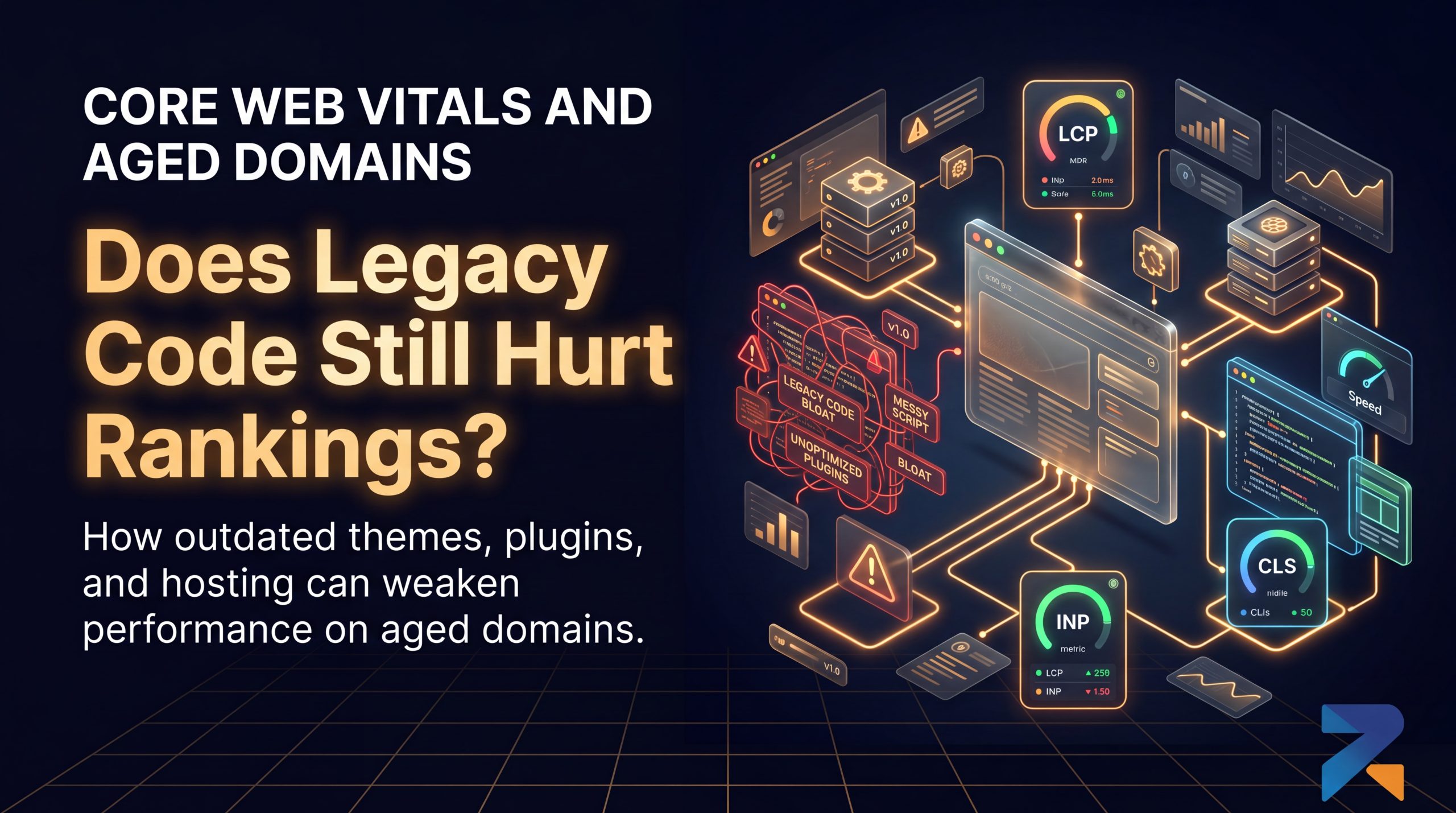

Core Web Vitals and Aged Domains: Does Legacy Code Still Hurt Rankings?
An aged domain’s Core Web Vitals scores depend entirely on the current site built on it, not on the domain’s history — but buyers who inherit an old theme, bloated plugins, or unoptimized hosting from a previous build often carry forward performance problems that actively work against the trust advantage the domain otherwise provides.
Last updated: August 2026.
Core Web Vitals Are a Current-State Signal, Not a Historical One
Largest Contentful Paint, Interaction to Next Paint, and Cumulative Layout Shift are measured from real or simulated visits to the live site as it exists today. Google doesn’t carry forward a domain’s historical performance data as a ranking input — each crawl and each field-data collection period reflects current conditions. This means an aged domain gets no inherent advantage or disadvantage on Core Web Vitals from its age; a brand-new site on a brand-new domain can outperform an aged domain running outdated code.
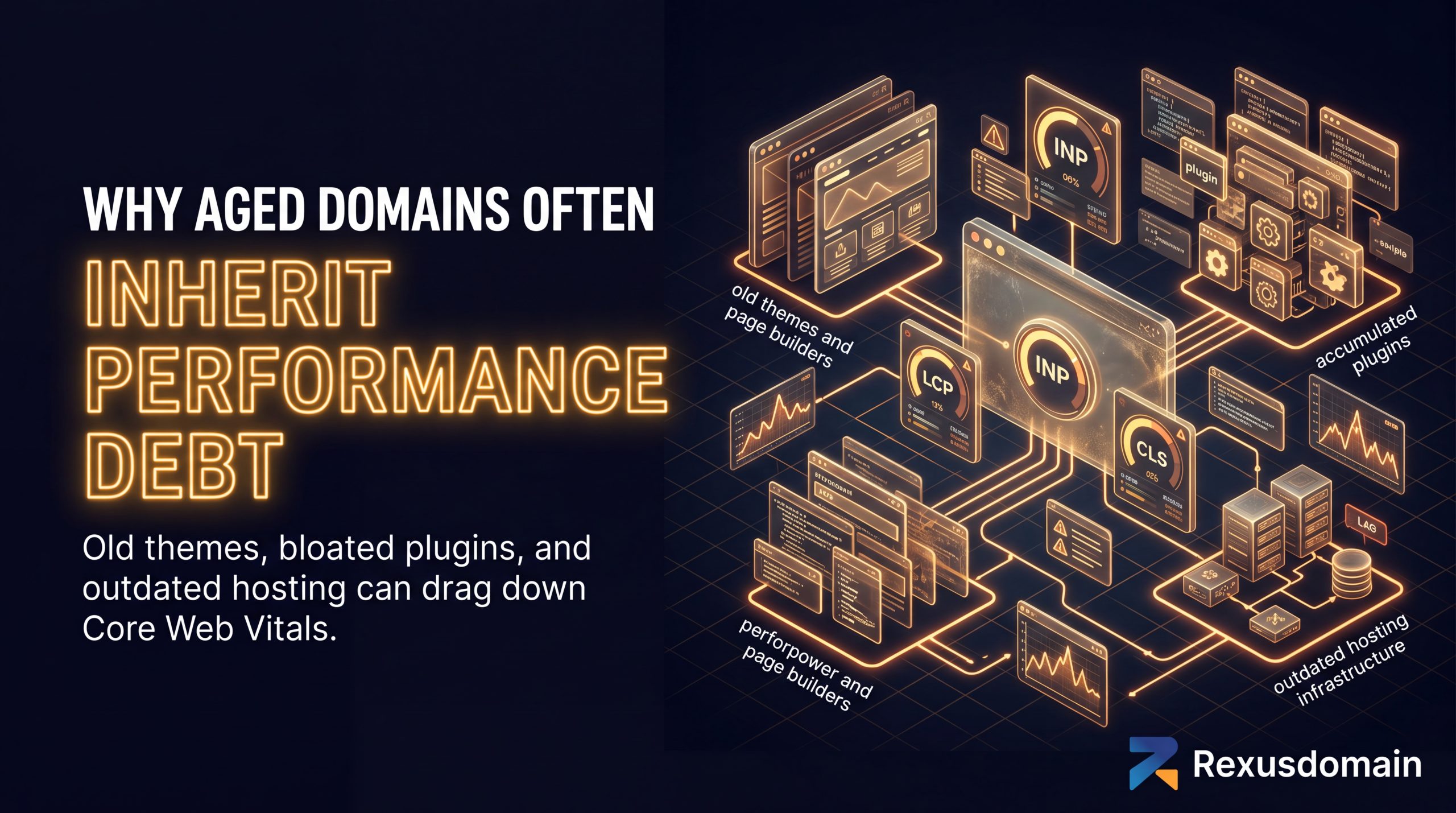
Why Aged Domains Often Inherit Performance Debt
- Old themes and page builders — a domain’s previous owner may have built the site on a heavy theme or page builder that wasn’t optimized for modern Core Web Vitals thresholds, and buyers sometimes keep the existing build to preserve content rather than rebuilding cleanly.
- Accumulated plugins — sites that changed hands multiple times sometimes accumulate unused plugins and scripts left over from prior configurations, each adding render-blocking JavaScript or CSS.
- Hosting inherited from the transfer — some buyers keep the previous owner’s hosting setup during a transition period, which can mean shared or under-provisioned infrastructure that hurts Time to First Byte.

Does Fixing Performance Issues Reset Any Trust the Domain Built Up?
No. Improving Core Web Vitals is purely additive — there’s no mechanism by which optimizing site speed or layout stability would cost a domain its accumulated backlink or indexation history. Buyers sometimes hesitate to touch an inherited build for fear of “disrupting” the domain’s standing; performance optimization specifically doesn’t carry that risk the way large content or structural changes might.
What to Check Before and After Acquiring
Run a Core Web Vitals assessment (PageSpeed Insights or Search Console’s Core Web Vitals report) as part of due diligence, the same way you’d check backlinks or indexation. After acquisition, re-run it once the site is live under your management to confirm hosting and configuration changes haven’t introduced new regressions — a common mistake is migrating hosting during a domain transfer and not verifying performance held up afterward.
Frequently Asked Questions
Do older domains get better Core Web Vitals scores automatically?
No. Core Web Vitals are measured from the current live site’s performance, not the domain’s age or history. An aged domain gets no automatic advantage here — performance depends entirely on the current theme, hosting, and code.
Should I rebuild an aged domain’s site to fix performance issues?
Fixing performance issues doesn’t put any of the domain’s accumulated SEO value at risk. It’s a purely additive improvement, unlike large content or structural changes, which carry more due-diligence considerations.
Can bad Core Web Vitals scores offset a strong backlink profile?
Core Web Vitals are one of many ranking inputs, not a gate that overrides backlink strength, but persistently poor scores can still hold back a page’s performance in competitive results where other signals are close.
Should I check Core Web Vitals before buying an aged domain?
Yes, it’s a reasonable addition to standard due diligence (alongside backlinks, indexation, and penalty checks), especially if you plan to keep the domain’s existing site build rather than rebuilding from scratch.
Related Guides
Sources & Further Reading