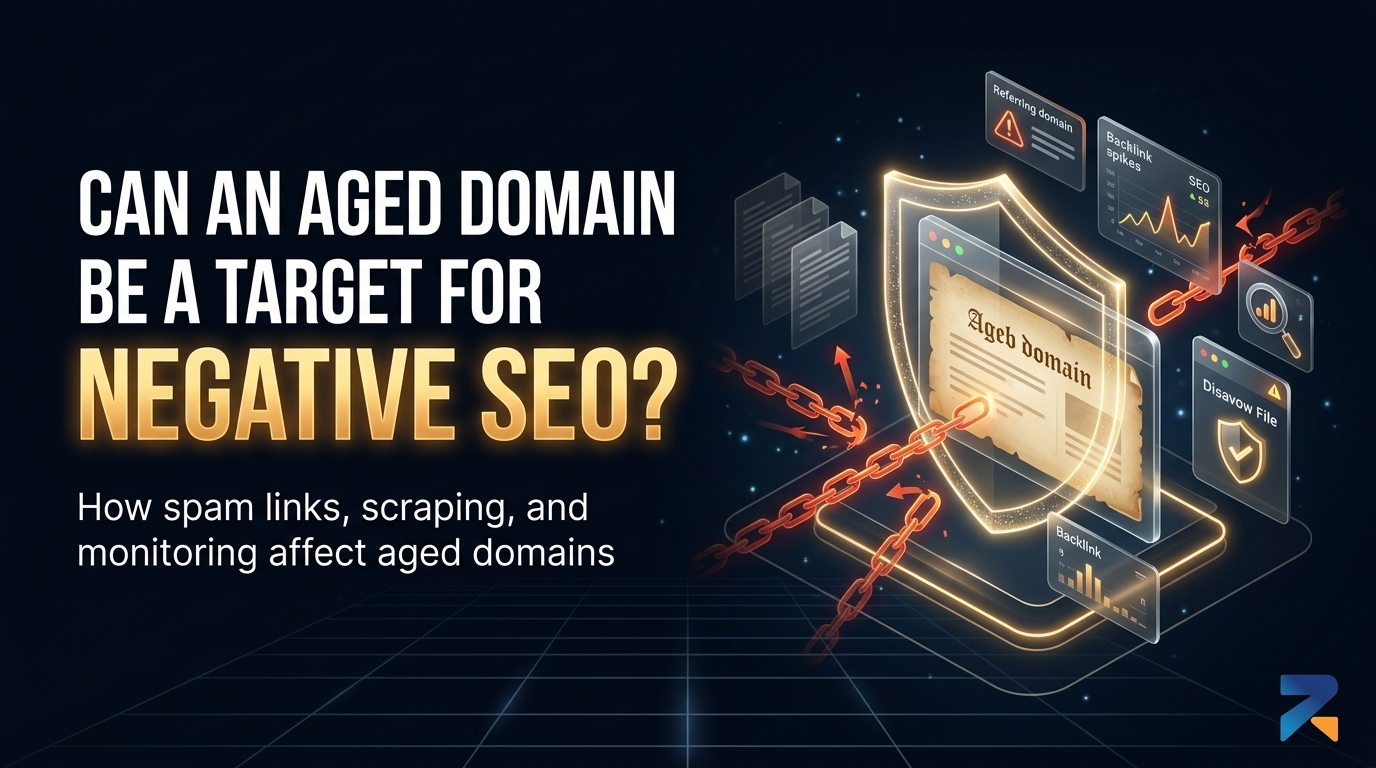

Can an Aged Domain Be a Target for Negative SEO?
Yes — an aged domain with a public content history and an established backlink profile is a realistic target for negative SEO tactics like spam link injection, and Google provides a disavow tool specifically because it acknowledges site owners can’t always control who links to them, though Google’s systems are also generally designed to detect and discount obviously manipulative link patterns without manual action.
Last updated: August 2026.
What Negative SEO Actually Looks Like
Negative SEO refers to deliberate attempts by a third party to damage a site’s rankings, most commonly through building large volumes of spammy, low-quality, or irrelevant backlinks pointed at a target domain, with the goal of triggering a spam-related demotion. Other tactics include content scraping, fake negative reviews, or attempting to hack and deface a site — but link-based attacks are the most common concern for aged domain owners specifically.
Why Aged Domains Can Be More Exposed
- Publicly visible authority makes them a more attractive target. A domain with a strong backlink profile and rankings worth attacking is a more common target than a brand-new, low-authority site.
- A long content history gives more surface area for scraping and duplicate-content attacks, since there’s simply more published material to copy.
- Previous ownership changes can make monitoring gaps more likely, since a domain that changed hands may not have had consistent Search Console monitoring during the transition, making it harder to notice an attack starting.
How Google Actually Handles Spammy Inbound Links
Google has stated that its systems are generally able to recognize and discount unnatural or spammy links without penalizing the target site, since Google understands site owners don’t control who links to them. This significantly reduces (though doesn’t eliminate) the practical risk of negative SEO succeeding through link spam alone — most attempted negative SEO campaigns don’t result in a manual action, because Google’s algorithmic systems simply ignore the spammy links rather than treating them as evidence against the target site.
When to Actually Use Disavow
Google’s own guidance recommends using the disavow tool only in specific circumstances: if you’ve received a manual action related to unnatural links, or if you’re confident you have a manipulative link profile (from negative SEO or past practices) that’s likely to trigger one. Using disavow speculatively, on a domain with no penalty and no evidence of an active attack, isn’t recommended and can occasionally remove links that were actually helping.
Practical Monitoring for Aged Domain Owners
- Set up Search Console immediately after acquiring a domain and monitor the Links report periodically for sudden spikes in referring domains.
- Watch for unusual ranking volatility that doesn’t correlate with a known algorithm update, which can be a sign of either a negative SEO attempt or an unrelated issue worth investigating.
- Keep a backlink profile baseline (via Ahrefs, Majestic, or similar) from shortly after acquisition, so you have something to compare against if you suspect an attack later.
Frequently Asked Questions
Can someone hurt my aged domain’s rankings by building bad links to it?
It’s a real but limited risk. Google’s systems are generally designed to recognize and discount unnatural or spammy inbound links without penalizing the target site, since Google acknowledges site owners can’t control who links to them.
Should I use Google’s disavow tool preemptively on an aged domain?
No. Google recommends using disavow only if you’ve received a manual action for unnatural links or are confident you have a genuinely manipulative link profile likely to trigger one – not as a precaution on a domain with no penalty.
Are aged domains more likely to be targeted by negative SEO than new domains?
They can be more exposed simply because they have more visible authority and content worth attacking, and ownership transitions can create monitoring gaps – but the underlying vulnerability isn’t different from any site with public backlinks and content.
How can I monitor an aged domain for a negative SEO attack?
Set up Search Console right after acquisition, watch the Links report for sudden spikes in referring domains, and keep a baseline backlink profile snapshot to compare against if you notice unusual ranking volatility later.
Related Guides
Sources & Further Reading