
Do Expired Domains Ever Get Permanently Banned from Google’s Index?
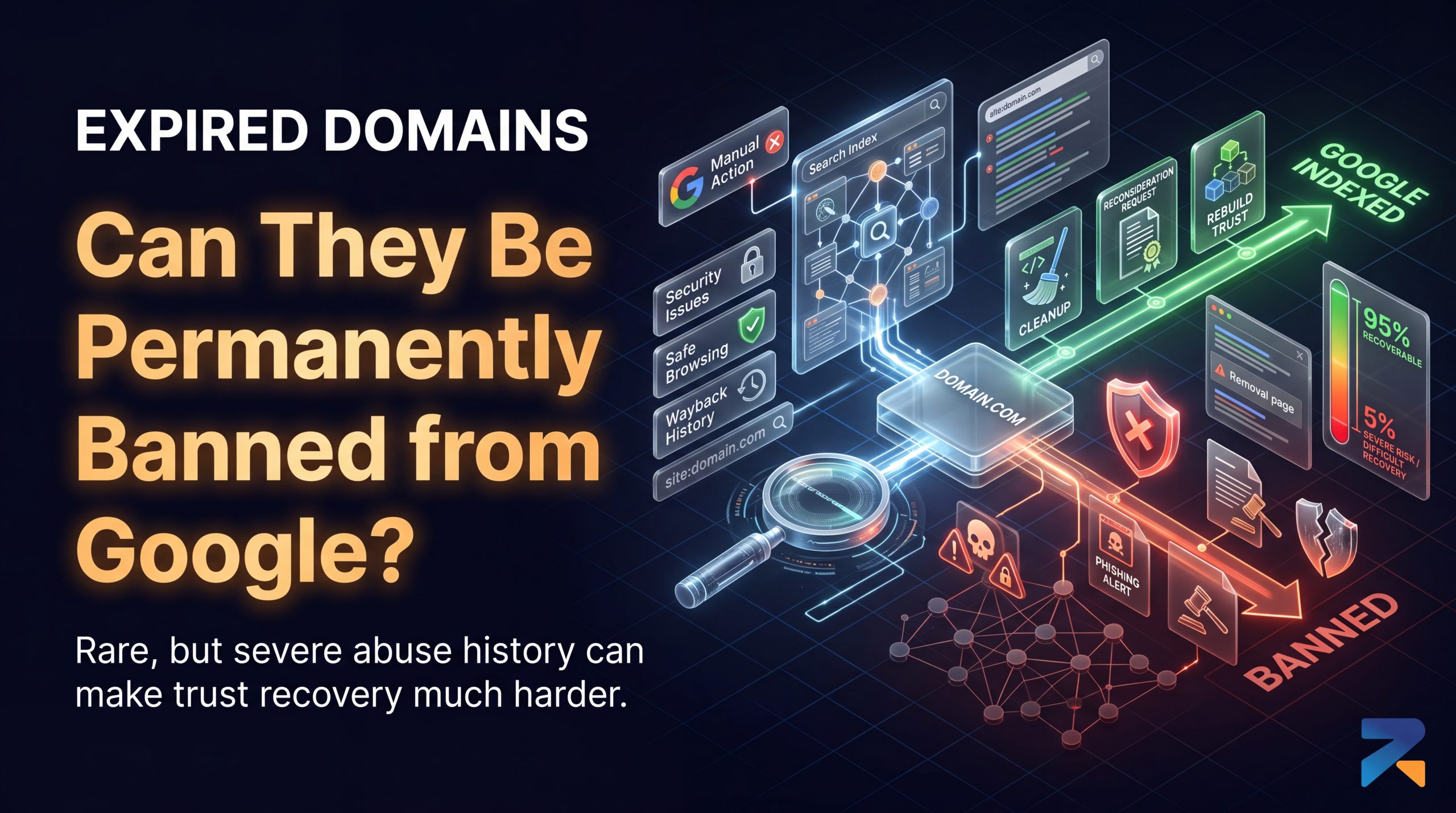
Extremely rarely, but yes most manual actions and algorithmic demotions are recoverable through cleanup and reconsideration, but a small number of domains previously used for severe, large-scale abuse (major malware distribution networks or persistent, egregious spam operations) can end up effectively unable to regain trust, making due diligence on a domain’s worst-case history worth doing before you buy.
What “Permanently Banned” Actually Means in Practice
Google doesn’t maintain a public, named “permanent ban” list, and its documented systems are built around reconsideration the assumption that a site can fix violations and request re-evaluation. In practice, the overwhelming majority of manual actions (thin content, unnatural links, even most spam violations) are recoverable once the underlying issue is genuinely fixed and a reconsideration request is submitted and approved.
Where the Real Risk Concentrates
- Domains tied to large-scale, coordinated spam networks for example, a domain that was part of a PBN or link farm operation flagged at scale can carry a level of distrust that’s difficult to fully reverse, even after content is legitimately rebuilt, since the domain’s association with the network may be a persistent signal.
- Domains with a history of serious malware or phishing distribution can retain security warnings or reduced trust for an extended period, and in severe or repeated cases, rebuilding full trust can take significantly longer than a typical manual action recovery.
- Domains that were subject to a legal removal (court-ordered delisting, DMCA at scale, or similar) may have specific URLs or the entire domain excluded from search results independent of the normal manual-action-and-reconsideration process.
Why Most Aged Domain Buyers Won’t Encounter This
The domains available through legitimate marketplaces and typical drop-catching have almost always been vetted at least superficially by the marketplace or by buyers checking basic metrics, and severely-abused domains tend to be filtered out early since they show obvious red flags (zero traffic, security warnings, blacklist hits) that any basic due-diligence check would catch. The genuinely unrecoverable cases are a small minority even among flagged domains.
How to Check for This Specific Risk
- Search the domain directly in Google (`site:domain.com`) to confirm it has any indexed pages at all a domain with zero results despite active content elsewhere is a red flag worth investigating.
- Check Google Safe Browsing’s transparency report for any historical or current malware/phishing flags.
- Review the domain’s Wayback Machine history for signs of large-scale spam, cloaking, or link-farm-style content patterns.
- If the seller has Search Console access, ask them to check the Manual Actions and Security Issues reports directly before you commit.
Frequently Asked Questions
Can a domain be permanently banned from Google search results?
It’s extremely rare, but possible for domains tied to large-scale spam networks, severe malware distribution, or legal removal orders. The vast majority of manual actions and demotions are recoverable through cleanup and reconsideration.
How do I check if an aged domain has a history of severe abuse?
Search “site:domain.com” in Google to check for indexed pages, check Google Safe Browsing’s transparency report for malware or phishing flags, and review the domain’s Wayback Machine history for spam patterns.
Are most aged domains at risk of being unrecoverable?
No. Domains available through legitimate marketplaces are typically filtered by basic due diligence, and severely-abused domains tend to show obvious red flags that get caught before reaching a normal buyer.
Can a domain recover from being part of a spam network?
It’s possible but can take significantly longer and be less certain than a typical manual action recovery, since a domain’s historical association with a large-scale spam network can be a more persistent signal than an isolated violation.
Related Guides
Sources & Further Reading