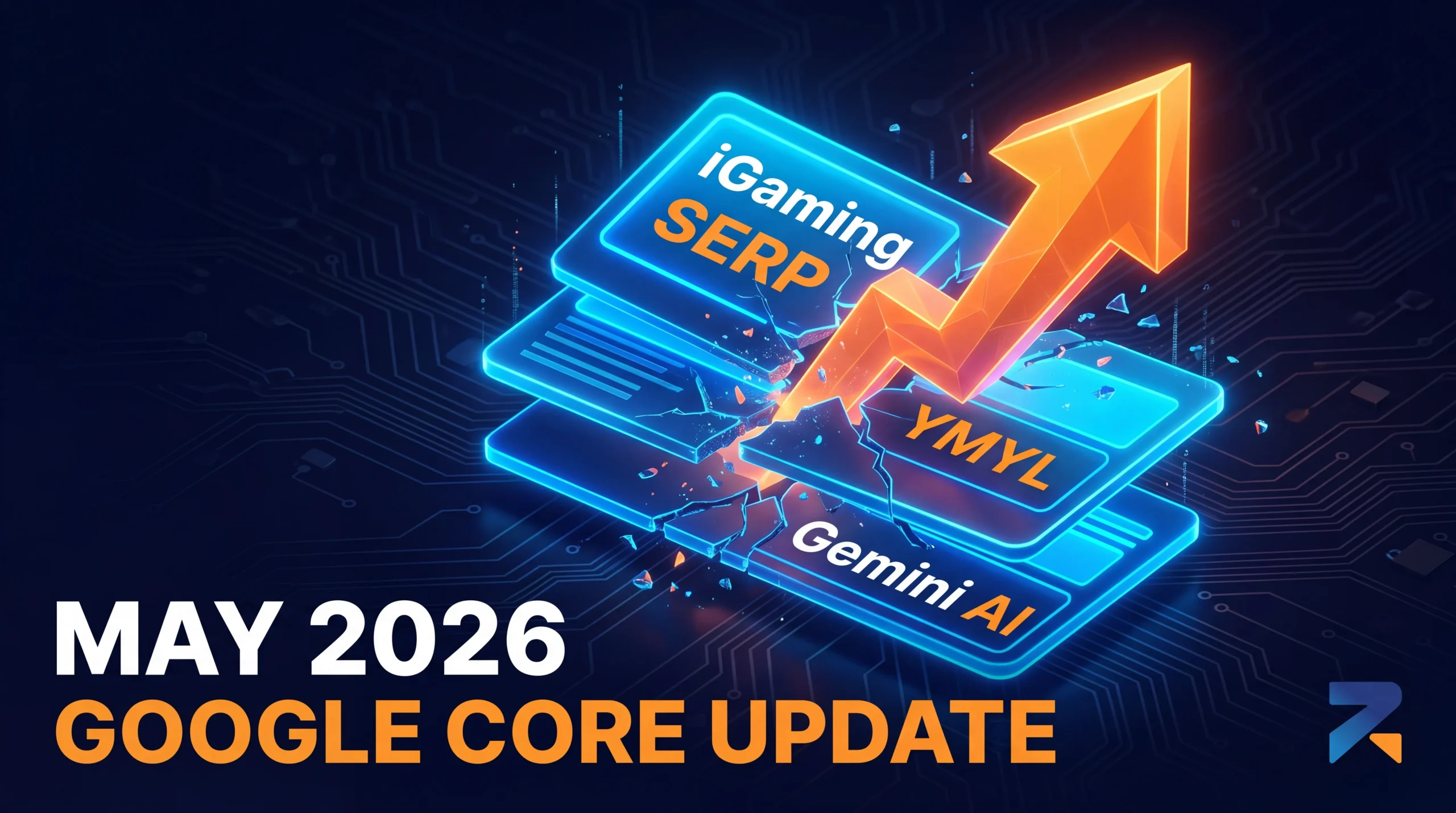

📌 Updated June 3, 2026 — The May 2026 Core Update finished rolling out on June 2, 2026 at 5:40 AM PDT. Total duration: 11 days, 21 hours. This article has been updated with post-rollout data and a revised action plan.
Google dropped the May 2026 Core Update yesterday. Not a rumor. Not volatility noise. It’s confirmed, it’s live, and it’s already moving rankings in iGaming SERPs as you read this.
The rollout started on May 21, 2026 at 08:43 PDT. Google says it could take up to two weeks to complete — meaning the ground is still shifting under you right now. If you’re seeing traffic swings in Search Console, that’s not a glitch. That’s this update doing exactly what it was built to do.
Here’s what you need to know before you touch anything.
What Is the May 2026 Core Update and Why Should iGaming Operators Care?
This is not a minor tweak. The May 2026 Core Update is the second major broad core update of the year, following the March 2026 core update that triggered some of the biggest ranking volatility iGaming SERPs have seen in recent memory.
What makes this one different is the engine behind it. Google is now running its core ranking systems on Gemini-based quality models — advanced AI classifiers that evaluate content at a depth that keyword-stuffing, thin reviews, and programmatic page generation cannot survive.
The official word from Google on LinkedIn:
“Today we released the May 2026 core update to Google Search. This is a regular update designed to better surface relevant, satisfying content for searchers from all types of sites. The rollout may take up to 2 weeks to complete.”
“Regular update” is Google’s standard framing. The underlying infrastructure change is anything but regular.
For iGaming operators and affiliates, this matters more than it does for most niches. Google classifies gambling content as YMYL — Your Money or Your Life — which means it applies its strictest quality and trust evaluation to every casino, sportsbook, and affiliate page in the index. When the quality models get upgraded, YMYL sites feel it hardest and fastest.
What Exactly Changed in This Update?

Google never publishes a changelog. That’s deliberate. But pattern analysis from the March 2026 update, combined with what’s been confirmed about Google’s AI infrastructure at Google I/O 2026, gives a clear picture of what this update prioritizes.
1. Gemini-Based Quality Classifiers Are Now Core
The shift started in late 2025. The May 2026 update completes it. Google’s quality evaluation no longer relies primarily on traditional signal weighting — it uses Gemini AI models to assess whether a page genuinely serves the reader, or whether it was built to game a ranking system.
You cannot optimize your way past a model that reads your content the way a senior editor would. AI Overviews and aged domains for iGaming
2. Original, Expert-Led Content Wins. Everything Else Loses.
The pattern from this update is already clear from early SERP movement data: approximately 80% of top results are shifting toward branded domains, official sources, and editorial publishers with documented review methodologies. Generic affiliate templates, auto-generated reviews, and content that reads like it was written by someone who has never actually used a casino product are getting displaced.
Experience — the first E in E-E-A-T — is no longer a nice-to-have. It’s a ranking signal with measurable weight.
3. Automated and Ad-Heavy Pages Are Penalized
The update explicitly targets pages that rely on volume over quality: programmatic content at scale, ad-bloated layouts, and cookie-cutter landing pages that provide no distinct value to the searcher. If your site structure looks like it was built to capture traffic rather than serve a user, this update is looking at you.
4. AI Mode and Conversational Search Shift the Stakes
This update launched the day after Google I/O 2026, where Google announced the biggest overhaul of its search interface in 25 years. AI Mode — Google’s conversational search layer — is now a primary traffic channel. The quality models that determine what appears in AI Mode responses are the same ones being updated here. If your content loses organic ranking position, it loses AI Mode visibility too. The two are no longer separate.
Why iGaming Gets Hit Harder Than Other Niches
Let’s be direct about the competitive reality.
iGaming has been under YMYL scrutiny since Google formalized the framework. What changed in the December 2025 core update is that Google extended YMYL evaluation standards deeper into adjacent high-stakes categories — and placed gambling at the most scrutinized end of the spectrum.
That means three things for anyone running casino affiliate sites, sportsbook operators, or slots review properties:
Backlink volume no longer carries the weight it once did. Affiliate page authority in 2026 is not a function of how many links point to a domain. It is a function of the underlying quality signals that Google’s classifiers use to evaluate trust — content depth, author credibility, review methodology transparency, and brand signal consistency. Sites that scaled through programmatic content and raw link building have been losing ground since the March 2024 rollout. This update extends that trend.
Site reputation abuse is being flagged more aggressively. Google has been targeting domains that effectively rent their authority to gambling affiliates — large publisher domains running leased content sections, and PBN structures that leave algorithmic footprints. If your off-site strategy relies on any of these, this update is a warning.
The sandbox problem is getting worse for new domains. The Gemini-based classifiers need more evidence to trust a new site than the previous systems did. A fresh domain in 2026 doesn’t just wait out a 6-month sandbox — it waits out an AI evaluation cycle that requires consistent signals over time. The gap between a new domain and an aged domain with established authority is wider now than it was 12 months ago.
What the March 2026 Update Already Told Us About May
The March 2026 core update ran for 12 days and produced some of the sharpest SERP volatility the iGaming niche has seen since the March 2024 combined core and Helpful Content rollout. The pattern was consistent with what SEO professionals who work inside regulated industries have been saying all year: reactive content pipelines cannot survive update frequency at this pace.
Four confirmed or detectable Google ranking movements hit in Q1 2026 alone. January volatility. February’s first-ever Discover-specific core update. March spam update. March core update. That’s four movements in three months. We covered the full pattern of how Google algorithm updates impact iGaming SEO and what each rollout since 2024 actually changed.
Sites that were running monthly content audits, checking their top 20 pages against current SERPs, and maintaining rolling quality reviews came through March without major drops. Sites that were reacting to updates after the fact — auditing content only when rankings fell — did not recover in time before the next movement hit.
May is the same story, accelerated.
Rollout Complete: What the Final 12 Days Showed
The May 2026 Core Update finished on June 2, 2026 — two days ahead of the original estimate. Total rollout: 11 days and 21 hours. Google confirmed via its Search Status Dashboard and X simultaneously.
What made this rollout unusual wasn’t just the duration. It was the volatility pattern. There were three distinct spike windows — not just one at the start:
- May 23–24 (first weekend): First major SERP movement after launch
- May 30–31 (second weekend): Second wave of significant shifts
- June 2 (day of completion): Another spike right before Google called it done
Three separate windows of volatility inside a single rollout. That’s why mid-rollout ranking screenshots are meaningless. A page that looked like it dropped on May 24 may have recovered by June 1. A page that looked stable on May 28 may have dropped on June 2.
Glenn Gabe, SEO consultant at G-Squared Interactive, described this as a real, impactful core update. Lily Ray, VP of SEO Strategy at Amsive, flagged significant movement during both rollout weekends. The practitioner read is consistent: this update landed hard across the board.
The earliest clean comparison window in Search Console is June 9, 2026. That’s when you can compare the settled post-update week against the week before May 21. Anything before that is still noisy data.
What the Settled SERPs Are Telling Us
Now that the dust has settled, the pattern is readable.
Winners: Branded operators, editorial review sites with named authors and documented review methodologies, and established affiliates with clean domain history. In iGaming SERPs specifically — operators who built real product experience into their content are holding and gaining. The domains backing those pages have verifiable authority, not manufactured metrics.
Losers: Generic bonus comparison templates, programmatic review pages built at scale, and what the SEO industry is now calling “AI Slop” — unedited, mass-produced AI content with no genuine Experience signal. These pages are losing visibility at a rate that confirms the Gemini-based classifiers are doing exactly what they were built to do.
For iGaming specifically, geo-targeted landing pages in Southeast Asian markets — Indonesia, Thailand, Vietnam — saw some of the sharpest drops. These markets have historically been thin content + aggressive backlinking. That combination is no longer competitive.
The operators who came out ahead aren’t necessarily the ones with the highest DR. They’re the ones whose content and domain foundation together passed Google’s trust evaluation in one cycle rather than needing multiple update cycles to establish credibility.
That’s not a coincidence. That’s the structural advantage of starting on a domain Google already trusts.
Your Post-Rollout Action Plan (Update: June 3)
Do not panic. Do not make sweeping structural changes while the rollout is still in progress. Rankings will continue to shift until approximately June 4, 2026. Any analysis you do before then is incomplete data. iGaming recovery with aged domains after core update
Here is what to do instead:
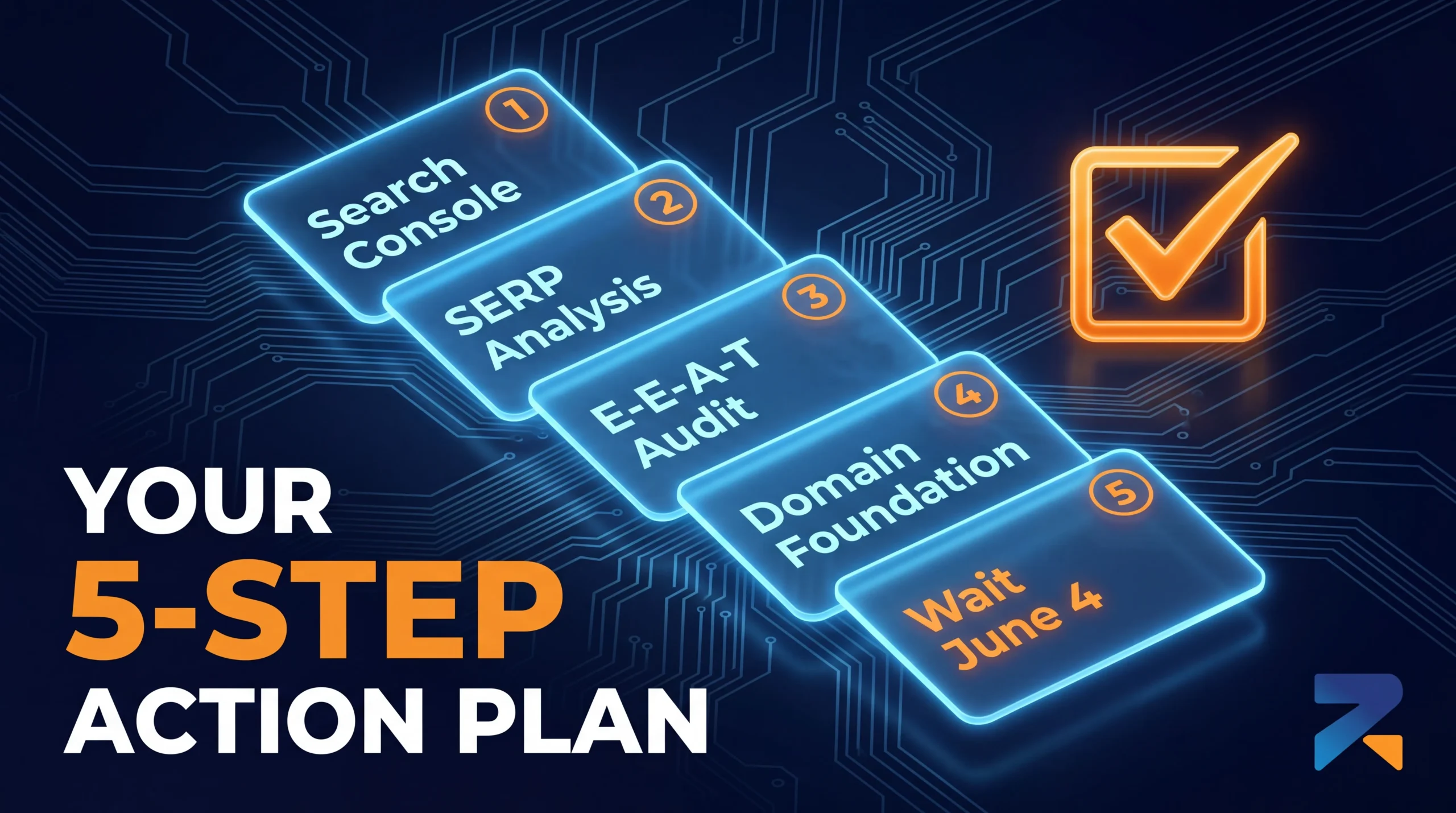
Step 1: Open Google Search Console
Pull your Performance Report. Set a date comparison filter: May 21, 2026 onward versus the same period in the prior month. Identify which pages lost clicks and impressions first. These are your signal pages — the ones Google’s classifiers are re-evaluating most actively.
Step 2: Look at What Is Winning Your Target SERPs
Check your five most important keywords right now. Who moved up? What does their content look like? If authoritative, editorial-style pages with genuine review methodology are outranking affiliate templates, that tells you exactly where the classifiers are shifting weight.
Step 3: Audit Your Content for E-E-A-T Signals
The Experience component is the most commonly missing signal on iGaming affiliate sites. Content that reviews a casino product without demonstrating that a real person actually used it — actual screenshots, specific withdrawal experience, named author credentials — is exactly what Gemini-based classifiers are trained to identify and deprioritize.
Step 4: Check Your Domain Foundation
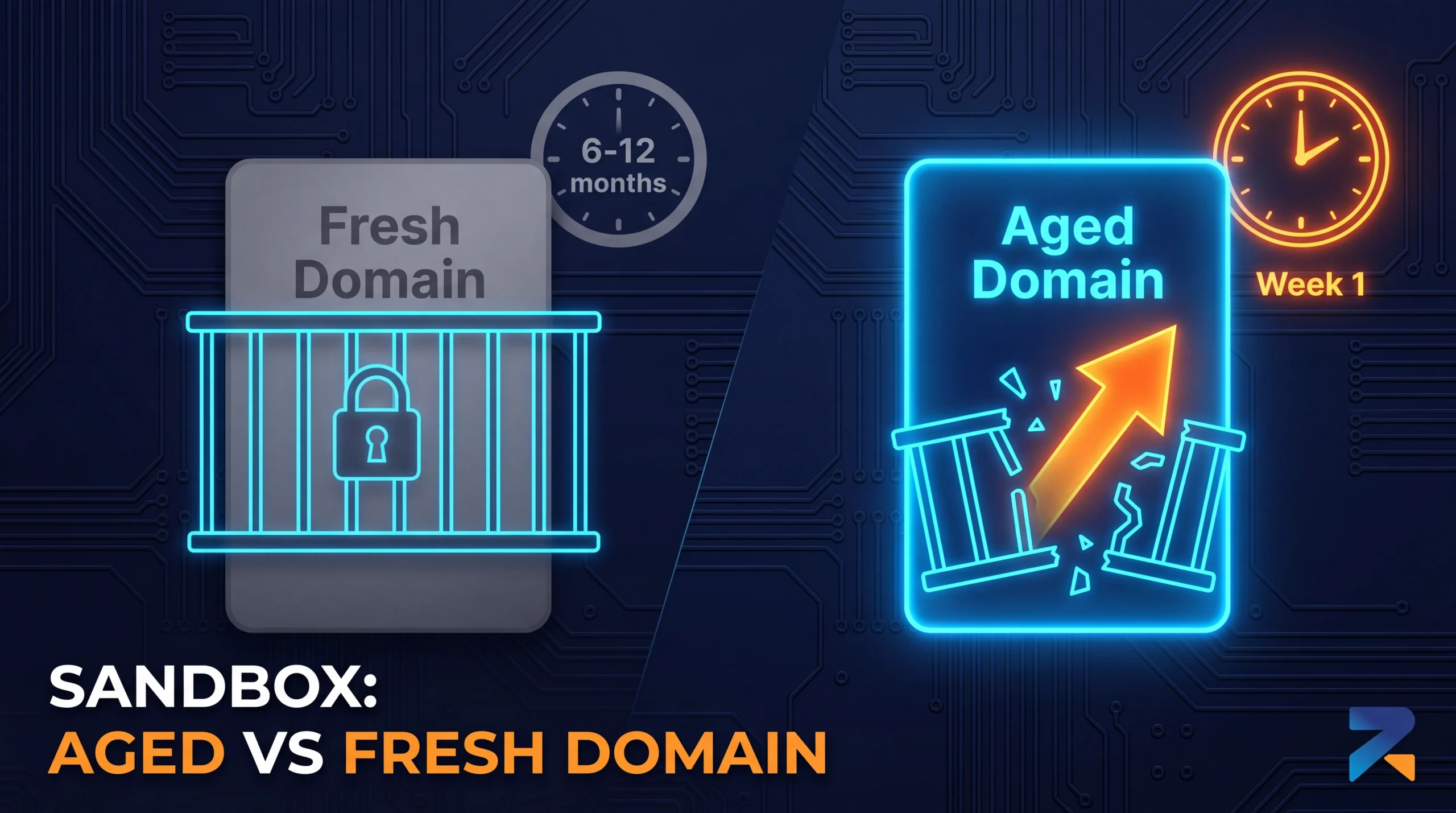
If you’re running your iGaming money site on a fresh domain, this update makes the sandbox problem materially worse. If you’re running on an aged domain with clean history and established authority, you are working with a structural advantage that this update amplifies rather than erodes. Aged domains with legitimate referring domains from relevant sites — genuine sports, gaming, finance verticals — carry trust signals that Gemini quality models can verify. That verification is now faster and more consequential.
Before you buy any aged domain to recover from this update, make sure you know how to audit an aged domain properly — the same YMYL standards that this update enforces apply directly to the domain’s history, not just the content you build on it.
Step 5: June 9 is your starting gun
The update is done. But your data isn’t clean yet. Google’s own documentation says to wait at least one full week after rollout completion before analyzing Search Console results.
That puts your first reliable data window at June 9, 2026.
When June 9 arrives: compare the full week of June 2–9 against May 13–20 (the week immediately before the update launched). That’s your real before-and-after. Not May 22 vs. June 1. Not today vs. last month. Specifically those two windows.
Pages that dropped significantly in that comparison are your actual priority list. That’s where you start — content quality fixes on the highest-value affected pages, and an authority assessment for any site-wide drops that suggest a domain-level signal issue.
What This Means for Aged Domain Strategy Going Forward
The May 2026 update reinforces something that has been true for every major Google update since 2024: The foundation of your domain matters more than the tactics you run on top of it. For operators who haven’t yet built on aged domain infrastructure, here’s the full case for why: aged domains for iGaming SEO.
An aged domain with a clean backlink profile and niche-relevant authority does not start from zero every time a core update reshapes quality evaluation. The trust is already verified. The referring domains are already indexed and evaluated. The history is already clean.
A fresh domain competing in iGaming in 2026 needs to earn trust from a quality model that is now significantly harder to satisfy than it was 18 months ago. The sandbox is longer. The threshold for ranking in YMYL queries is higher. And the gap between a new domain and an established one is now wider than it has been since Google first introduced YMYL evaluation frameworks.
If you are considering a 301 redirect from an aged domain to boost an existing money site, the same logic applies — the quality of the redirecting domain’s history is now evaluated more rigorously than it was before this update. A clean aged domain transfers clean authority. A domain with a problematic history transfers that history too.
This is not an argument for panic. It is an argument for making the right foundational decision before you build, not after you have spent six months trying to recover from a sandbox you could have avoided entirely.
The Bottom Line
The May 2026 Core Update ran May 21 to June 2. It’s done. The SERP movement is real, the data is settling, and the clean analysis window opens June 9.
What this update confirmed: iGaming sites backed by clean domain authority and genuine content signals held their positions. Sites built on thin content, programmatic pages, and manufactured link profiles did not. That gap is now wider than it was before May 21.
If your money site took a hit and you’re looking at the next core update potentially arriving in mid-July — the recovery window is narrow. On-page fixes take time. Authority rebuilding from a fresh domain takes even longer.
The fastest structural fix available to iGaming operators right now is starting from a domain Google already trusts. Browse pre-audited aged domains at Rexusdomain — clean history, verified metrics, iGaming-relevant inventory. 24-hour transfer.
Frequently Asked Questions
When will the May 2026 Core Update finish rolling out?
The rollout completed on June 2, 2026 at approximately 5:40 AM PDT — two days ahead of the original estimate. Total duration was 11 days and 21 hours, starting May 21 at 8:40 AM PDT
Why does the May 2026 Core Update hit iGaming harder than other niches?
Google classifies gambling and iGaming content as YMYL — Your Money or Your Life — meaning it applies its strictest quality and trust evaluation to every page in this niche. The December 2025 core update extended YMYL standards deeper into the gambling category. Combined with the Gemini-based quality models powering this update, iGaming affiliates and operators face higher evaluation thresholds than most other content categories.
My rankings dropped after the May 21 rollout. What should I do first?
Open Google Search Console and compare Performance data from May 21 onward against the prior period. Identify which pages lost impressions first — these are the pages being re-evaluated. Do not make major site changes until the rollout completes around June 4. Core update drops during active rollouts can be temporary and correct themselves before the rollout finishes.
Does this update affect aged domains differently from fresh domains?
Yes. Aged domains with established authority and clean backlink history carry pre-verified trust signals that Gemini-based quality models can evaluate positively from the start. Fresh domains enter a sandbox that this update has effectively made longer and harder to exit — particularly in YMYL categories like iGaming. The structural advantage of starting on an aged domain with legitimate referring domains is amplified by every update that raises the quality bar.
What is the connection between this update and Google I/O 2026?
The May 2026 Core Update launched the day after Google I/O 2026, where Google announced what it called the biggest upgrade to the Search interface in 25 years, including the expansion of AI Mode. The quality models updated in this core rollout are the same models that determine what appears in AI Mode results. Losing organic ranking position in this update also affects AI Mode visibility — the two are no longer independent channels.
Should I be worried about my PBN if I’m using aged domains?
The May 2026 update continues Google’s pattern of targeting manipulative link structures — including PBNs that leave algorithmic footprints. The key distinction is between aged domains with genuine referring domain diversity and clean history, versus domains with manufactured link profiles or mismatched niche history. Pre-audited aged domains from a curated marketplace reduce this risk significantly compared to buying from general auction platforms without due diligence.
Related Guides
- Best aged domain marketplaces to rebuild iGaming authority after the May 2026 update
- Best Aged Domain Marketplace for iGaming SEO (2026)
- Where to Buy Aged & Expired Domains in 2026: The Complete Buyer’s Guide
- Aged Domain Sellers You Can Trust: How to Vet a Premium Marketplace
- How to Buy Aged or Expired Domains: A Step-by-Step Guide
Sources & Further Reading
Frequently Asked Questions
How did the May 2026 Google Core Update affect iGaming websites?
The May 2026 Google Core Update continued Google’s push toward E-E-A-T (Experience, Expertise, Authoritativeness, Trustworthiness) signals. iGaming sites built on aged domains with legitimate authority histories showed stable or improved rankings, while thin affiliate sites on new domains or domains with spammy backlink histories experienced significant drops.
Did the May 2026 Google update target PBN-backed iGaming sites?
The May 2026 update targeted footprint patterns consistent with PBN use — identical hosting, similar IP ranges, cookie-cutter content templates. Well-built PBNs using aged domains with unique hosting, diverse content, and legitimate authority metrics showed no significant negative impact during this update period.
How do aged domains protect iGaming sites during Google algorithm updates?
Aged domains with real backlink authority and clean content history are more algorithmically stable than fresh domains during Google core updates. Google’s quality signals — E-E-A-T, backlink legitimacy, content depth — favor established entities. Sites built on properly vetted aged domains have a historical trust layer that helps absorb algorithmic volatility.