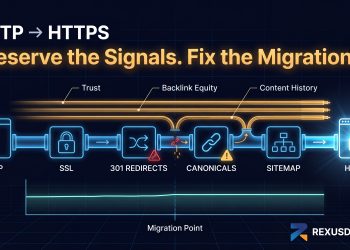


Your SEO tools are lying to you not maliciously, but by omission.
Ahrefs shows DR 42, 180 referring domains, mostly clean. Majestic shows Trust Flow 28. Nothing flags on the spam check. The seller says it was a “general blog” for several years before it dropped. Looks solid on paper. You pay and transfer.
Two months in, the domain isn’t moving. Rankings flatline or never materialize. You dig deeper and find it: three years ago, this domain hosted a doorway page network pushing Tier-3 casino keywords across a dozen markets. Google crawled every one of those pages. The backlinks in Ahrefs look clean because they were already cleaned. The content history what the domain was actually about is invisible to link tools. But Archive.org saw all of it. Google did too.
This is the check most operators skip, and it’s the one that makes everything else in a full aged domain audit worth running. Not because they don’t know Wayback Machine exists, but because nobody has shown them what to actually look for inside it when buying for iGaming. This piece does exactly that.
Why Archive.org Sees What Ahrefs Doesn’t
Link tools measure backlinks. They’re built for that. What they don’t capture is on-site behavior the content, structure, and topical signals the domain carried through its entire life. Google doesn’t just look at who links to you. It looks at what you have historically been, what your crawl history shows, and whether the entity now sitting behind that domain makes sense given everything it knows about it.
The Wayback Machine is the closest public record of that history. The Internet Archive has been crawling the web since 1996 and currently stores over 800 billion web pages. When Googlebot has been crawling a domain for years, Archive.org’s snapshots usually reflect much of the same content the same homepages, the same page structures, the same keyword intent signals baked into the copy.
Here’s the thing: Google doesn’t forget. A domain that spent 18 months hosting thin gambling affiliate pages in 2021 still has that association in Google’s entity graph. Buying it in 2026 and trying to repurpose it for a clean iGaming money site doesn’t erase that signal. The Wayback Machine won’t tell you what’s inside Google’s index. But it’ll show you everything that should concern you if you know how to read it. That’s exactly what makes an aged domain valuable or dangerous for iGaming: the history behind the metrics, not the metrics themselves.
How to Actually Navigate the Wayback Machine
Go to web.archive.org and type in the full domain you’re evaluating. Don’t add www unless you’re specifically checking that variant. Start with the bare root domain.
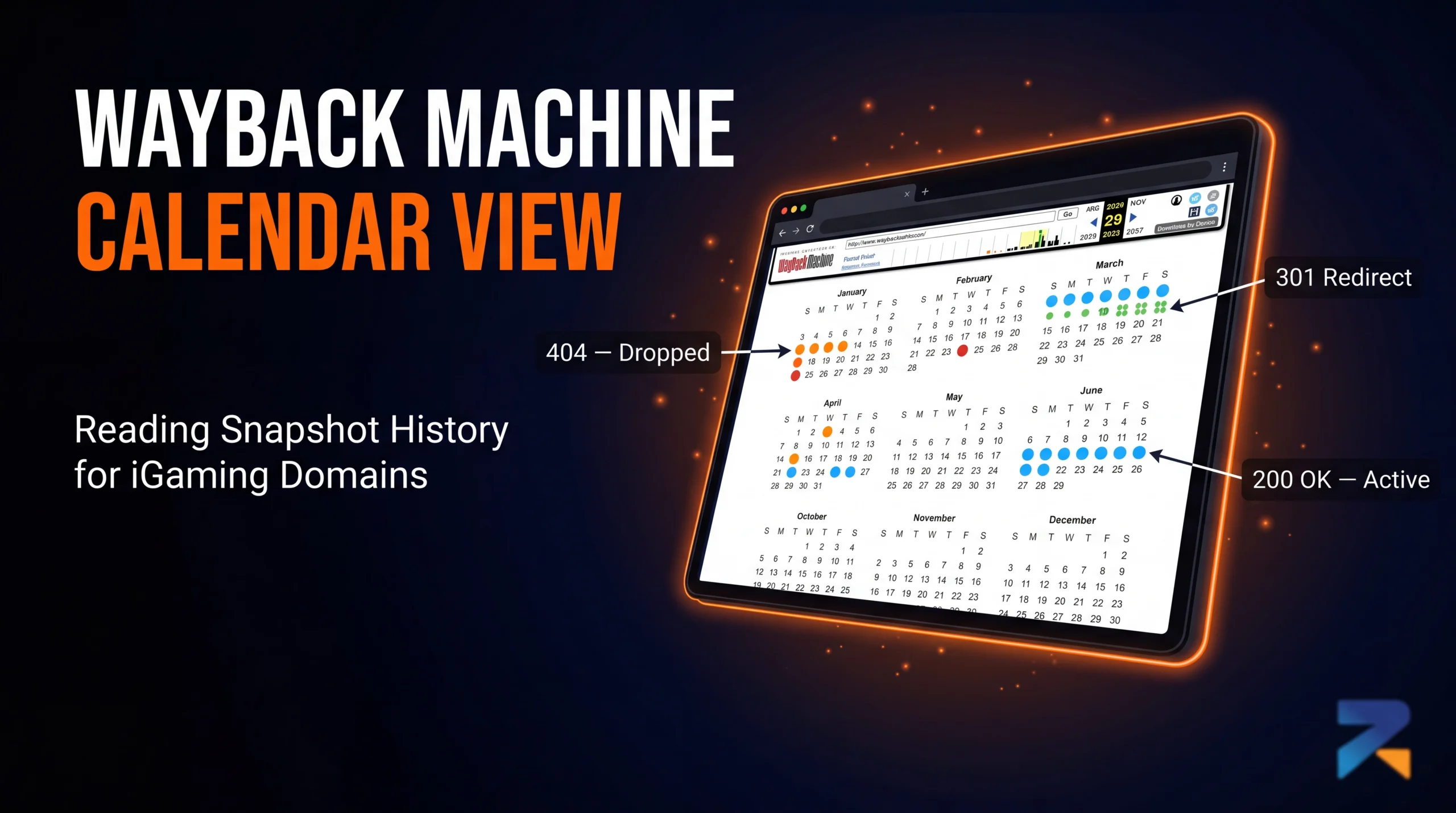
The calendar view is your first data point. Once you search a domain, you land on a calendar map showing every year the domain was crawled. Each crawled date is marked with a colored circle. The color indicates HTTP status:
- Blue = 200 (page loaded fine)
- Green = 301 or 302 redirect
- Red = server error or site down
- Orange = 404
Heavy blue coverage over multiple years means the domain was actively live and Googlebot was visiting regularly. That’s a positive signal. A domain that’s blue for 6 years, then drops to orange for 12 months, then comes back for sale? That gap needs explaining.
Check multiple years, not just the most recent. Most sellers will show you a clean recent snapshot. The problems are almost always older 2018, 2019, 2020. Click back. Look at what the homepage actually said before the domain dropped.
Open individual snapshots, not just the homepage. The homepage alone tells you very little. Navigate into internal pages from the snapshot. Check the navigation menu. Look at what categories existed. In iGaming due diligence, the site structure is often more revealing than the copy on any single page.
The 5 Things You’re Looking For
1. Original niche and topical consistency
What was this domain actually about for the bulk of its life? A domain that spent 7 years as a legitimate travel blog before expiring is a fundamentally different asset than one that pivoted between niches every 18 months. Topical consistency over time is a trust signal. Multiple pivots tech → health → finance → dropped is a link farm behavioral pattern. Don’t rationalize it away.
2. Signs of thin or doorway content
Open snapshots from 3–4 different years and read the actual copy. Not just headlines the body text. Thin content is obvious: 150-word pages with keyword stuffing, no real information, every page pointing to one external domain. In iGaming specifically, watch for pages that exist purely to push keyword variants: “best casino Indonesia”, “situs judi online terpercaya”, “slot online gacor” all pointing to a single operator site. That’s a doorway page setup. Google’s position on doorway pages hasn’t softened.
3. Adult, pharmaceutical, or gambling spam history
These three content categories create the hardest-to-recover-from domain associations. Adult and pharma are obvious. For gambling specifically: there’s a meaningful difference between a domain that was a legitimate affiliate review site with real editorial content versus one that was clearly a spam landing page in 2019 pushing affiliate links with nothing behind them. The first can be repurposed. The second is a liability regardless of how good the current backlink profile looks and this is one of the clearest differences between a genuinely aged domain versus a recycled expired domain.
4. What the site structure looked like
Real websites have structure: a homepage, category pages, an about page, a contact form, a sitemap. Count the pages visible in the archived navigation. If you can only ever find 1–3 pages across five years of snapshots, you’re looking at a thin site. Thin sites were often used as PBN nodes by previous owners which means the backlinks you’re seeing in Ahrefs were built to serve someone else’s SEO scheme, not because the domain earned them.
5. When the site went dark and why
Identify the last active snapshot and the gap before it dropped. A domain that was active through late 2022, then disappeared, then surfaced at auction in 2025? That three-year gap could mean the owner simply let it expire. Or it could coincide with a manual action or an algorithmic hit. Cross that date against Google algorithm update timelines. If the domain went dark within 60 days of a major core update, that’s not a coincidence.
iGaming-Specific Red Flags to Memorize

Rapid niche pivoting within 24 months. Travel blog → finance tips → crypto news → dropped. This is textbook link farm behavior. The domain was built, monetized with a link scheme, and then sold or abandoned once Google caught up.
Geo-targeted casino pages in local languages. Open snapshots and find pages in Thai, Indonesian, or Portuguese that are purely keyword-targeted gambling pages with no real content behind them. This almost always indicates cloaking or doorway page history the domain was serving one content set to users and another to Googlebot. If Archive.org captured it, Google almost certainly did too.
“Under construction” or parked pages that ran for 6+ months. A parked domain loses crawl frequency fast. More importantly, parked pages with ads are often monetized with affiliate redirects. Check the parked page content in Wayback what ad categories were being served? If the parking ads were gambling-related, Google made that topical association regardless of what the current link profile shows.
Homepage that changed dramatically with no logical transition. An arts and crafts blog that overnight became a forex trading site in one snapshot is a red flag. It means ownership changed and someone tried to pivot the domain quickly usually to exploit the existing authority for a link scheme before it decayed.
Green Flags: What a Clean Archive Looks Like
Consistent niche across all visible snapshots. A domain that was a legitimate tech blog, pet care site, or recipe platform for 5–8 years before expiring is exactly what you want. The content was real, the editorial standards were real, and Google treated it as a real site throughout its history.
Real page depth. Multiple categories, author pages, individual posts, comment sections. These are signals of a site that existed for reasons other than manipulation.
High snapshot frequency. If Archive.org has hundreds of snapshots across multiple years, Googlebot was visiting often. High crawl frequency means the domain was considered worth crawling regularly. That’s a genuine trust signal that carries forward.
Natural content evolution. Snapshots from 2017 show one version of the site. Snapshots from 2020 show it had grown added sections, changed design, published more content. That’s organic development. It’s what a real site does over time.
Wayback Machine Alone Is Not Enough
Use it in combination. Here’s the cross-reference workflow that operators running domains at volume actually use:
Archive.org + Ahrefs link velocity graph. Pull the domain’s backlink history in Ahrefs and look at when referring domains were acquired. If there’s a spike of 200+ links acquired in a 3-month window several years back, go to Archive.org and look at what the site was serving during that exact period. Artificial link spikes almost always coincide with thin or doorway content in the archive the two signals validate each other.
Archive.org + Google Search Console (if transferable). In some cases when buying from a direct owner rather than an auction, you can request historical Search Console data. Cross-reference traffic drops against what Archive.org shows during the same periods.
Archive.org + Wayback CDX API for bulk vetting. If you’re evaluating 30+ domain candidates per month, the CDX API lets you pull a complete snapshot list programmatically. You can automate the first-pass check: total snapshot count, first crawl date, gap detection, HTTP status distribution. Run it before you manually review anything. Narrow the list to 5–10 candidates, then go deep on those.
Most operators check Wayback Machine once, look at the homepage, and move on. That’s not vetting. That’s theater. Real vetting means spending 20–30 minutes per domain across at least 5 historical snapshots, multiple internal pages, and multiple years of calendar data.
If a domain can’t pass that check cleanly, the DR and TF numbers don’t matter. You’re buying a liability with good metrics attached to it.
Every domain listed on Rexusdomain goes through content history verification as part of the pre-listing process archive review included. If the Wayback Machine raises questions, the domain doesn’t make it to the catalog, regardless of how clean the link profile looks on paper. Browse the current inventory and you’ll only find domains that have already cleared that bar.
Related Guides
- Best Aged Domain Marketplace for iGaming SEO (2026)
- Best aged domain marketplaces 2026 — top 7 platforms ranked
- How to Build a PBN for iGaming SEO Using Aged Domains
- Where to Buy Aged & Expired Domains in 2026: The Complete Buyer’s Guide
- Aged Domain Sellers You Can Trust: How to Vet a Premium Marketplace
Sources & Further Reading
Frequently Asked Questions
How do I use Wayback Machine to vet an aged domain?
Go to web.archive.org, enter the domain, and check snapshots across multiple years. Look for: (1) consistent legitimate content history; (2) no doorway pages, pharma spam, or casino redirect pages; (3) no long gaps in archive history that suggest penalty or deindexation; (4) content in the same language and niche as your intended use. Red flags include adult content, drug-related content, or foreign-language spam.
What does a clean Wayback Machine history look like for an iGaming domain?
A clean history shows the domain consistently served legitimate content — ideally news, entertainment, sports, or gambling-adjacent content in English. You want to see regular archiving with no extended gaps of 12+ months, which often signal manual penalties or abandonment. The older the legitimate content history, the more valuable the domain authority signal.
What Wayback Machine red flags disqualify a domain?
Disqualifying red flags: (1) adult content or escorts at any point in history; (2) pharmaceutical spam or illegal pill sites; (3) phishing or malware warning pages; (4) years of parked pages with no real content; (5) foreign-language spam pages; (6) gambling spam doorways targeting grey-market jurisdictions. Any of these create manual penalty risk when the domain is reactivated.
Can a domain with bad Wayback Machine history still be used?
Rarely, and only with significant risk. Domains with past spam history carry the legacy anchor text profile that produced it. Even if you clean the site, Google may have historical records of the spam. For high-value iGaming campaigns, never buy a domain with confirmed spam history in the Wayback Machine — the risk of inherited penalties outweighs any domain metrics advantage.
How far back should I check Wayback Machine archives?
Check the full available history, not just recent years. A domain that was legitimate in 2022-2024 but was a pharma spam site in 2016-2019 still carries that historical footprint in Google records. Go back to the earliest archive snapshot available. Pay particular attention to any period where archiving suddenly stops — this typically coincides with a Google manual action.
Is Wayback Machine the only tool needed to check domain history?
No. Wayback Machine checks content history, but you also need: Ahrefs for current backlink profile, Majestic for Trust Flow and link quality, Google Search Console (post-purchase) for manual actions, and a Google site:domain.com check for indexation. Wayback Machine is the first filter; Ahrefs and Majestic complete the vetting.