

Most iGaming operators treat backlinks like a commodity. Buy more, rank higher. That logic worked in 2018. In 2026, it’s how you end up with a 60-domain backlink profile that does absolutely nothing — or worse, triggers a manual review that takes six months to recover from.
The real question isn’t how many backlinks you have. It’s which types you’re using, in what combination, and whether each type is actually doing what you think it’s doing in this niche specifically.
iGaming is not general SEO. Google applies YMYL scrutiny to gambling content. Every link signal gets evaluated harder. A backlink type that works fine for a SaaS blog can actively damage a casino affiliate if deployed wrong.
Here’s the complete breakdown — every major backlink type, what it actually does in iGaming, which ones are worth your budget in 2026, and one black hat tactic that’s spreading through operator communities right now that you need to understand before someone uses it against you.
Contextual Backlinks
Contextual links are the gold standard. A link embedded naturally inside the body copy of a relevant article — not in a sidebar, not in a footer, not in a “resources” box at the bottom of a page. Inside the content, surrounded by topically relevant text, pointing to your page with anchor text that makes sense in context.
Why do they matter more than anything else? Because Google’s algorithm weights links based on surrounding content. A link inside a paragraph about “best online casino bonuses in Southeast Asia” carries dramatically more topical relevance signal than the same link dropped in a generic “partners” page.
In iGaming, contextual links from sites with established editorial history — ideally aged domains with real traffic and a clean backlink profile — are the highest-value links you can acquire. One contextual link from a legitimate 7-year-old sports or finance domain often outperforms 20 links from thin affiliate sites created last year.
The mistake operators make: They buy contextual links from any site that offers them. The hosting domain matters as much as the link itself. A contextual link from a domain Google has already flagged as a link farm is worse than no link at all — it’s an association signal you can’t easily undo.
Guest Post Backlinks
Guest posts are contextual links with extra steps — and extra costs. You write (or pay for) an article, it gets published on someone else’s site, and inside that article lives a link to your money site.
The difference between a guest post and a raw contextual link placement is editorial framing. A guest post implies the host site reviewed the content and chose to publish it. That’s a trust signal — in theory.
Here’s the thing. Google has gotten very good at identifying guest post networks. Sites that publish 20 gambling-related guest posts per month, all from different “authors,” all linking to different casino operators — that pattern is detectable. The domain’s link-to-content ratio shifts. Content velocity spikes. Topical consistency breaks down.
For iGaming, guest posts still work — but only on sites that have real organic traffic (verify in Ahrefs or Semrush, not just DR), don’t have 40%+ of their content obviously sponsored, are genuinely relevant to gambling, sports, finance, or entertainment, and have been publishing consistently for at least 3 years.
A guest post on a 6-month-old “lifestyle” blog that publishes eight articles a week, half of which are about casinos, is not a guest post. It’s a contextual link placement on a low-quality site. Budget accordingly — or skip it entirely.
PBN Backlinks (Private Blog Networks)
This is where iGaming SEO gets serious.
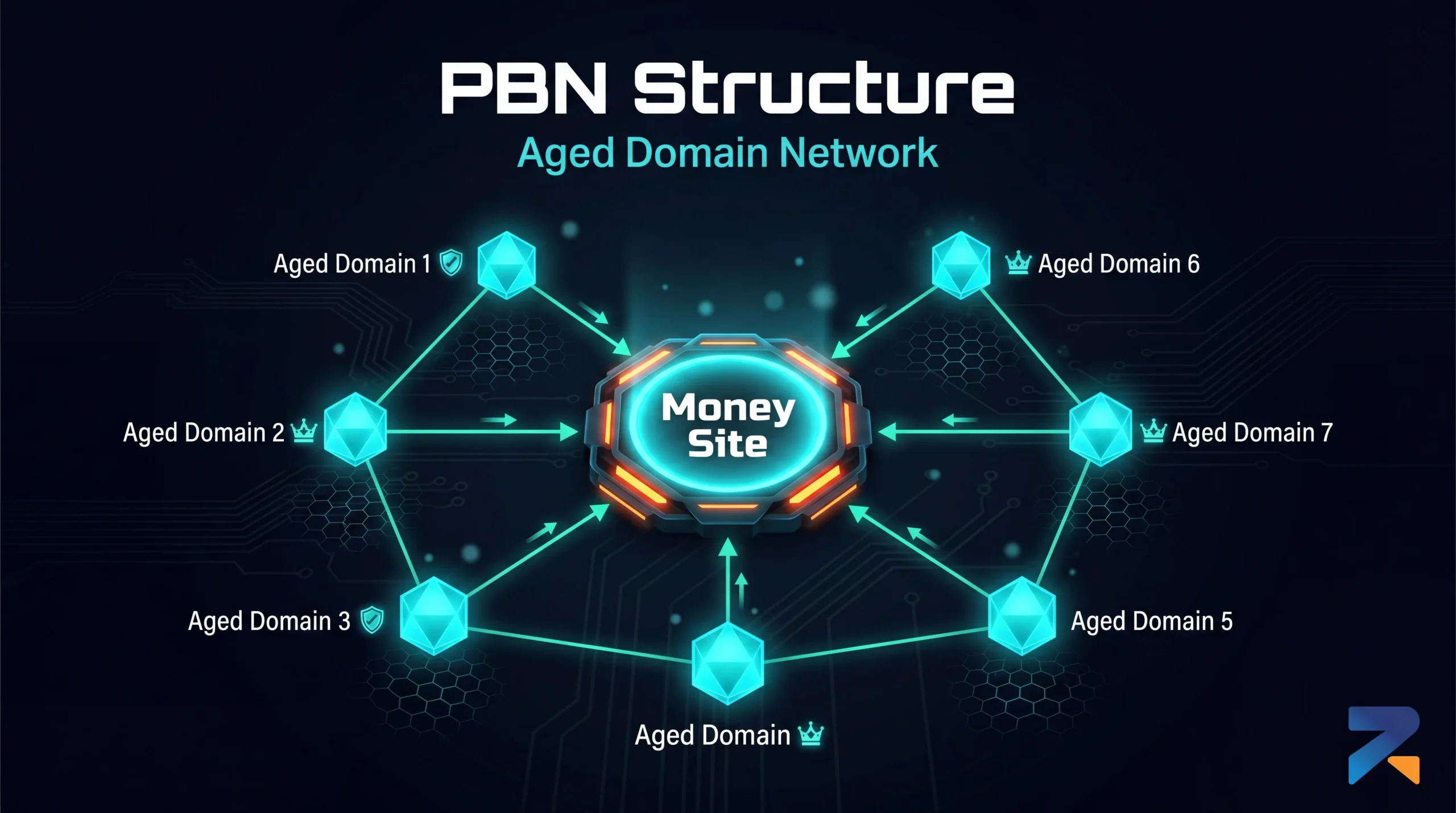
A PBN is a network of websites you own or control, built specifically to pass link equity to your money site. Done right, it’s one of the most powerful tools in this niche. Done wrong, it collapses your rankings and sometimes takes years to recover from.
The entire value of a PBN depends on the domains it’s built on. A PBN built on fresh registrations is basically a network of spam sites that fools nobody. A PBN built on genuine aged domains — sites with years of real history, real referring domains, real content relevance — is a completely different category.
Why aged domains are non-negotiable for iGaming PBNs:
Google has already evaluated these domains over years of crawling. If you want the full breakdown of how aged domain authority works before building your PBN stack, read: aged domains for iGaming SEO. A domain that spent six years as a legitimate sports news site has accumulated trust signals, crawl history, topical authority, and a referring domain profile that can’t be fabricated. When that domain links to your casino site, it’s passing real equity. Not simulated authority. Real trust built over time. If you want to understand exactly what makes these domains valuable before you build a PBN around them, the aged domain fundamentals for iGaming SEO article covers the mechanics in detail.
The four pillars of a PBN that survives Google updates in 2026:
Domain quality over quantity. Ten aged domains with real DR and clean history beat 50 expired domains with inflated metrics and spam histories. Always audit before you buy. Check Wayback Machine, run the full backlink profile, verify the topical history matches what you’re building on top of it.
Hosting diversity. Every site on different hosting providers, different IP blocks, different nameservers. This is basic footprint hygiene. A PBN where 30 sites all sit on the same C-class IP range is a footprint that will eventually surface. It’s not a matter of if — it’s when.
Real content, not spun garbage. Each PBN site needs to look like a legitimate website. That means consistent content publishing, coherent internal linking, a real about page, and content that maintains topical relevance. A site that publishes one article per month and exists solely to house outbound links to casinos looks exactly like what it is.
Controlled link velocity. Don’t activate all your PBN links at once. Build them in gradually, mix them with other link types, and let each domain breathe between placements. Operators who launch 15 PBN links in two weeks often see a ranking spike followed by a sharp drop. The spike was real. The drop was the algorithm catching the pattern. For a full walkthrough on building a PBN for iGaming on aged domains, including domain selection and footprint avoidance, that guide covers the complete setup.
Is PBN still worth it in 2026?
Yes — in iGaming specifically, because organic link acquisition at scale in this niche is borderline impossible. Real editorial links from mainstream publications require either enormous brand authority or enormous budget. PBNs on aged domains fill the gap between “we need ranking signals now” and “we can’t get 40 DR+ editorial links this month.”
Niche Edit / Link Insertion Backlinks
Niche edits — also called link insertions — are contextual links placed inside existing articles. Content that’s already published, already indexed, already has ranking history and age.
The advantage over a fresh guest post is significant. The page already has age, crawl history, and potentially existing ranking signals. A link inserted into a 4-year-old article about online betting regulations carries fundamentally different weight than a freshly published article created specifically to house your link.
In iGaming, niche edits on aged content are underutilized. Most operators default to guest posts because they’re easier to find at scale. But a well-placed niche edit on a high-authority gambling or sports page that already ranks for competitive keywords is one of the highest-ROI link moves available right now.
Watch for: Sites that sell niche edits at scale without disclosing that half their “aged content” was published four months ago. Real niche edits come from real aged articles — check the publication date, the Wayback Machine history, and whether the article has any measurable organic traffic before you pay for placement.
Hidden CSS Backlinks (display:none): The Black Hat Tactic Spreading Through iGaming Communities Right Now
This one deserves its own section because it’s actively being sold in Telegram groups, grey-market link vendor communities, and underground iGaming SEO forums — and operators are buying it without fully understanding what they’re touching.
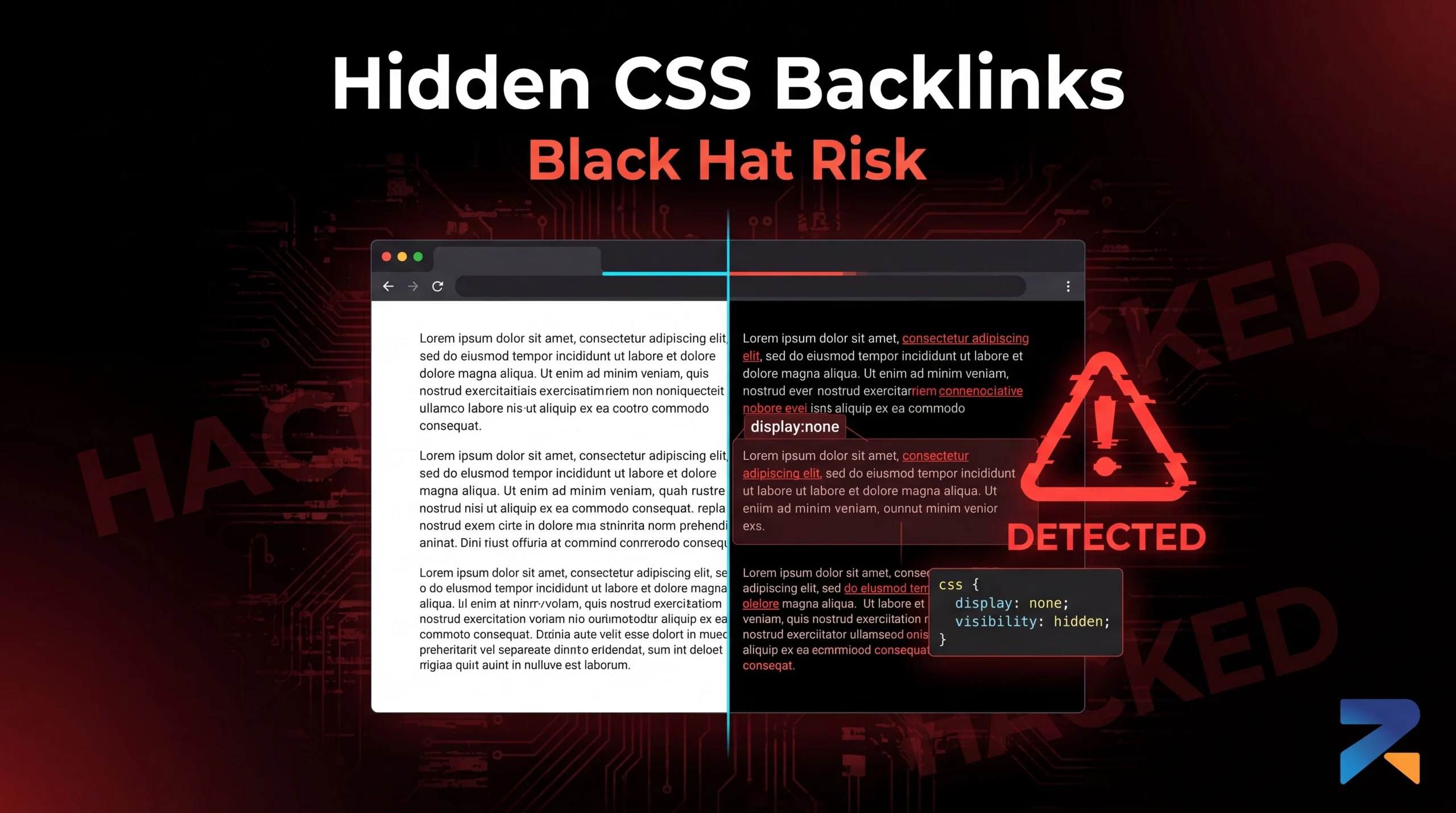
What it is: Hidden CSS backlinks use CSS properties — display:none, visibility:hidden, font-size:0px, or text colored to match the background — to hide links from human visitors while leaving them technically crawlable by bots. The link exists in the HTML. Users can’t see it. The theory is that Googlebot crawls it, passes link equity, nobody notices.
Where it comes from: Most of these links are injected into hacked sites. Outdated WordPress installations, vulnerable plugins, old Joomla deployments — these get compromised, and the attacker injects hundreds of hidden links pointing to casino and gambling sites. This is why you’ll hear it called “domain hack backlinks” in vendor pitches. Someone hacks a legitimate aged domain, injects your links invisibly, and charges you per placement.
Why operators in iGaming are buying this: The pitch sounds compelling. Legitimate aged domains, real DR, clean-looking metrics, and a price point that’s lower than proper aged domain contextual links. For operators who are behind on rankings and need volume fast, it looks like a shortcut.
The reality in 2026:
Google’s crawler has rendered JavaScript and CSS fully for years. Googlebot doesn’t just read raw HTML — it renders the page the way a browser does. It knows what’s visible to users and what isn’t. display:none is not invisible to Google. It’s a flag.
There are two outcomes when Google detects hidden links. The first: the links get ignored entirely — no equity passed, money wasted. The second, and the one that ends rankings: if Google detects a pattern of hidden link injection across your profile, or if the host site gets flagged for spam injection, it can trigger a manual action against your domain. Not a filter. A manual review by a human at Google who then applies a penalty that requires a reconsideration request to lift.
The negative SEO angle — this is the part most people miss:
Hidden CSS backlinks are also deployed as a negative SEO weapon. A competitor injects hundreds of hidden gambling links into your domain pointing to other operators, then submits a spam report to Google. Your site gets flagged for link injection. You spend months trying to explain to Google that you didn’t put those links there.
This isn’t theoretical. We’ve seen iGaming operators lose competitive rankings because someone used hidden link injection against them — not for them. The attack vector works precisely because hidden links look like exactly the kind of manipulation Google penalizes.
What to do if you find hidden links in your backlink profile:
Run a full backlink audit immediately. If you’re seeing links in Ahrefs or GSC that point to your site but you can’t find them on the source page visually, that’s a hidden link. Disavow them, document the pattern, and submit a reconsideration request if you’ve already received a manual action notification. Don’t wait to see if Google ignores them. For a structured approach to auditing your backlink profile in iGaming, the aged domain audit guide covers the diagnostic framework.
Bottom line: Don’t buy hidden CSS backlinks. Don’t let vendors pitch these to you as “stealth contextual links” or “grey-hat placements.” The best-case scenario is zero value. The realistic scenario is penalty risk. And the worst case is that someone uses the same tactic against you and you don’t catch it until rankings are already gone.
Web 2.0 Backlinks
Web 2.0s — pages you create on platforms like Medium, Tumblr, or WordPress.com — used to be a staple of iGaming link building. They’re essentially free pages on high-authority domains that you control.
In 2026, standalone Web 2.0s as a primary Tier 1 link source are low-value. Google has significantly discounted links from these platforms because of years of systematic abuse. A Medium article you wrote yourself, linking to your casino site with exact-match anchors, isn’t moving rankings.
They still have a legitimate use: as Tier 2 links in a tiered structure (supporting your PBN pages or guest post URLs), or as auxiliary signals to diversify a link profile that would otherwise look unnaturally clean. But as direct first-tier links pointed at your money site? Expect minimal lift in competitive gambling verticals.
Forum and Comment Backlinks
Low value. Almost always nofollow. Google doesn’t count most of them for ranking purposes in iGaming.
The only legitimate reason to build forum and comment links in this niche is profile diversification. A backlink profile consisting exclusively of high-authority contextual links with no brand mentions, no forum participation, no social signals — that pattern can itself look suspicious during an audit. A sprinkle of branded forum mentions from genuine gambling community participation makes the profile look more organic.
Don’t buy these in bulk. Don’t use exact-match anchors. Don’t spend real budget here. If you’re allocating link-building spend to forum comments, redirect it.
Directory and Citation Backlinks
Gambling directories, review aggregators, casino listing sites — these are the iGaming equivalent of local citations. Low individual ranking value, but collectively they build a baseline of brand presence signals that matter for credibility and topical relevance.
Relevant directories — established gambling review sites, licensed affiliate portals, geo-specific gambling aggregators — are worth pursuing for brand visibility and anchor diversity. Generic web directories with no topical relevance are not worth your time.
One specific use case worth noting: if you’re targeting regulated markets like the UK, Sweden, or Netherlands, being listed on established local gambling comparison sites is part of baseline credibility. It’s not purely an SEO play — it’s a trust signal that affects user behavior and sometimes has licensing optics implications as well.
Tiered Link Building in iGaming
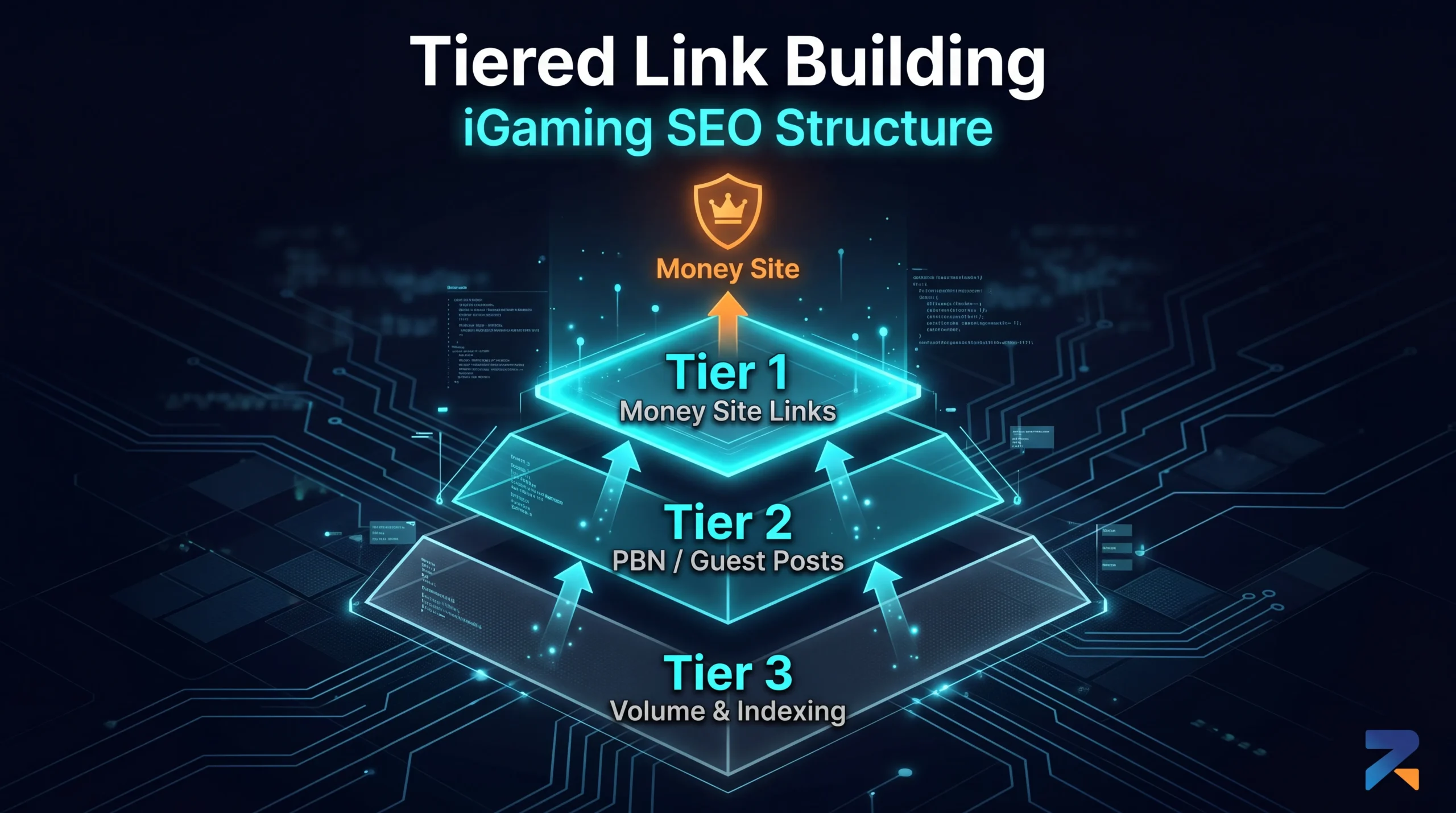
Tiered linking is a strategy that determines how all the above types interact anchor text audit for iGaming — and in iGaming, it changes everything about what you can safely deploy at scale.
Tier 1 links point directly to your money site. These need to be your cleanest, most authoritative backlinks — aged domain PBN links, contextual links from credible sites, strong niche edits. Every link in Tier 1 needs to be something you’d be comfortable showing in a manual review.
Tier 2 links point to your Tier 1 pages — your PBN sites, your guest post URLs, your niche edit host pages. Web 2.0s, social profiles, forum posts, and lower-authority contextual links live here. Their job is to push more equity into your Tier 1 sources, not directly into your money site. This is where you can use more volume without exposing your main domain.
Tier 3 links point to your Tier 2 pages. High volume, lower quality — primarily used to get Tier 2 pages indexed and keep them active. Bulk link tools can operate here without risk to your money site because they’re three hops away from it.
The mistake that keeps killing iGaming rankings: pointing Tier 2 or Tier 3 activity directly at the money site. The tiered structure exists precisely to create separation between aggressive link volume and your primary domain. Remove that separation and you’ve just pointed bulk manipulation signals at the site you most need to protect. Pair this structure with a solid anchor text strategy across all tiers — the ratios matter at every level, not just Tier 1.
What Actually Moves Rankings in iGaming Right Now
Here’s the practical framework for allocating link-building resources in competitive gambling verticals:
Primary movers — highest ROI, build these first: Contextual links from aged domains with genuine topical relevance. PBN links from aged domains with clean history and real content. Niche edits on existing high-authority gambling or sports content.
Supporting signals — use for diversity and profile health: Guest posts on legitimate, traffic-verified sites. Relevant directory listings in your target geos. Branded mentions and genuine community participation.
Avoid or use only at lower tiers: Web 2.0s as direct Tier 1 sources. Bulk forum and comment links with keyword anchors. Generic directories. And specifically — hidden CSS backlinks in any form, from any vendor, for any reason.
The operators who rank consistently in iGaming aren’t the ones with the most backlinks. They’re the ones who built on aged domain authority as the foundation, used clean contextual links and controlled PBN placement as the engine, structured their tiers to keep the money site clean, and didn’t get pulled into black hat shortcuts that traded short-term gains for long-term penalty exposure.
The domain layer is where this all starts. If you’re building a link strategy for an iGaming site without aged domains as part of the equation, you’re competing with one hand behind your back. The authority gap between fresh registrations and properly vetted aged domains is too large to close with volume alone.
Rexusdomain sources and vets aged domains specifically for iGaming operators — domains with real history, clean profiles, and the kind of authority that actually moves rankings when you build on top of them. Browse the current inventory if you’re ready to build on a real foundation.
Related Guides
Sources & Further Reading
Frequently Asked Questions
What backlink types are most effective for iGaming SEO in 2026?
Editorial links from real iGaming and gambling-adjacent publications remain the highest-value backlink type, followed by high-Trust Flow aged domain 301 redirects. Guest posts on established gambling affiliate sites, niche HARO citations, and press release placements in gaming news outlets provide strong topical authority. Avoid directory links, forum signatures, and blog comment links — these produce no measurable ranking movement in competitive iGaming SERPs.
Are PBN links still effective for iGaming SEO in 2026?
PBN links from properly managed networks built on aged domains with legitimate content histories remain effective for iGaming SERPs in 2026. Single-owner PBNs with 10-30 quality aged domains outperform high-volume cheap PBNs in both ranking power and penalty resilience. The risk-reward calculation depends on jurisdiction — PBN links for grey-market iGaming require more careful footprint management than licensed operator SEO campaigns.
How do editorial backlinks differ from PBN backlinks for iGaming sites?
Editorial backlinks come from real publishers who independently choose to link — they carry full Google trust and no penalty risk. PBN backlinks come from controlled domains — they carry more link equity per link than most editorial opportunities but carry algorithmic and manual penalty risk if the network is detected. Most iGaming SEO campaigns use both: editorial links for E-E-A-T signals, PBN links for rapid authority injection.
What is tiered link building and does it work for iGaming?
Tiered link building sends links to the links pointing at your money site — Tier 2 links amplify Tier 1 backlinks. For iGaming, aged domain PBN links as Tier 1 with contextual guest posts as Tier 2 is a common and effective structure. Tier 3 social signals and forum links amplify Tier 2. This structure reduces direct exposure of money-site to lower-quality links while multiplying overall link equity flow.
How many backlinks does an iGaming site need to rank competitively?
Referring domain count matters more than raw backlink numbers. Competitive casino and sports betting keywords in English-language markets typically require 200-500 unique referring domains to reach page 1. Highly competitive terms (online casino UK, sports betting) may require 1,000+ referring domains from diverse, authoritative sources. Track referring domain growth rather than total backlinks when planning iGaming link acquisition campaigns.
What is the best link acquisition velocity for a new iGaming site on an aged domain?
For a new iGaming site launched on an aged domain, acquire 10-30 new referring domains per month in the first 3 months, then scale to 20-50 per month as the site gains organic traction. Avoid velocity spikes above 100 new referring domains in a 30-day period during the first 6 months — this pattern triggers algorithmic scrutiny regardless of link quality. Consistent, gradual growth signals natural acquisition to Google.