
You bought the domain. DR 38, clean backlink profile, no manual penalties, history from a legitimate site. You rebuild the content, submit the sitemap, and wait.
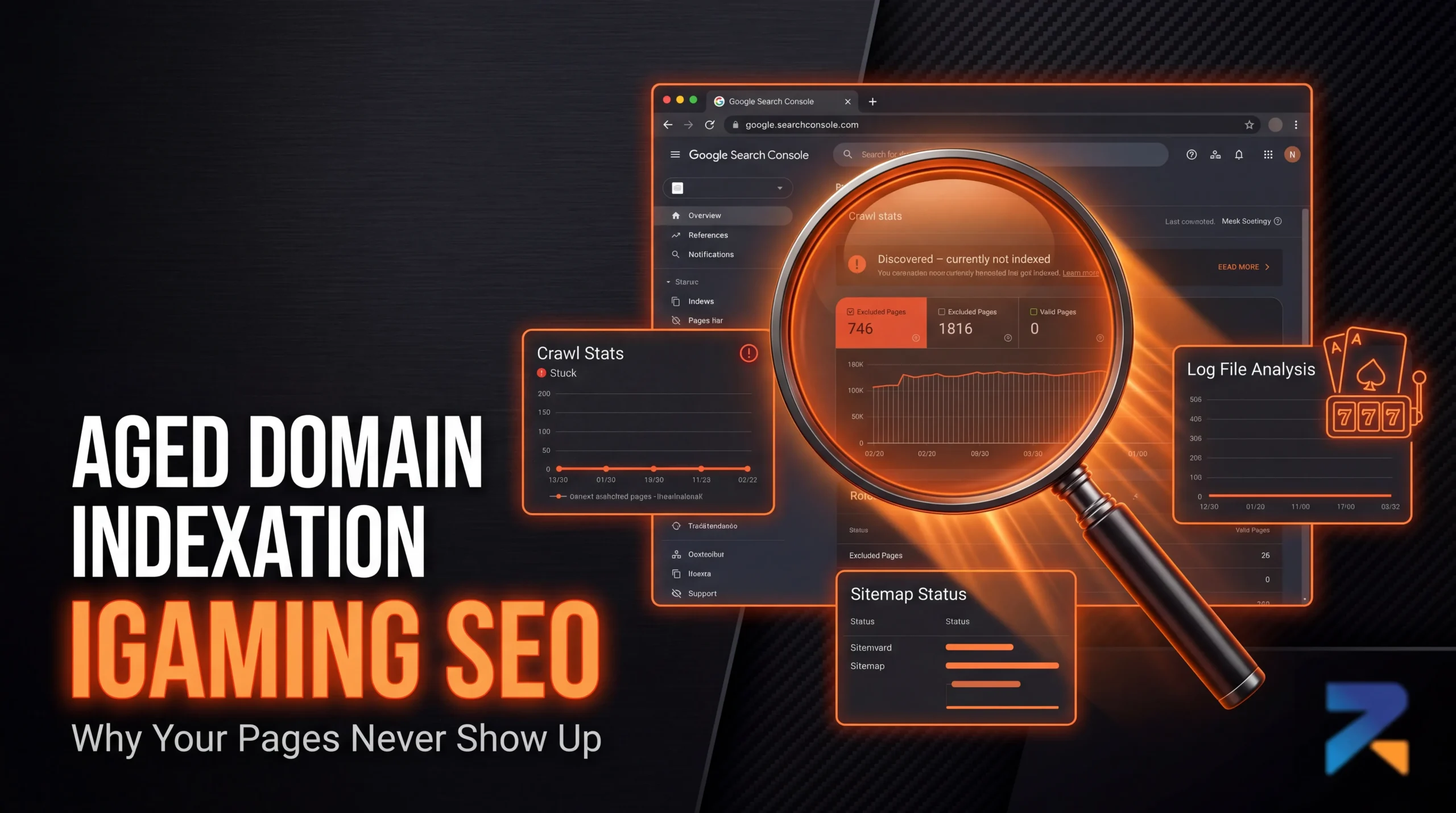
Two weeks later, Search Console is showing “Discovered – currently not indexed” on forty pages. They’re just sitting there. Not moving.
Nothing’s broken. The content isn’t thin. You did the audit. And yet Google is treating the whole thing like it doesn’t exist.
This is one of those problems that operators don’t talk about openly because it’s embarrassing to admit you spent good money on a domain that won’t behave. But it’s common. Way more common than the forums suggest. And in iGaming specifically, it hits differentlybecause everything looks fine on the surface, and the actual problem is buried somewhere underneath. Even operators who did a proper pre-purchase domain audit run into this post-takeover.
What “Not Indexed” Actually Means Here
On a fresh domain, not being indexed makes sense. Google hasn’t verified anything yet. You’re in the sandbox and you know it going in.
On an aged domain, it’s a different story. Google already knows this domain. It’s crawled it beforesometimes hundreds of times over years. It has a record: the content, the links, the behavior, how often it updated. So when your new pages don’t show up in the index, the issue isn’t that Google doesn’t know the domain exists. The issue is that something about the domain’s current state doesn’t match what Google remembers about it, and it’s holding back until it figures out what changed.
That distinction matters a lot when you’re trying to debug. A fresh domain problem and an aged domain indexation problem are not the same thing. Don’t treat them like they are.
Search Console breaks this into a few different statuses and they’re not interchangeable. “Discovered – currently not indexed” means Googlebot found the URL but hasn’t actually visited it yetcrawl budget issue, usually. “Crawled – currently not indexed” means Google went there, read the page, and chose not to include itthat’s a quality or relevance signal decision. When you see both at the same time on the same site, the problem has more than one layer.
iGaming Makes an Already Annoying Problem Worse
Google has always been more conservative with gambling content. Not aggressive, just slower to trust. Pages on casino and sports betting sites take longer to stabilize in the index than equivalent pages in less sensitive nicheseven when the technical setup is clean and the content is genuinely good.
Layer that on top of an aged domain with its own complicated history, and you’ve got two friction sources working against you simultaneously. The domain carries old signalscrawl patterns, topic associations, whatever was happening on the site beforeand Google has to reconcile all of that with what you’ve built now. In a low-scrutiny niche that reconciliation might take days. In iGaming it can drag on for weeks.
That’s not bad luck. That’s just the niche you’re in.
The Real Causes And They Almost Always Stack
Here’s where most operators go wrong: they assume there’s one thing causing the problem. There usually isn’t. The setups we’ve seen stall longest almost always have two or three issues sitting on top of each other, which is why fixing just one thing doesn’t move the needle.
Crawl Budget That Google Never Reset
When a domain goes darkexpires, gets abandoned, stays parked for monthsGoogle quietly dials back how often Googlebot visits. There’s no signal coming from the site, so there’s no reason to keep allocating crawl resources to it. That’s fine while the site is dead. The problem is that when you take over and rebuild, that reduced budget doesn’t snap back automatically.
Googlebot shows up once or twice, sees the new content, and then waits. It’s not being lazyit’s waiting for enough new signal to justify crawling deeper. Site speed, internal link structure, fresh content publishing cadence, inbound linksthese are what earn that budget back. If your rebuild was fast but technically thin, you’ll be waiting a while.
Domains that sat dormant for 3 to 12 months before you bought them are especially prone to this. The longer the gap, the harder Google throttled the crawl rate.
Niche Mismatchand Most People Underestimate This
Say the aged domain was a travel site, or a personal finance blog, or a regional news site. You bought it for the DR and the backlinks. Now it’s running casino content.
Google doesn’t penalize topic changes. But it does slow everything down while it reassesses what the site is actually about now. Think of it as a re-verification window. The bigger the gap between the domain’s previous topic and your current content, the longer that window stays openand during that window, indexation drags.
Operators who specifically buy domains with prior gambling or sports betting history skip this entirely. The topical signal is already pointing in the right direction. Pages index faster because there’s no conflict to resolve.
Technical Leftovers Nobody Cleaned Up
This one is preventable and it’s still the most common problem we see. When you take over a domain, you inherit its entire technical statenot just the authority and the links, but the robots.txt, the sitemap, the canonical structure, whatever redirect logic the previous owner had set up.
Old robots.txt blocking directories you didn’t even know existed. Canonical tags still pointing at dead URLs from two site versions ago. A sitemap that references a completely different URL structure. Redirect chains that loop or terminate somewhere useless.
Your site loads fine in Chrome. Googlebot’s experience is completely different. And when it’s already moving carefully around a gambling domain, any one of these friction points is enough to stall indexation across the board.
The rule here is non-negotiable: run the full technical audit before you publish a single page. Not after. Before. Everything you publish after a messy technical state is published into a broken environment.
Orphan Pages from a Fast Rebuild
Speed kills internal link structure. Every time.
Someone buys the domain, sets up WordPress, and has 80 pages live within the first week. The problem is that most of those pages have no internal links pointing to them from anywhere else on the site. They exist in the sitemap but they’re isolatedGooglebot finds them once via the sitemap submission and then has no reason to come back because nothing on the site connects to them.
Google’s crawlers follow links. That’s how they decide what’s worth revisiting. A page in a sitemap with no internal links is like a room at the end of a hallway with no door. It might get visited once. It won’t get prioritized.
In iGaming this hits harder than in most niches because the page types you need rankingreview pages, geo-targeted landing pages, individual game pagesare naturally deep in the site hierarchy. If the homepage and category pages don’t actively route Googlebot toward them through a logical link structure, they sit there unindexed indefinitely.
Ten well-connected pages beats eighty orphan pages. Not close.
The Hybrid Sandbox Thing Nobody Talks About

Aged domains are supposed to skip the sandbox. That’s part of the pitch. And most of the time it’s true.
But “skip the sandbox” is a tendency, not a guarantee. If the domain was offline for a long time before you bought it, or if it changed hands multiple times, or if it had a manual penalty that was eventually revokedGoogle can put the new content through a partial trust verification period. Not a full sandbox. Something that behaves like one.
The signal pattern looks like this: DR is solid, backlinks are real, no technical issues, content quality is there. But indexation is slow across the board and new pages keep sitting in “Discovered” for way longer than they should. Rankings don’t come at the pace you’d expect from a domain with that authority profile.
You can’t confirm this is what’s happening with any tool. It’s a diagnosis of eliminationyou rule everything else out and this is what’s left. The only move is to keep publishing consistently and let the trust signals accumulate.
The Penalty That Survived the Sale
Last one, and this is the one that actually requires action rather than patience.
Some domains carry a quality signal problem that doesn’t show up as an active manual action in Search Console. The previous site had spam patterns or a Penguin-era footprint that got suppressed algorithmically rather than flagged manually. There’s no warning in GSC, nothing in the manual actions tab. But the domain is still operating under that suppression, and when you build new content on it, the suppression applies to everything you publish too.
Ahrefs shows it clean. Majestic shows it clean. But every new page you put up behaves like it’s fighting an invisible headwind.
This is what a proper pre-purchase backlink audit is supposed to catch. Operators who skip that step or do it too quickly often inherit this problem without knowing it. If you’re seeing persistent “Crawled – currently not indexed” across pages where content quality isn’t the issue, this is worth investigating seriously before you invest more into the site.
Reading GSC the Right Way
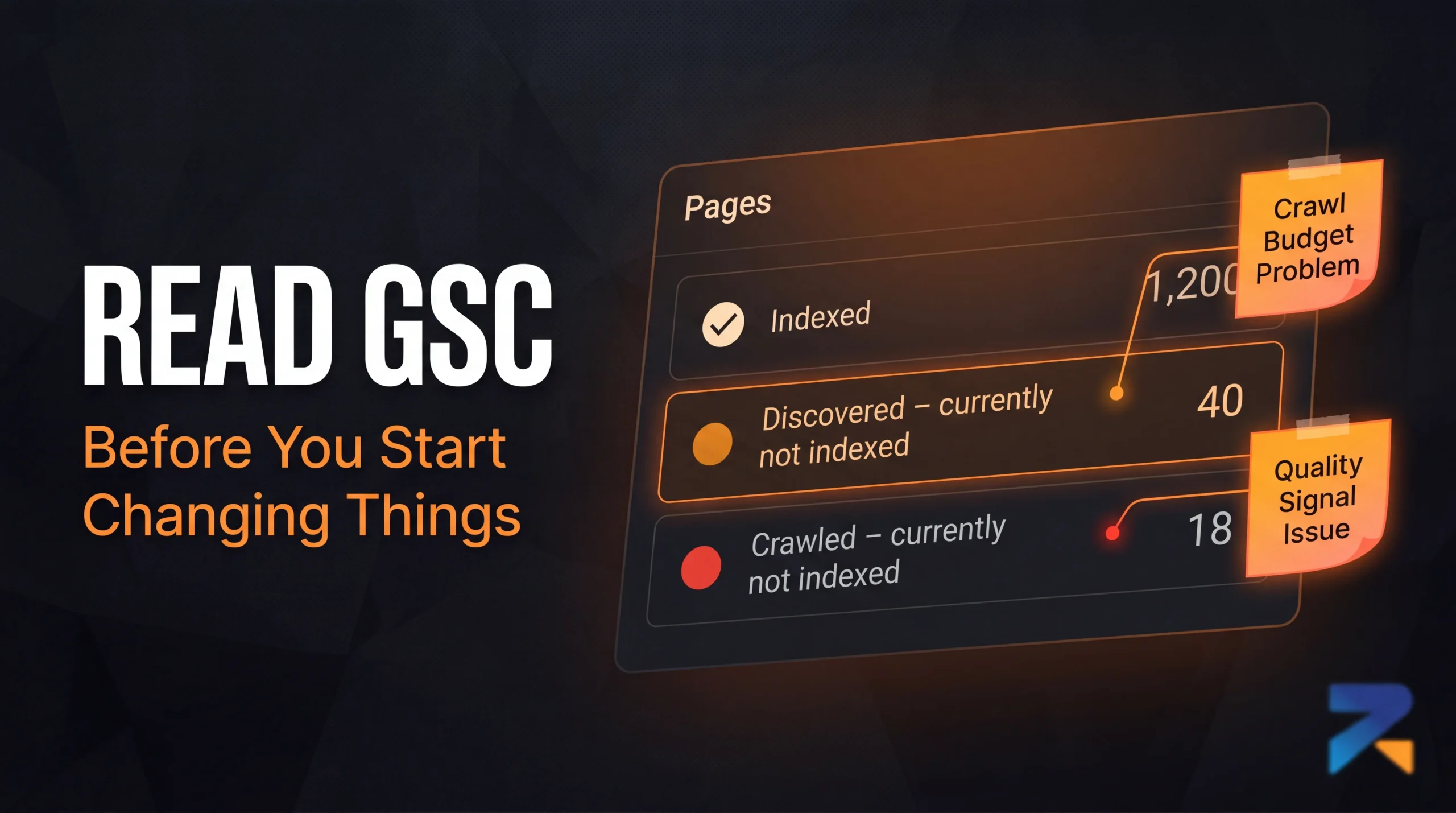
Go to Search Console, open the Pages report, sort by status. What you’re looking for is the ratio: how many indexed, how many “Discovered – currently not indexed,” how many “Crawled – currently not indexed.”
If “Discovered” is the dominant problem, you’re dealing with crawl budget. Google hasn’t visited most of your pages yet. The fix is internal link structure and site speedthose are the two signals that earn crawl budget back fastest.
If “Crawled – currently not indexed” is the dominant problem, fixing the sitemap won’t help. Publishing more content won’t help either. Google already visited those pages and made a decision not to include them. That decision is based on content quality signals, relevance, or a domain-level trust issue. Different problem, different solution.
The URL Inspection Tool is your ground truth on individual pages. Run it on a page that should be indexed and isn’t. If it says “URL is not on Google” even after you request indexing, you’re looking at a crawl accessibility or robots issue. If it was indexed and then dropped, that’s a quality signal event. The error message alone tells you which direction to go.
Don’t start making changes until you’ve looked at both the aggregate status and a few individual URLs. Making the wrong fix wastes time and sometimes makes things worse.
What to Actually Do After You Take Over
First thing: go to Wayback Machine and pull the robots.txt from the domain’s last active period. Compare it line by line to what’s live now. Then audit the canonical tags across your templatesnot just the homepage, the templatesbecause one wrong canonical in a page type can affect hundreds of URLs at once. Submit a fresh sitemap under your new GSC property and don’t assume anything carried over from the previous setup. If you’re migrating an existing site to the aged domain, the full process is covered in how to migrate an iGaming site to an aged domainbut the technical cleanup sequence applies either way.
Once the technical layer is clean, build your internal link structure before you try to scale page count. A silo of 15 to 20 pages that are properly connected to each other will get indexed faster and more completely than 80 pages spread across a flat architecture. Use the homepage and your top-level category pages to deliberately route Googlebot toward your priority content.
If the domain was offline for more than six months before you acquired it, manually request indexing for your five most important pages through the URL Inspection Tool. Not all of themjust the five that matter most. Google has rate limits on crawl requests and if you spam every page you just create noise.
For niche mismatch situations, the content strategy in the first 30 days is everything. If you bought a domain with travel or finance history and you’re building a casino affiliate on it, publish gambling-focused content hard and consistently from day one. The faster Google sees a clear, unambiguous topical signal, the faster it recalibrates what the site is about.
How Long Is Too Long to Wait?
On a clean aged domain with no technical issues and a decent internal link setup, you should see movement within 2 to 4 weeks. Not everything indexedbut pages shifting from “Discovered” to “Crawled” and some making it into the index. That’s the expected trajectory.
If nothing has shifted in 30 days after you’ve sorted the technical layer, stop waiting and start diagnosing. Run the backlink audit properly, look at which pages are getting indexed versus which aren’t, and compare the topic relevance across both groups. A pattern in that comparison usually tells you something.
Sixty days with no indexation movement anywhere on the site is a structural problem. At that point you’re looking at either a domain that was sold to you with a hidden quality issue, or a technical problem that hasn’t been found yet. Either way, more content and more patience isn’t the answer.
There’s a difference between giving Google time to work and ignoring a signal that something is broken. Know which situation you’re in.
Every page that eventually ranks had to get indexed first. All the work that went into the domain acquisition, the content build, the link profilenone of it matters until Google decides to put those pages in the index. This is the part most operators rush past, and it’s where a lot of aged domain investments quietly underperform.
If you want domains that start from a cleaner baselineproperly vetted history, no technical baggage baked in from previous Rexusdomain checks every domain before it hits the marketplace. You still run your own technical audit after takeover. But you’re not starting from scratch trying to figure out what the last person left behind.
Related Guides
- Best Aged Domain Marketplace for iGaming SEO (2026)
- Best aged domain marketplaces 2026 — top 7 platforms ranked
- How to Build a PBN for iGaming SEO Using Aged Domains
- Where to Buy Aged & Expired Domains in 2026: The Complete Buyer’s Guide
- Aged Domain Sellers You Can Trust: How to Vet a Premium Marketplace
Sources & Further Reading
Frequently Asked Questions
How do I get an aged iGaming domain re-indexed quickly after acquisition?
After publishing content on the aged domain: (1) add the domain to Google Search Console immediately; (2) submit an XML sitemap covering all published URLs; (3) use the URL Inspection tool to manually request indexing of priority pages (up to 10 per day); (4) acquire 2-3 quality backlinks pointing to the domain within the first 2 weeks to trigger Googlebot crawl; (5) ensure robots.txt is not blocking any content; (6) verify the domain has no previous manual action in Search Console.
Why might an aged iGaming domain be slow to index after content rebuild?
Common indexation delays for rebuilt aged domains: (1) the domain had a previous manual action (check Search Console for inherited penalties); (2) Google has the domain in a reduced-crawl state from previous abandonment; (3) thin or duplicate content on the rebuilt pages triggers quality hold; (4) server configuration issues blocking Googlebot (check crawl stats in Search Console); (5) robots.txt accidentally disallowing key directories; (6) canonical tags pointing to the old domain or wrong URL.
Does domain age speed up indexation for new iGaming content?
Yes. Aged domains with existing crawl history and backlinks typically achieve indexation 2-4 times faster than fresh domains. Google allocates higher crawl budget to domains with established authority and link profiles. A rebuilt aged iGaming domain with DR 25+ and active backlinks can achieve indexation of new content within 24-72 hours via sitemap submission, compared to 1-4 weeks typical for fresh domain submissions in competitive niches.
What is crawl budget and how does it affect iGaming sites on aged domains?
Crawl budget is Google determination of how frequently and how deeply to crawl a specific domain based on its authority and update signals. Aged domains with higher authority receive larger crawl budgets — Google revisits their pages more frequently. For iGaming sites on aged domains, higher crawl budget means new content indexes faster and updated content (revised odds, new casino reviews, updated bonus information) reaches the index within hours rather than days.
How do I monitor indexation health for an iGaming site on an aged domain?
Monitor indexation health in Google Search Console: Coverage report (confirmed indexed vs. excluded URLs), Crawl Stats (crawl rate, response time, pages crawled per day), and URL Inspection (per-URL index status). Set weekly targets for percentage of submitted URLs achieving confirmed indexation. For iGaming sites with frequent content updates (daily odds, live promotions), crawl stats anomalies — sudden drops in pages crawled — indicate server issues or crawl budget reduction requiring immediate investigation.
Can indexation problems on an aged domain affect the money site it redirects to?
Yes. If a 301-redirect source aged domain has indexation problems (pages blocked, crawl errors, manual actions), the equity transfer to the money site can be incomplete or delayed. Google must be able to crawl and process the redirect source to pass authority. Verify the 301-redirect source domain is returning proper HTTP 301 headers (not 302 or meta-refresh), is not blocking Googlebot in robots.txt, and has no active manual actions that could contaminate the redirect equity.