
Most iGaming operators who go beyond GoDaddy Auctions end up on one of three platforms: Sedo, NameJet, or Dropcatch. They look at the domain metrics, see something promising, buy it, and assume the process was the same as GoDaddy just a different interface.
It’s not. These three platforms operate on completely different acquisition mechanics. The inventory source is different. The pricing logic is different. The risk profile is different. And for iGaming specifically, getting that distinction wrong costs more than just the purchase price it costs you the time spent deploying a domain that was never going to work.
Here’s what each platform actually is, how the mechanics work under the hood, and which one fits which use case in an iGaming SEO operation.
Three Platforms, Three Completely Different Games
This is the part most guides skip. They compare interface, fees, and inventory size. That’s surface-level.
The real difference is where the domains come from and how the transaction is structured.
Sedo is a marketplace. Someone owns the domain and is actively selling it. NameJet is an expired domain auction platform the original owner didn’t renew, and NameJet caught the domain before it fully lapsed. Dropcatch is a drop catching service it goes after domains that have already been deleted, waiting in the redemption period or full drop window, and competes to register them the second they become available again.
Same end result: you own a domain. Completely different paths to get there. And each path carries different implications for what you’re actually buying.
How Sedo’s Inventory Actually Works
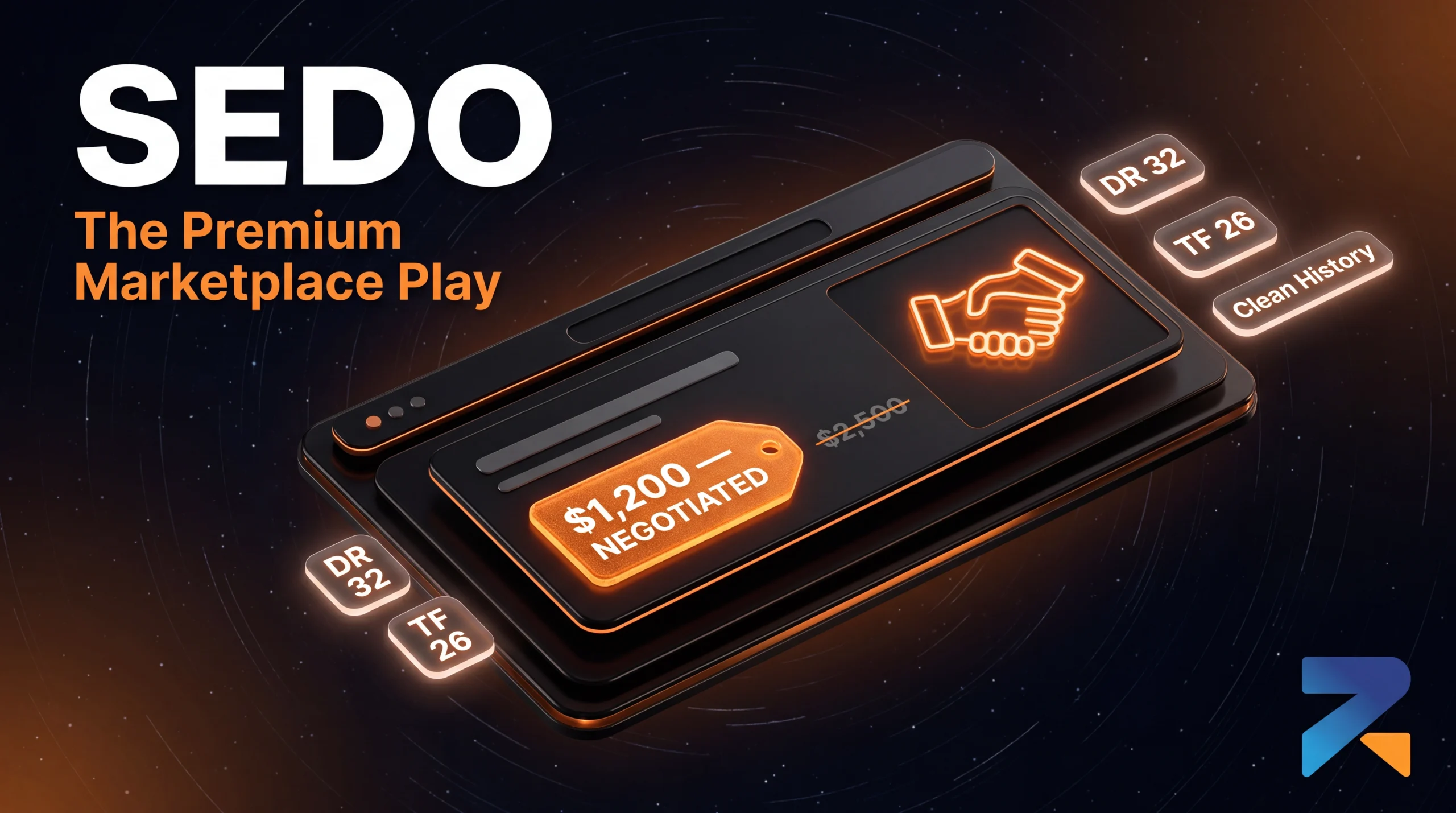
Sedo is not an expired domain platform. It’s a secondary market. The domains listed there are actively owned and actively listed for sale by their current registrants. Think of it like a real estate listing the owner decided to sell and put it on the market.
This changes everything about how you evaluate inventory. On Sedo, you’re not racing against other bidders for a domain that dropped. You’re negotiating or buying outright from someone who has had time to think about what their domain is worth and in most cases, price accordingly.
The inventory skews toward domains that have held value. Owners don’t bother listing garbage on Sedo. The barrier is low, but the effort to list and manage a sale still filters out pure junk. You’ll find aged domains with genuine backlink profiles, real DR history, and in some cases, domains with active or recent traffic.
For iGaming operators, this is actually valuable. A domain listed on Sedo by someone who built a legitimate travel, finance, or sports site over 8 years is a fundamentally different asset than a domain that lapsed because the owner forgot to renew.
Pricing Reality on Sedo
Nothing is cheap on Sedo. That’s not a complaint it’s a structural reality.
Sellers set their own prices. Many of them have used Estibot or some amateur valuation tool and anchored to a number that has nothing to do with what the domain is worth for SEO purposes. You’ll see DR 30 domains priced at $4,000 because the seller thinks a five-letter .com is inherently valuable.
The negotiation game on Sedo is real and it works. Make offers through the platform. Sellers who’ve been sitting on a listing for 6-18 months often take 40-60% of their asking price. We’ve seen solid aged domains with TF 25+ and clean history close at $800-1,200 after negotiation that were originally listed at $2,500+.
The broker service Sedo offers is worth knowing about. For premium domains (typically $5,000+), Sedo assigns a broker who mediates. For iGaming operators scaling a PBN or building multiple money sites, this is rarely relevant but it’s there.
When Sedo Makes Sense for iGaming
Use Sedo when you need a specific domain type and you have time to search and negotiate. It’s the right platform if you want domains with intentional content history former finance blogs, sports review sites, news domains the kind of niche relevance that helps an iGaming money site inherit topical signals faster.
Don’t use Sedo when you need volume or when speed matters. You’re not going to efficiently source 10 PBN domains through Sedo negotiations. The per-domain effort is too high for bulk acquisition.
How the Backorder System Works
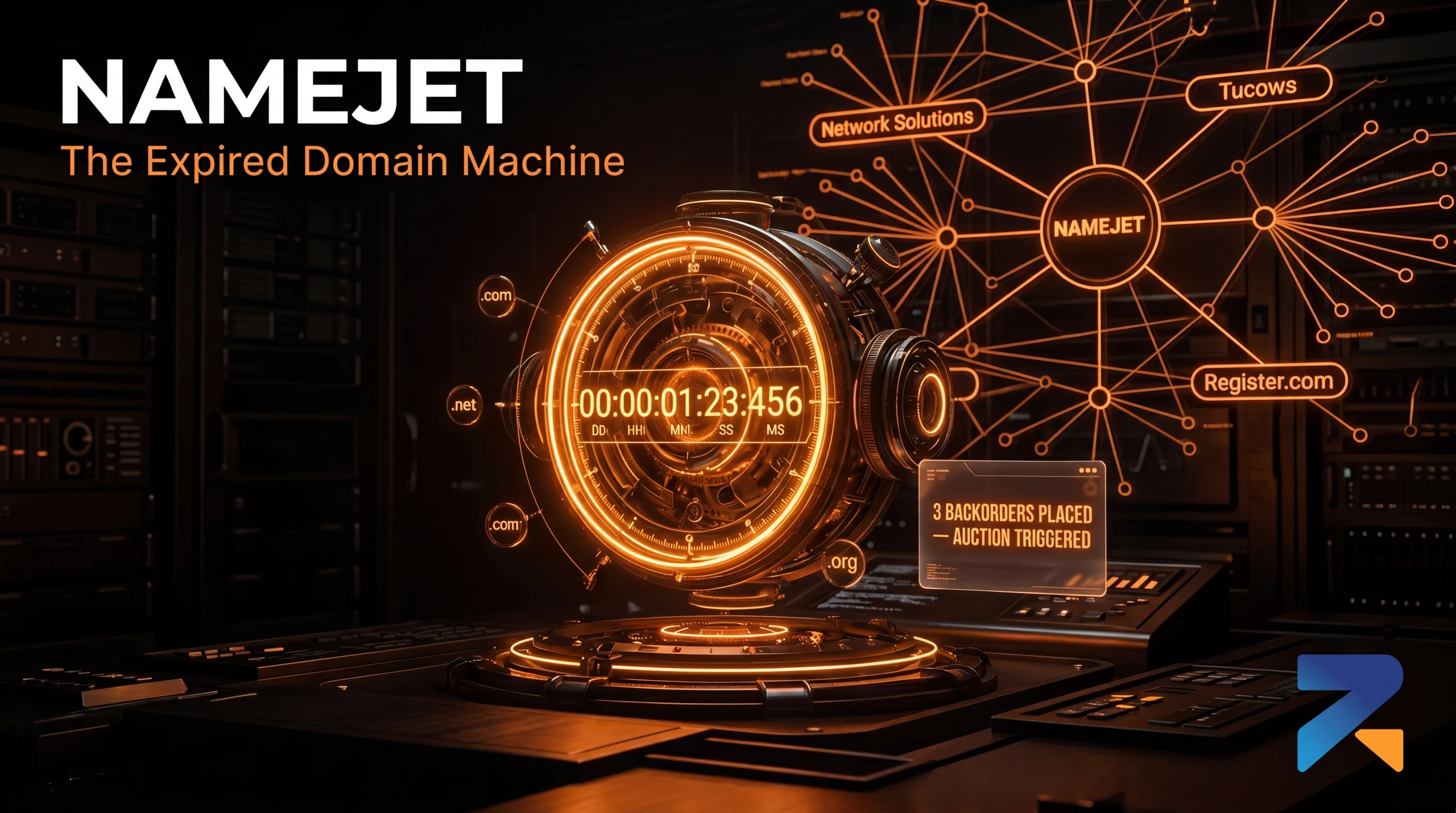
NameJet operates a backorder system. You find a domain that’s about to expire or is in the deletion queue, place a backorder (typically $69 base fee), and NameJet attempts to catch it when it lapses.
Here’s the thing NameJet has formal partner relationships with Network Solutions, Register.com, Tucows, Enom, and several other major registrars. This means when a domain registered through those registrars expires, NameJet gets first look before it enters the public drop pool. That partner access is the core of NameJet’s value proposition.
If only one person backordered a domain, they get it at the base fee. If multiple people placed backorders, it goes to auction among the backorder holders. This is where pricing escalates. Popular domains with visible DR or TF metrics get multiple backorders, and auction prices for anything respectable routinely hit $500-2,000+.
Inventory Quality and What You’re Actually Getting
NameJet’s inventory is primarily genuine expired domains domains that real businesses and publishers owned, renewed for years, then eventually stopped paying for. The supply of legitimate aged assets here is substantial.
But there’s a catch specific to iGaming evaluation. Because NameJet catches domains at expiry rather than after a long sale process, the market moves fast. You’re evaluating domains from a backorder queue, often with a window of a few days to research before the auction closes.
Operators who do this well run Ahrefs and Majestic simultaneously on every candidate not one or the other. DR tells you one thing, Trust Flow tells you another. A domain that looks clean on Ahrefs and shows TF 8 on Majestic has a problem. That’s not a coincidence. The full audit workflow matters here. Before committing to any backorder, the audit process described in the iGaming aged domain audit guide should be non-negotiable.
Where NameJet Wins
Volume and freshness. NameJet cycles through more expired inventory than any other single platform. For operators building or scaling a PBN, the backorder feed gives you consistent access to domains that haven’t been picked over by resellers and re-listed at inflated prices.
The quality ceiling is also high. Because NameJet has registrar partnerships, you occasionally find premium aged domains domains that were owned by real media companies, tech startups, or established publishers that never hit the secondary market at all. They just expired and went into the partner catch queue.
The Drop Catch Mechanism Explained

Dropcatch is structurally different from both Sedo and NameJet. It doesn’t partner with registrars. It doesn’t catch domains at expiry. It waits for domains to complete the full deletion cycle past expiry, through the redemption grace period, into the pending delete phase and then races to register them the instant they’re released back into the open pool.
This is a technical arms race. Multiple drop catchers (Dropcatch, SnapNames, Pool, and others) fire registration attempts at domain registries milliseconds after a domain becomes available. There’s no guarantee of success. There’s no backorder that reserves your place in line. Dropcatch wins some, loses some, and you only pay if they catch it.
The auction structure on Dropcatch runs among Dropcatch users who placed catches on the same domain. If you’re the only one, you pay a low fixed fee often $25-60. If multiple users are competing, it goes to auction. The prices stay lower than NameJet on average because Dropcatch doesn’t have the same registrar partnerships, which means it misses some domains NameJet catches at the partner level before full drop.
Why the Price Difference Exists
Dropcatch inventory is genuinely cheaper for one simple reason: the competition is thinner. Fewer operators are monitoring the Dropcatch queue versus the NameJet backorder feed. Many serious iGaming domain buyers aren’t even aware Dropcatch exists as a separate platform they assume all drop catching happens through NameJet or GoDaddy’s backorder service.
That creates an arbitrage opportunity. Domains that fall through NameJet’s partner catch because they were registered through registrars outside NameJet’s network end up in the public drop pool where Dropcatch competes. The quality can be identical. The price is lower by default.
What You’re Actually Risking
The risk with Dropcatch is the chaos of the drop process itself. Because you’re catching domains after full deletion rather than at expiry, there’s a window sometimes weeks where the domain has been offline completely. No DNS, no content, just gone.
Google handles this. A domain that drops and goes dark doesn’t permanently lose its signals. The backlinks still exist. The historical authority is recoverable. But the indexation resets faster after a full drop than after a clean transfer. This means your rebuild timeline after a Dropcatch acquisition is typically longer than after a Sedo purchase where the domain maintained continuous registration. The indexation guide for aged domains breaks down exactly what happens during this window and how to compress recovery time.
Head-to-Head: What Matters for iGaming
| Sedo | NameJet | Dropcatch | |
| Inventory type | Active seller listings | Expiring domains via registrar partners | Publicly dropped domains |
| Price range | $500 – $10,000+ (negotiable) | $69 – $3,000+ (auction-driven) | $25 – $1,500 (lowest ceiling) |
| Research window | Days to weeks | 24–72 hours | Hours before drop |
| Content history quality | High (intentional sellers) | Medium-high | Medium (drop gap exists) |
| Speed of acquisition | Slow | Medium | Fast but unpredictable |
| Volume potential | Low | High | High |
| Best for | Quality money site domains | PBN scaling, premium expired | Budget PBN, opportunistic buys |
The iGaming-specific consideration that doesn’t appear in this table: niche relevance. Sedo gives you time to filter by the domain’s original niche using Wayback Machine before buying. NameJet gives you 48 hours to do the same. Dropcatch gives you almost none you’re working from backlink profile and registration history only. For a money site where topical relevance matters, that time constraint is material.
How to Use All Three Without Wasting Money
The operators doing this right aren’t choosing one platform. They’re using all three for different parts of the acquisition stack.
Sedo for money site domains. Take your time, negotiate hard, verify history thoroughly through the Wayback Machine workflow before pulling the trigger. Pay more, but know exactly what you’re getting.
NameJet for PBN tier one and tier two domains. Set up consistent backorder monitoring on domains that match your target profile DR 20+, TF 15+, clean referring domain spread. Run the audit fast but run it completely.
Dropcatch for budget PBN domains and opportunistic catches. Monitor for domains that fall outside NameJet’s partner network. Be prepared for higher post-acquisition work faster indexation push, earlier content deployment to compensate for the drop gap.
None of these platforms replaces proper vetting. The platform only determines how you access the domain. Whether it’s actually worth deploying in an iGaming context that’s a separate question entirely, and the answer lives in the backlink profile, spam history, and Wayback data, not in the marketplace interface.
If you want aged domains that have already been vetted for iGaming use clean history confirmed, metrics verified, ready to deploy Rexusdomain’s inventory skips the auction grind entirely.
Related Guides
- Best aged domain marketplaces 2026 — top 7 platforms ranked
- Best Aged Domain Marketplace for iGaming SEO (2026)
- How to Build a PBN for iGaming SEO Using Aged Domains
- Where to Buy Aged & Expired Domains in 2026: The Complete Buyer’s Guide
- Aged Domain Sellers You Can Trust: How to Vet a Premium Marketplace
Sources & Further Reading
Frequently Asked Questions
Is Sedo or NameJet better for buying aged iGaming domains?
NameJet typically carries higher-authority aged domains due to registrar partnerships with Network Solutions and Register.com, making it better for premium iGaming buys. Sedo has broader inventory and supports private listings, which suits buyers with specific niche requirements or budget flexibility.
What is DropCatch and how does it differ from Sedo and NameJet?
DropCatch specialises in catching expired domains the moment they enter the deletion phase, competing in real-time auctions. Unlike Sedo or NameJet, DropCatch inventory is entirely drop-based — no private listings, no aged domains held back from the market. It suits buyers who monitor specific targets and move fast.
Can I find iGaming-specific aged domains on GoDaddy Auctions?
Yes. GoDaddy Auctions lists thousands of expiring domains daily, including iGaming-relevant .com and .net drops. Use the Majestic Trust Flow filter and keyword search to isolate casino, betting, and poker domains. Volume is high but manual vetting is essential — GoDaddy does not pre-screen for spam history.
What minimum Trust Flow should I target for a PBN domain?
A Trust Flow of 15+ is the minimum for a functional PBN node. For iGaming niches, aim for TF20+ with a Topical Trust Flow mapping to gambling, entertainment, or news categories. Trust Flow under 10 rarely produces measurable ranking movement in competitive casino and betting SERPs.
Are auction platforms like NameJet and Sedo safe for domain purchases?
Both NameJet and Sedo are established platforms with escrow-backed transactions, making them structurally safe. The risk is not the platform but the domain itself — neither platform vets for spam history, manual penalties, or link profile quality. Always run Ahrefs and Wayback Machine checks before bidding.
What is the typical price range for aged iGaming domains on these platforms?
Budget iGaming aged domains sell for $100-$500 at auction on DropCatch and GoDaddy. Mid-tier domains with DA20+ and clean histories run $500-$2,000 on NameJet. Premium aged iGaming domains with TF30+ and proven gambling backlinks can exceed $5,000 on Sedo private listings.