
Aged Domain Sellers You Can Trust: How to Vet a Premium Marketplace Before You Buy
“Premium aged domains” gets used as a marketing label far more often than it gets earned. Before you pay a premium price, you need a way to tell a genuinely trusted aged domain marketplace from a seller who is just calling unvetted inventory “premium.” This guide gives you a concrete checklist for vetting aged domain sellers, explains what “premium” should actually mean in terms of measurable criteria, and flags the specific red flags that separate trustworthy sellers from risky ones.
Last updated: July 2026
What “Premium” Should Actually Mean
A domain marketed as premium should meet several measurable criteria, not just carry a high price tag:
- Verified metrics, not seller screenshots — Trust Flow, Citation Flow, and Domain Rating pulled live from Majestic/Ahrefs at the time of listing, not a stale image.
- Documented penalty-free status — explicit confirmation the domain carries no active Google manual action.
- Clean, relevant content history — verifiable via the Wayback Machine, showing the domain was never a parked page, spam farm, or off-topic site.
- Niche-relevant backlink profile — referring domains topically aligned with your intended use (e.g. iGaming, finance, health), not just high raw authority numbers.
- Trademark and Legal Risks When Buying an Aged or Expired Domain
Marketplaces that can show all four, on request, for any listing are operating at a genuinely premium standard. Marketplaces that only show a price tag and a Domain Rating number are not.
How to Vet an Aged Domain Seller: 7-Point Trust Checklist
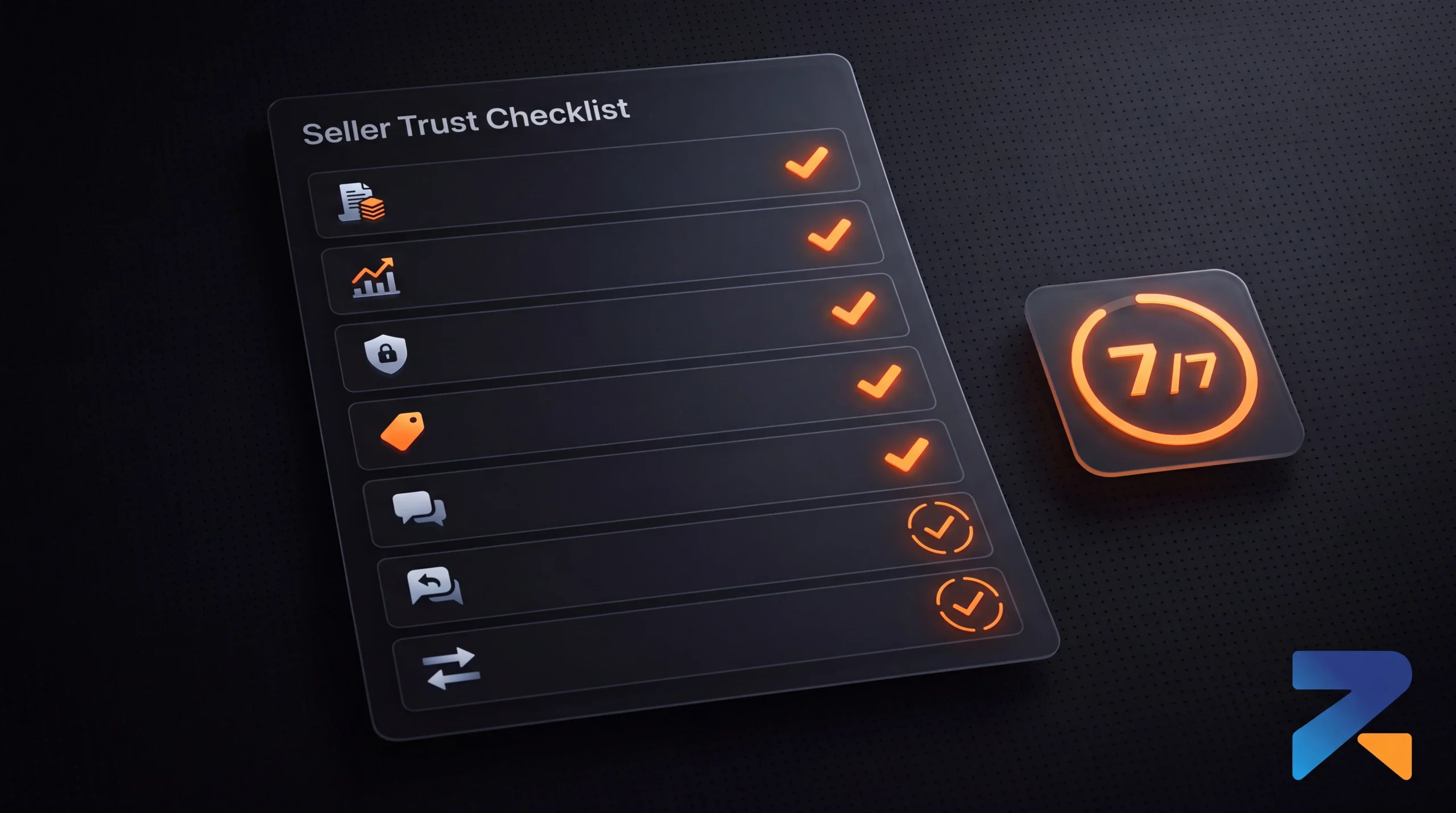
| # | Check | What to Look For |
|---|---|---|
| 1 | Vetting process disclosed publicly | Seller explains, in writing, exactly what checks each domain passes before listing (not just “hand-picked”) |
| 2 | Metrics are live, not static | Ahrefs/Majestic data pulled at time of listing or on request, not a months-old screenshot |
| 3 | Manual penalty screening included | Seller confirms Search Console / manual action status before sale, in writing |
| 4 | Transparent, fixed pricing | No hidden buyer’s premiums, no “make an offer” games disguising a lack of a real valuation basis |
| 5 | Independent reputation exists | Seller is discussed (not just self-promoted) in communities like BlackHatWorld, NamePros, or SEO forums |
| 6 | Responsive pre-sale support | Substantive answers to specific due-diligence questions before you pay, not generic copy-paste replies |
| 7 | Clear post-sale transfer process | Written timeline and process for domain transfer, with recourse if metrics were misrepresented |
Trust Signals vs Red Flags
| Trust Signal | Red Flag |
|---|---|
| Publishes its exact vetting methodology (e.g. an eight-point manual process) | Uses vague language like “premium quality” with no defined criteria |
| Discloses niche and vetting scope of its inventory | Claims “millions of premium domains” with no filtering explained |
| Confirms penalty-free status in writing before sale | Silent on manual action status, or says “buyer’s responsibility to check” |
| Fixed, disclosed pricing with all fees itemized | Opaque pricing, negotiable “starting from” prices with no floor shown |
| Verifiable mentions on independent forums/review sites | Only self-published reviews on the seller’s own site |
Where Trusted Aged Domain Sellers Tend to Cluster
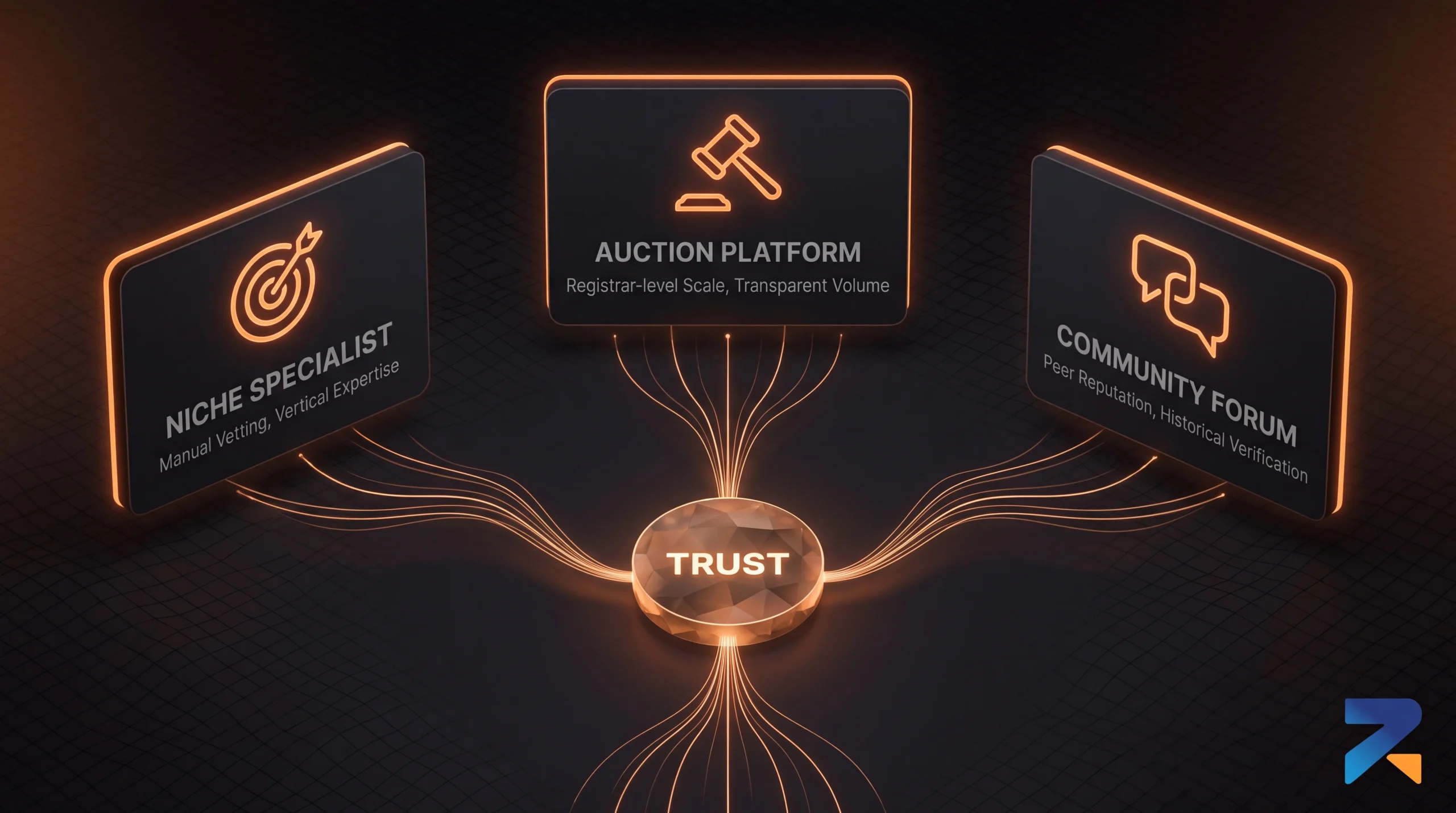
Trust signals concentrate differently depending on the type of seller. Niche-specialist marketplaces (like RexusDomain for iGaming) earn trust through a disclosed, repeatable manual vetting process applied narrowly to one vertical. Large general auction platforms (GoDaddy Auctions, NameJet, DropCatch) earn trust through registrar-level partnerships and transaction volume, but provide little to no content or penalty vetting — buyers must do that layer themselves. Community-vetted sources (BlackHatWorld and NamePros marketplace threads) earn trust through visible transaction history and peer reputation over time, which is exactly why forum threads keep surfacing in search results for “aged domain sellers” — buyers specifically want a trust layer that a polished sales page cannot provide on its own.
5 Questions to Ask Before You Pay
A seller’s answers to these five questions, asked directly before any payment, tell you more than their landing page copy ever will:
- “Can you show me this domain’s live Ahrefs/Majestic report right now?” A trustworthy seller can pull this on demand. Hesitation, or a pre-made screenshot, is a signal to slow down.
- “Has this domain ever had a manual action or algorithmic penalty?” Ask for written confirmation, not a verbal assurance. A seller who can’t or won’t check Search Console history is a bigger red flag than an unclear answer on its own.
- “What was this domain used for historically?” A seller who has actually reviewed the Wayback Machine history for a listing can answer this in specifics. A vague “general content” answer usually means no one checked.
- “What happens if the metrics don’t match what was advertised after transfer?” Look for a specific remedy in writing — refund window, replacement, or partial credit. No stated recourse means the risk sits entirely with you.
- “How long has this domain been in your inventory, and has anyone else made an offer on it?” Legitimate sellers answer this plainly. Artificial urgency (“3 buyers interested right now”) with no way to verify it is a pressure tactic, not a trust signal.
None of these questions require specialized tools, just the willingness to ask, and to walk away if the answers are vague.
In practice, most sellers who fail this checklist don’t fail on all seven trust points at once — they fail quietly on one or two, usually metrics verification and penalty disclosure, while the rest of the listing looks polished enough to pass a casual glance. That’s exactly why a checklist matters more than a gut-check: a domain can look “premium” in every visible way (clean design on the sales page, a high Domain Rating number front and center, confident copy) and still fail on the two checks that actually predict whether it will hold rankings after you deploy it. Treat the checklist as a floor, not a formality — a domain that passes all seven points on request is a meaningfully lower-risk purchase than one that passes five and gets vague answers on the rest.
Frequently Asked Questions
What makes an aged domain “premium”?
A premium aged domain should have verifiable metrics (not seller-provided screenshots), documented penalty-free status, a clean and topically relevant content history confirmed via the Wayback Machine, and a niche-relevant backlink profile — not just a high price tag or a high raw Domain Rating number.
How do I know if an aged domain marketplace is trustworthy?
Check whether the seller publicly discloses its exact vetting process, confirms penalty status in writing before sale, offers fixed and fully itemized pricing, and has a verifiable reputation in independent communities like BlackHatWorld or NamePros rather than only self-published testimonials.
Are aged domain sellers on forums like BlackHatWorld safe to buy from?
They can be, provided you check the seller’s transaction history and peer feedback within the forum itself, and still independently verify metrics, content history, and penalty status yourself before paying — forum reputation reduces risk but does not replace due diligence.
What’s the difference between a curated marketplace and a general aged domain seller?
A curated marketplace applies a disclosed, repeatable vetting process to every listing before it goes up for sale. A general seller or auction platform typically lists raw inventory with basic metrics and leaves vetting entirely to the buyer.
Should I avoid marketplaces that don’t disclose their vetting process?
Treat it as a significant caution flag. A seller unwilling to explain, in writing, what checks a domain passes before listing is asking you to trust a price tag rather than a process — verify independently or look elsewhere.
Related Guides
- Best Aged Domain Marketplace 2026: Top 7 Platforms Reviewed
- How to Audit an Aged Domain Before You Buy
- How to Buy Aged or Expired Domains: A Step-by-Step Guide
- Where to Buy Aged & Expired Domains in 2026: The Complete Buyer’s Guide
- How to Pay Safely When Buying an Aged or Expired Domain
- Trademark and Legal Risks When Buying an Aged or Expired Domain
- How to Resell or Flip an Aged Domain: Exit Strategy, Valuation, and Where to List It