
If you’re running an iGaming affiliate site, your strategy comes down to one fundamental choice at launch: the brutal slow grind of a fresh domain, or trying to bypass the line with an aged domain?
This isn’t a minor detail. It’s a decision that defines how much trust Google grants you on day one.
Both paths can lead to the top of the SERP, but the risk profiles are fundamentally different. For highly competitive gambling SEO, you need to focus only on speed, verifiable authority, risk exposure, and when you can actually turn a profit.
Understanding the Key Players
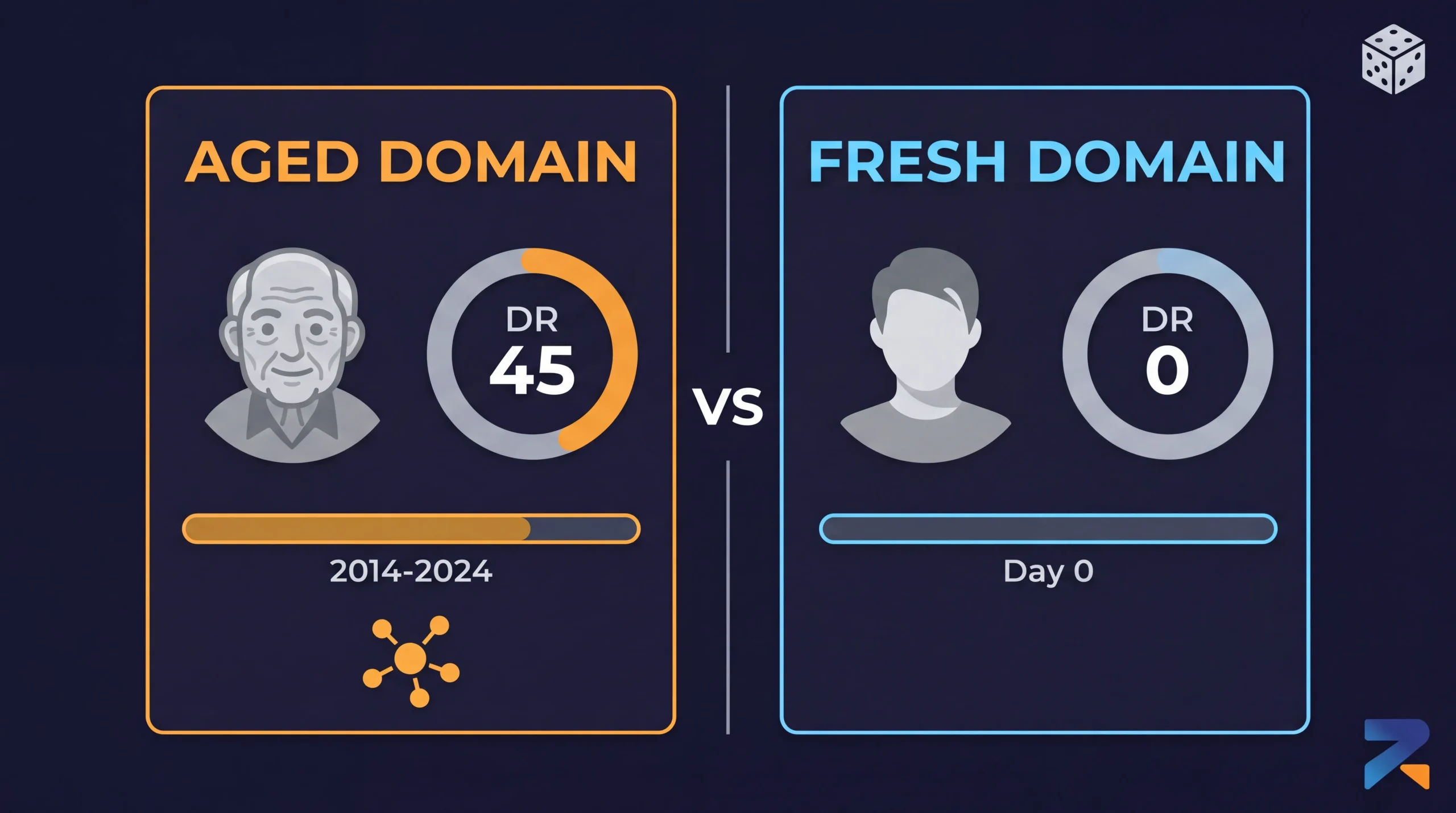
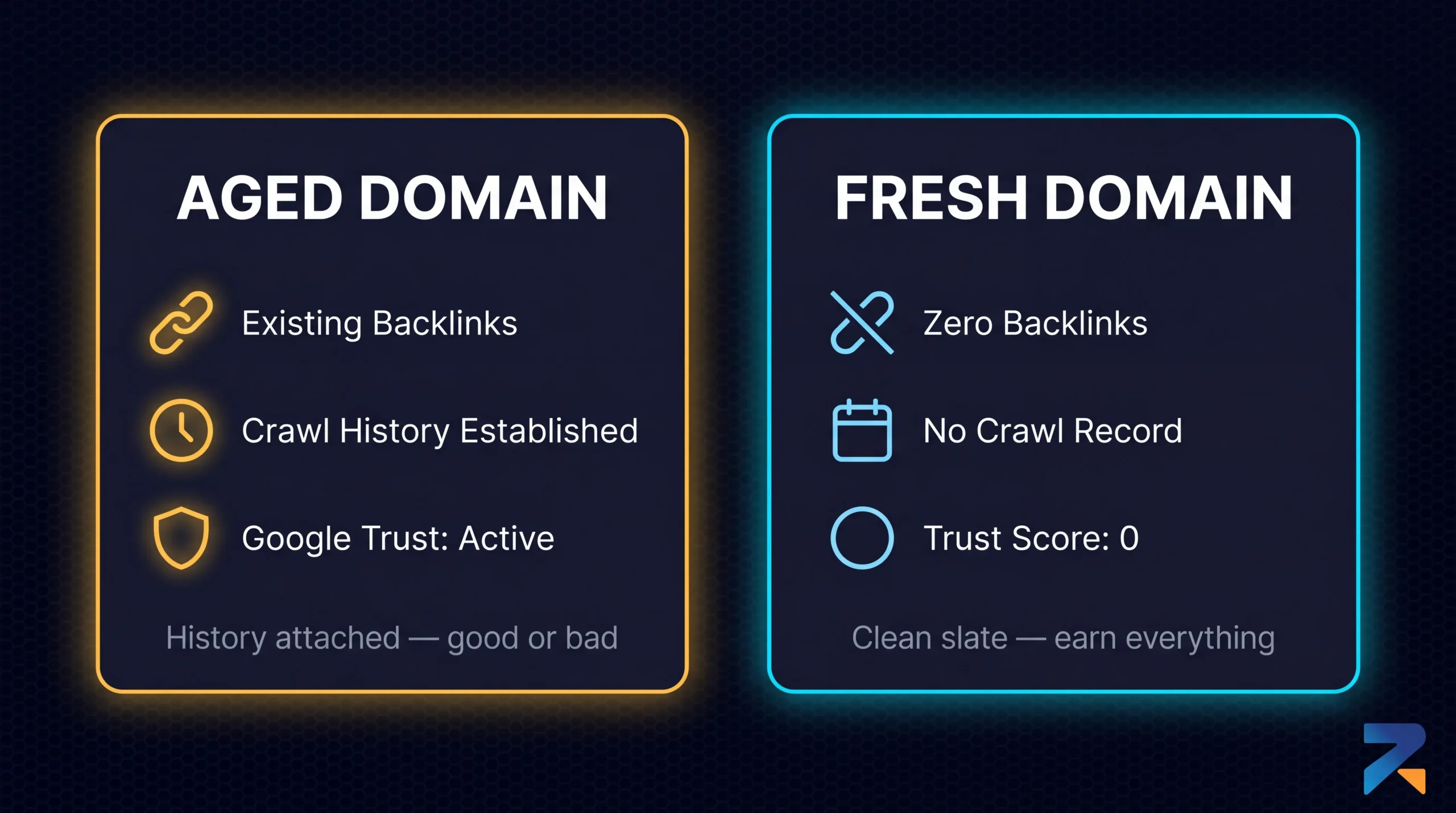
Forget the textbook definitions. A fresh domain is zero. Zero history, zero backlinks, zero trust. You are starting from ground zero, waiting for Google to even acknowledge your existence.
An aged domain is a veteran asset. It carries historical baggage, yes, but the goal is clean history packed with high-quality backlinks. The metric isn’t its age. It’s the momentum it retains. Are you willing to assemble the engine while stuck in neutral, or do you want to start with a machine that’s already warmed up?
Speed Factor: Bypassing the Sandbox
Fresh Domain
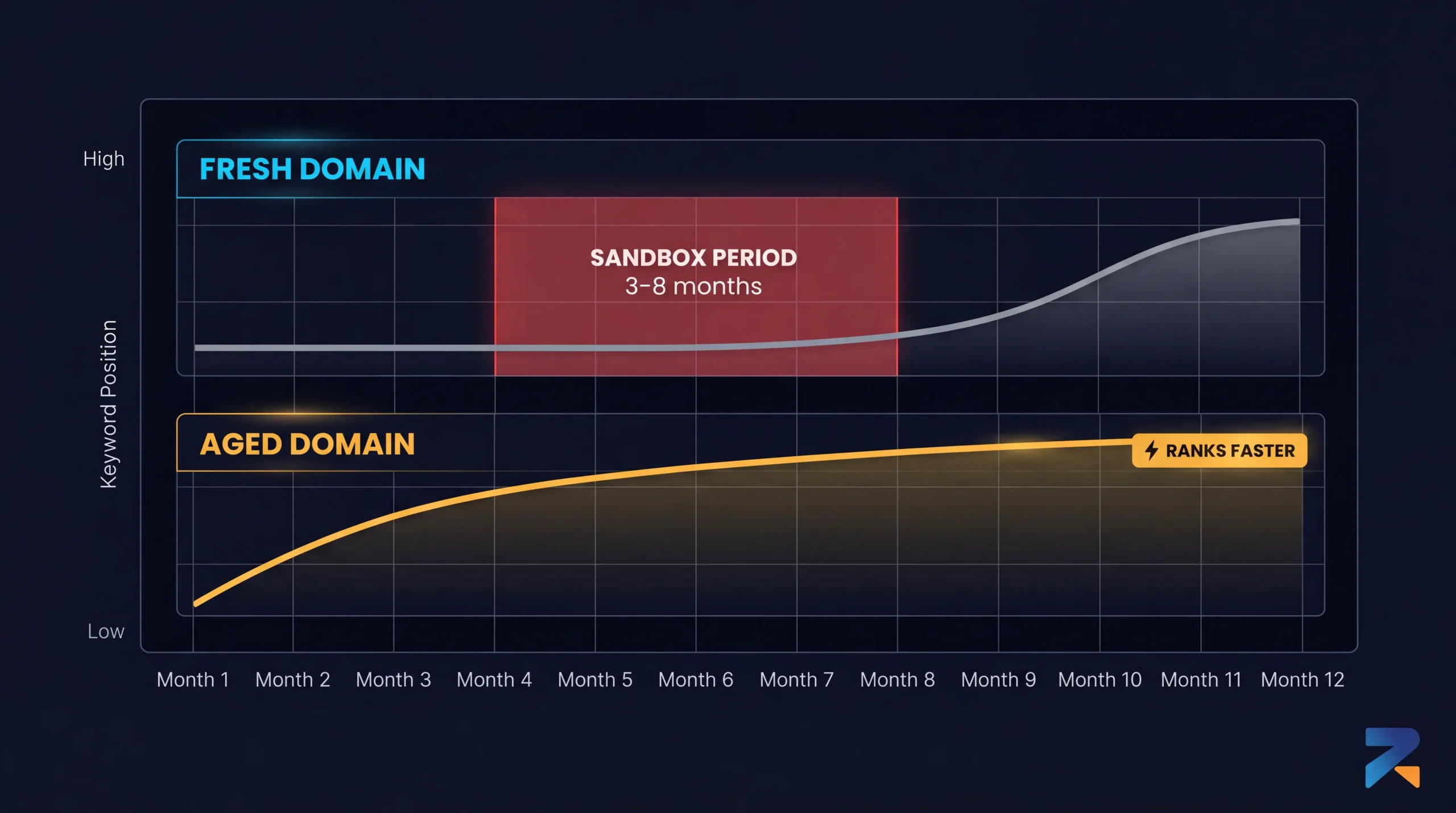
The “Google Sandbox” is not a rumor in iGaming—it’s a brutal reality. A new domain is sentenced to months of near-zero organic visibility. You can write perfect content, yet still be stuck outside the top 100 for six months, sometimes longer, while Google confirms legitimacy. When you’re in a high-value niche, sacrificing months of potential revenue is purely opportunity cost.
Aged Domain
This asset changes the entire timeline. Google has years of data on the domain’s past life: the Wayback footprint and its complete link graph. You typically skip that initial probation period. You’re not a newcomer; you’re an established entity with new ownership. Instead of waiting six months for impressions, you can see ranking movement in a matter of weeks. For high-value, competitive keywords, this head start is easily the most critical factor.
Speed Conclusion: Aged domains win hands down. You cannot buy back the time lost in the sandbox.
Authority: The Problem with Building vs. Buying
Fresh Domain
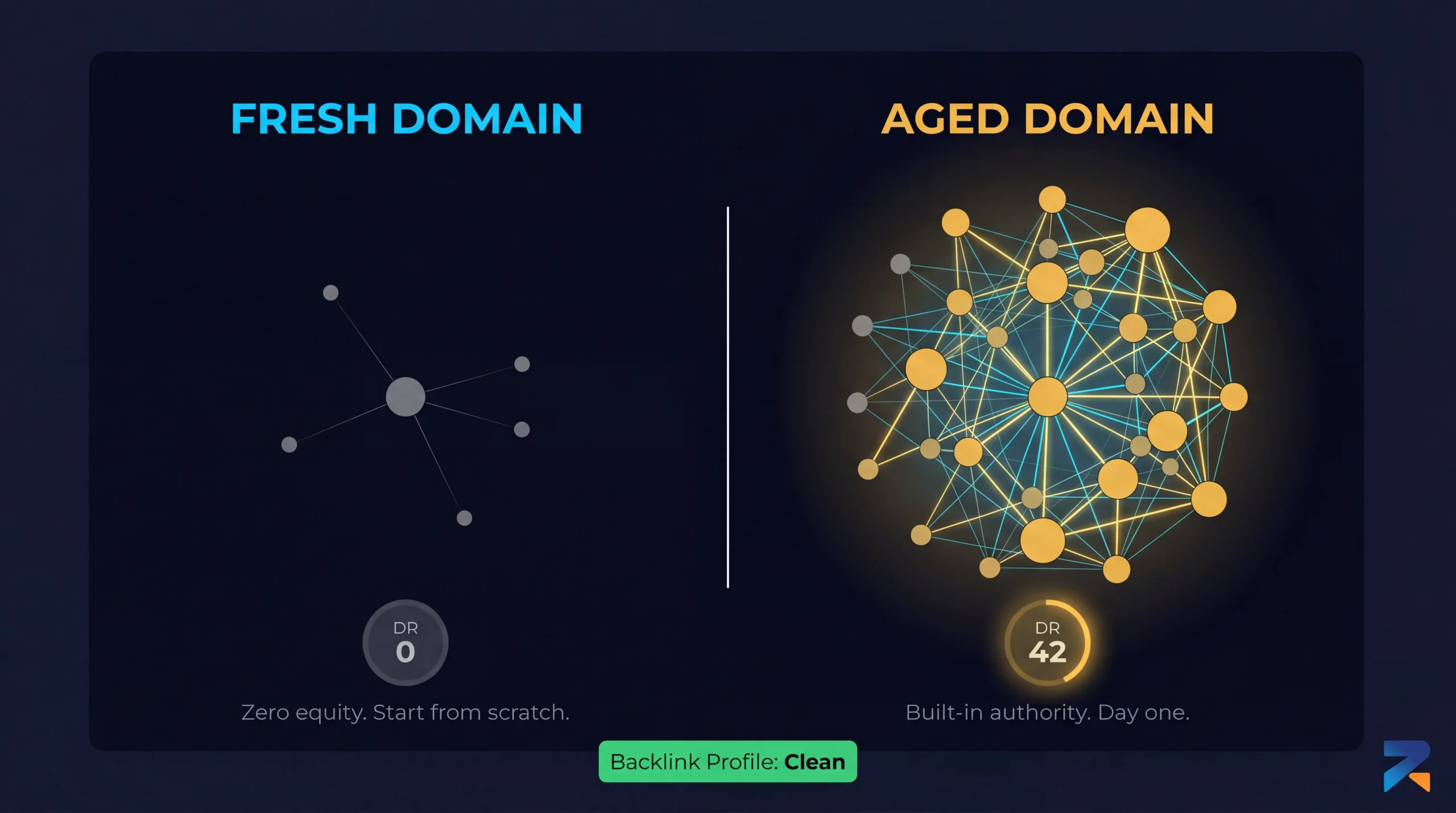
Building a backlink profile from scratch in iGaming is slow, grueling, and expensive. This vertical is hyper-competitive, meaning securing genuinely high-quality, non-spammy links is one of the hardest challenges in SEO. You’re not just paying for placements; you’re battling the intense scrutiny applied to all gambling content. Reaching a Domain Rating (DR) of 30 or higher demands significant budget and months of focused link acquisition—all before you see a single affiliate commission.
Aged Domain
You are not simply buying a domain name here. You are acquiring link equity and the verified work already invested in that asset. Existing links continue to pass power.
But here’s the reality check: The metric looks good, but the history tells another story. The quality is entirely dependent on where you source the aged domain. A discount marketplace might offload assets propped up by old PBN schemes or link farms. This scenario is genuinely worse than starting fresh. You need a clean history, and critically, backlink relevance to your target niche.
Authority Conclusion: An aged domain provides a massive head start. But a strong DR score means very little if the anchors are messy or the domain was abused before.
Risk vs. Reward: Inheriting a Legacy
Fresh Domain
From a historical standpoint, a new domain is safe. You control every move from day one, guaranteeing zero hidden penalties or toxic baggage. The actual risk here is entirely the opportunity cost. You are simply sacrificing traffic, revenue, and compounding authority while you wait 12 months for the sandbox to lift.
Aged Domain
When you buy aged, you inherit a legacy. If the previous owner engaged in reckless practices—cloaking, aggressive redirect abuse, or heavy spam risk—you are effectively buying a time bomb. This part is easy to miss during a quick check.
Your due diligence must include understanding how Google algorithm updates have historically affected iGaming domains. If a site tanked during a previous Core Update, it often still carries those negative signals. The initial price tag is higher, but the potential ROI is exponentially greater, assuming you perform a non-negotiable, comprehensive audit before purchase. A cheap domain can quickly become expensive if it carries old spam with it.
Risk Conclusion: Fresh is cleaner, but a properly audited aged domain offers a dramatically better Total Cost of Ownership (TCO). This hinges entirely on taking the audit process seriously.
Brand Control vs. Niche Relevance
Fresh Domain
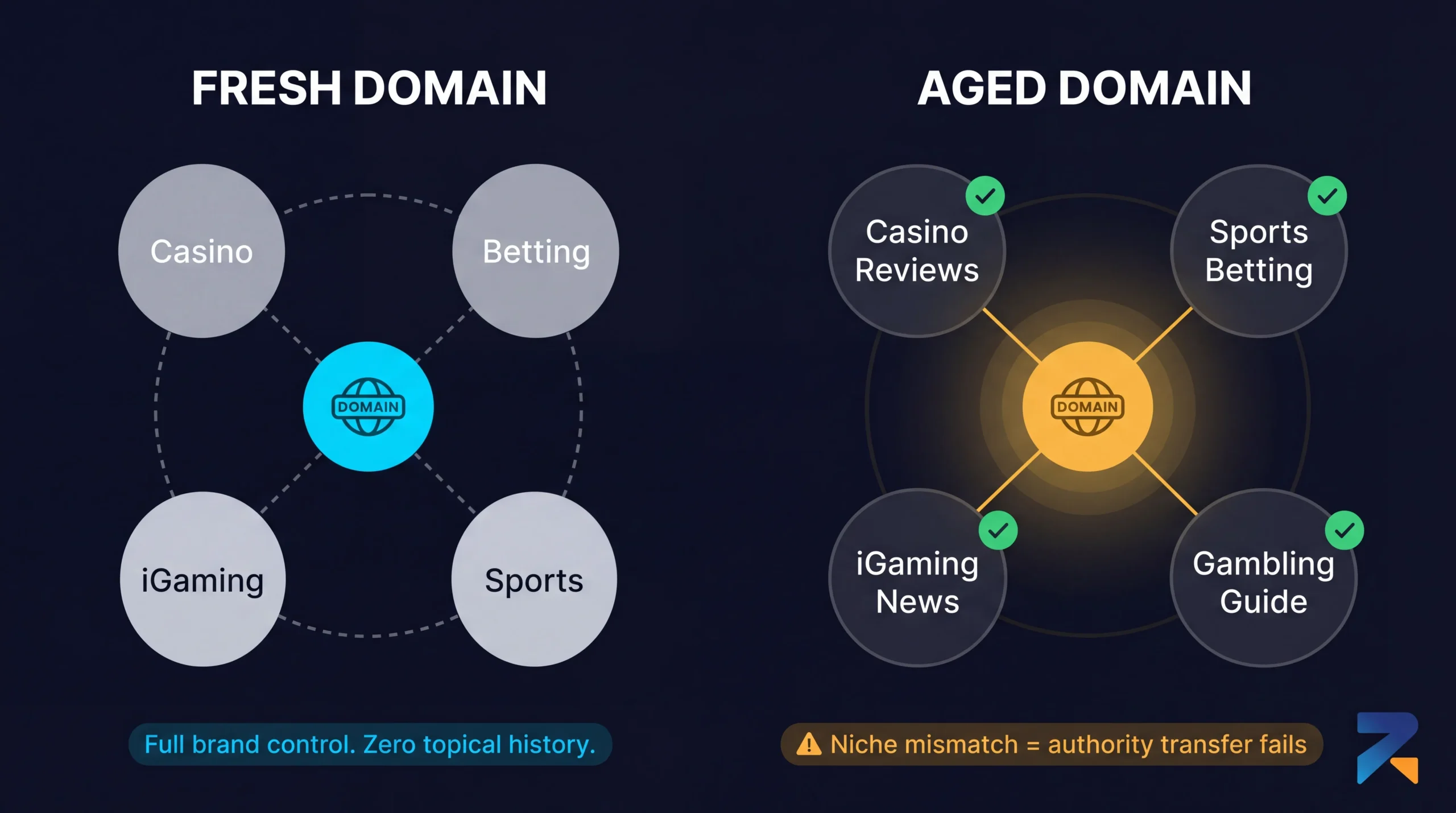
If your absolute top priority is perfect brand alignment—the exact name, TLD, and identity—starting fresh is the only way. You get 100% control, zero compromises.
Aged Domain
You will likely have to settle for an imperfect brand name. This is irrelevant. For affiliate iGaming SEO, topical relevance is king. If you secure an aged domain that was previously a high-authority sports blog or casino review platform, you gain topical equity that a new domain simply cannot compete with. For high-stakes competitive SEO, relevance matters more than people admit.
When a Fresh Domain Actually Makes More Sense
An aged domain isn’t a cure-all. There are specific, rational scenarios where starting new is actually the correct decision:
- The 5-to-10-Year Brand Play: If your goal is establishing a huge, long-term, recognizable operator brand that goes far beyond affiliate SEO, inheriting the compromises of a previous owner’s legacy might create unnecessary friction later on.
- Budget vs. Time Flexibility: If you can comfortably tolerate 6 to 12 months of near-zero organic traffic—and cannot justify the investment for a quality aged domain—a fresh start with a disciplined, low-cost link acquisition approach is a valid path. Just know it will be significantly slower.
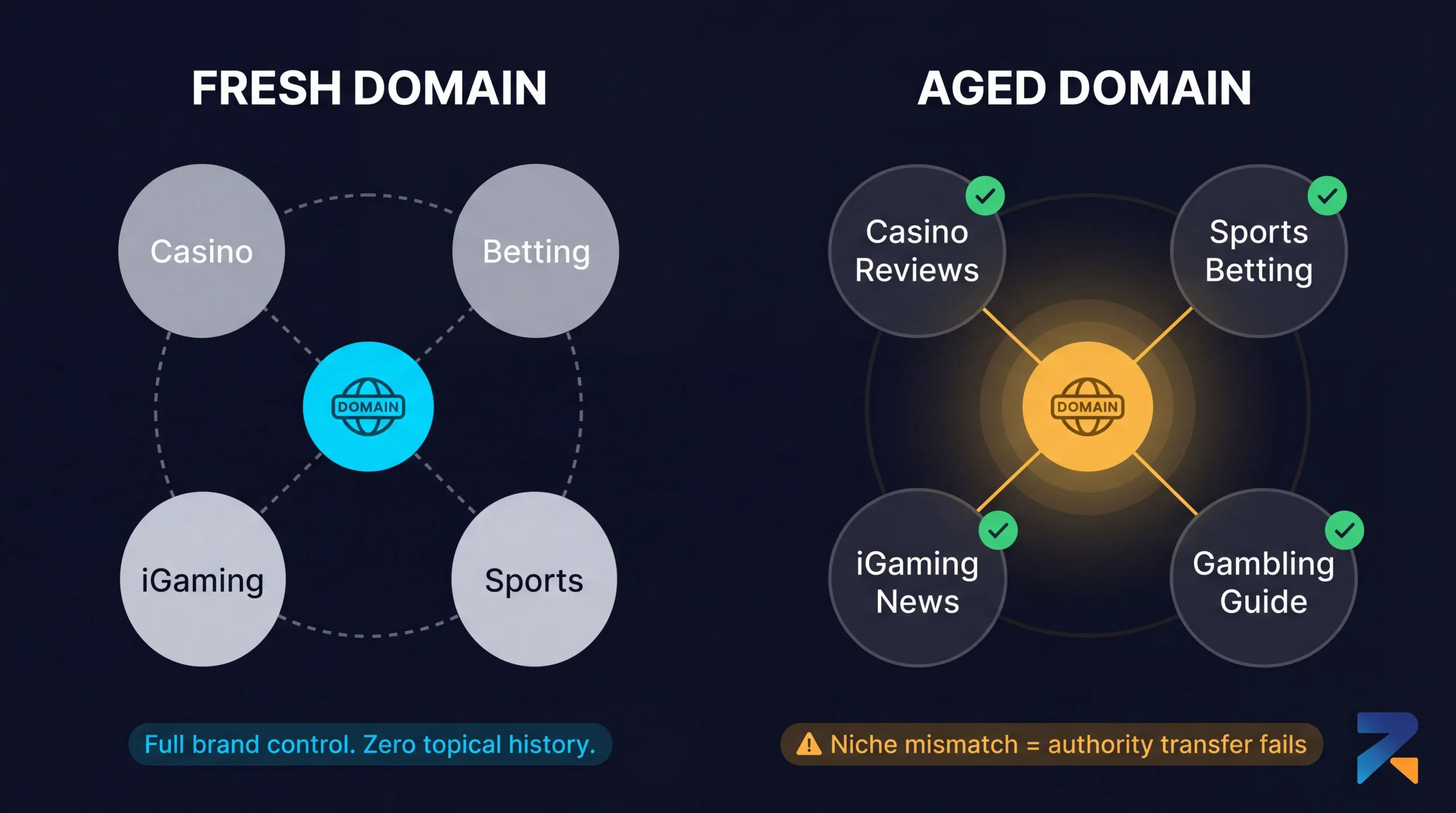
- Irrelevant Inventory: This is the most common buyer mistake. Never purchase an aged domain from a totally irrelevant niche (e.g., travel or cooking) just because the DR score is high. The topic mismatch cancels out the authority benefit. If clean, authentic iGaming or sports history is unavailable, starting fresh is safer than buying a poorly chosen aged asset.
Final Verdict
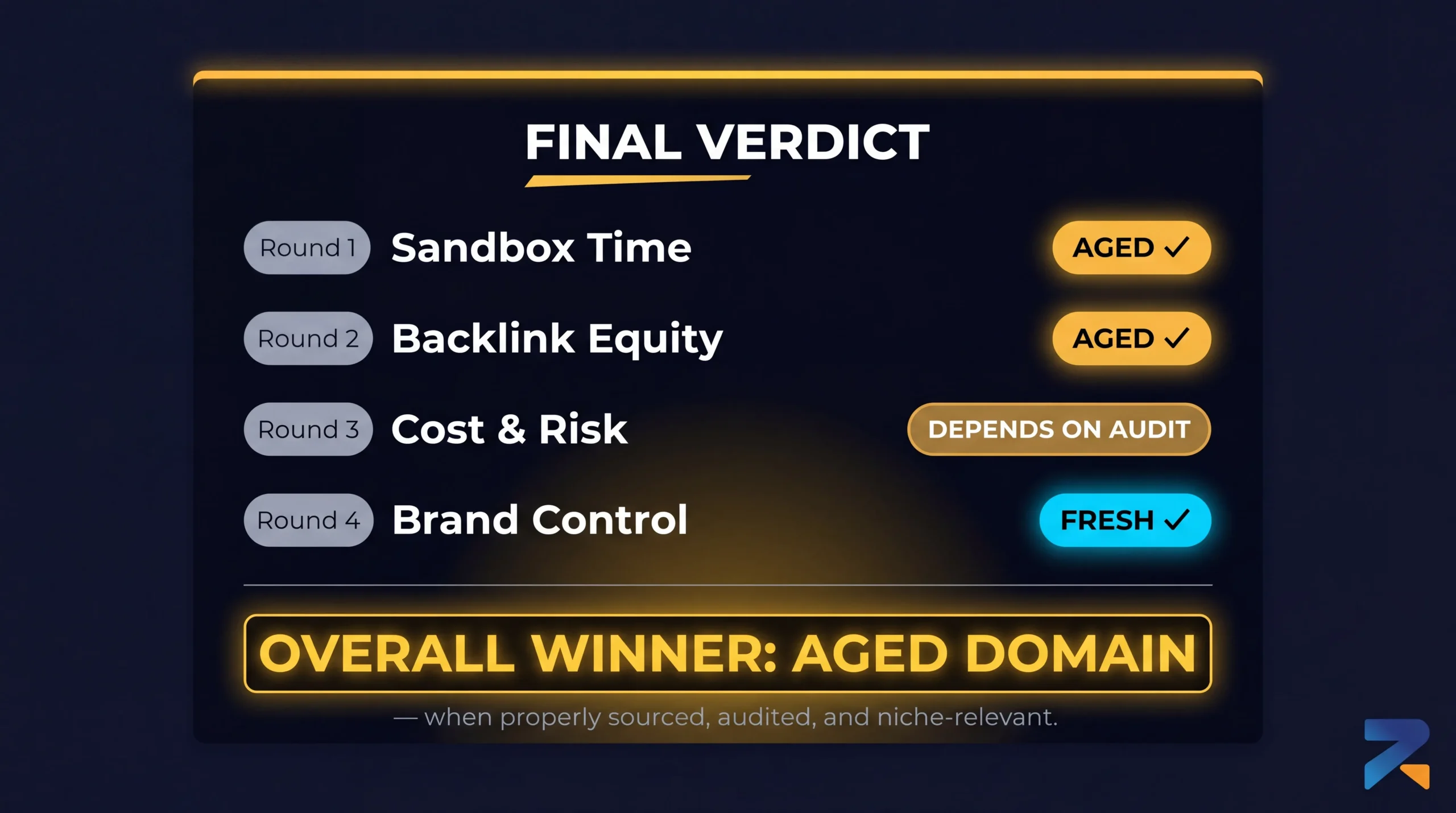
Which one wins?
For the majority of iGaming affiliates operating in a competitive SERP, a properly vetted aged domain is the smarter, faster move. Once that decision is made, here’s the full strategic picture: how aged domains work in iGaming SEO money site, PBN, 301, and geo landing page use cases covered.. It directly solves the two biggest headaches in this niche: the painfully slow time-to-rank and the exorbitant cost of acquiring baseline authority.
But be clear: it’s not a silver bullet. A bad aged domain—one with a messy old anchor text profile, irrelevant links, or a history of penalties—is significantly worse than a fresh one. The victory lies entirely in finding clean inventory and proven real relevance.
Relevance Conclusion: A fresh domain is better for perfect branding. But a topically relevant aged domain crushes it on niche authority and ranking speed.
If you need a deeper dive into the metrics and backlink relevance that separate a winning domain from a losing investment, check out the complete analysis on aged domains in iGaming SEO.
Ready to cut your time-to-rank drastically? If you need aged domains that have passed strict clean history curation for iGaming, go directly to Rexusdomain. They specialize in premium inventory focused on niche relevance and verified quality. Get your high-quality domain now at Rexusdomain.
Related Guides
- Best aged domain marketplaces 2026 — top 7 platforms ranked
- Best Aged Domain Marketplace for iGaming SEO (2026)
- Where to Buy Aged & Expired Domains in 2026: The Complete Buyer’s Guide
- Aged Domain Sellers You Can Trust: How to Vet a Premium Marketplace
- How to Buy Aged or Expired Domains: A Step-by-Step Guide
Sources & Further Reading
Frequently Asked Questions
What is the main advantage of an aged domain over a fresh domain for iGaming SEO?
An aged domain carries existing link equity, Trust Flow, and topical authority accumulated over years of legitimate operation. A fresh domain starts with zero authority and typically requires 6-18 months of link building before competing in iGaming SERPs. For competitive casino and sports betting keywords, aged domains reduce time-to-rank by 60-80% compared to fresh registrations.
Do aged domains always outperform fresh domains for iGaming SEO?
Not always. An aged domain with a clean history and topically relevant backlinks outperforms fresh domains. An aged domain with spam history, manual penalties, or irrelevant link profiles can underperform a well-built fresh domain. Domain age alone provides no advantage — the quality of the historical link profile and content relevance determine actual ranking outcomes.
How much does a quality aged iGaming domain cost compared to a fresh registration?
Fresh domain registrations cost $10-15 per year. Quality aged iGaming domains with verified metrics (DR25+, TF15+, clean history) range from $500 to $5,000+ depending on authority level, niche relevance, and available organic traffic history. The premium reflects accumulated SEO authority that would cost $10,000-$50,000 in link-building campaigns to replicate from scratch.
Can Google penalise an aged domain that changes ownership?
Yes. Google can penalise a domain regardless of ownership change if the domain carries a pre-existing manual action or a severe algorithmic penalty. Spam history, thin content penalties, and unnatural link patterns follow the domain, not the owner. Always request a Google Search Console history from the seller and check for manual actions before completing any acquisition.
What niche should an aged iGaming domain come from?
The ideal aged domain for iGaming SEO has direct niche relevance — previous casino, betting, poker, or gambling-adjacent content. Sports, finance, and entertainment domains are acceptable second-tier sources. Completely unrelated niches (cooking, fashion, tech) provide generic link authority but no topical Trust Flow benefit for iGaming — they require significantly more content work to establish relevance.
How long does it take for an aged domain to pass link equity after 301 redirect?
After a 301 redirect, most link equity transfers within 4-8 weeks. Full ranking benefit typically appears over 3-6 months as Google re-crawls and re-evaluates all linking pages. Some SEOs report faster transfer (2-4 weeks) for domains with small, high-quality link profiles. Domains with hundreds of low-quality links may see slower or partial equity transfer.