
How Much Do Aged Domains Cost? A 2026 Pricing Guide
Aged domain prices typically range from under $100 for a low-authority domain with basic indexation history to several thousand dollars for a domain with strong backlink profiles, clean penalty history, and topical relevance to a competitive niche — the price is driven primarily by referring domain quality, not by age alone.
Last updated: August 2026.
What Actually Drives an Aged Domain’s Price
Age by itself is a weak pricing signal. A 15-year-old domain that sat parked with no content and no links is worth less than a 4-year-old domain with a real publishing history and a clean backlink profile. Buyers and marketplaces price primarily on:
- Backlink profile quality — the number and topical relevance of referring domains matters more than a raw authority score. A domain with 20 relevant, editorial links is usually priced above one with 200 low-quality directory links.
- Content and indexation history — verifiable through the Wayback Machine. A domain that hosted real, indexed content commands a premium over one that was parked or redirected for most of its life.
- Penalty and spam history — a domain with a confirmed manual action or algorithmic penalty sells for a fraction of a clean domain with comparable metrics, if it sells at all.
- Niche and topical relevance — a domain with prior content or backlinks in a buyer’s target niche carries a relevance premium, since it can transfer more usable topical trust.
- TLD — .com generally commands a premium over other TLDs; some ccTLDs carry their own premium in geo-targeted use cases.
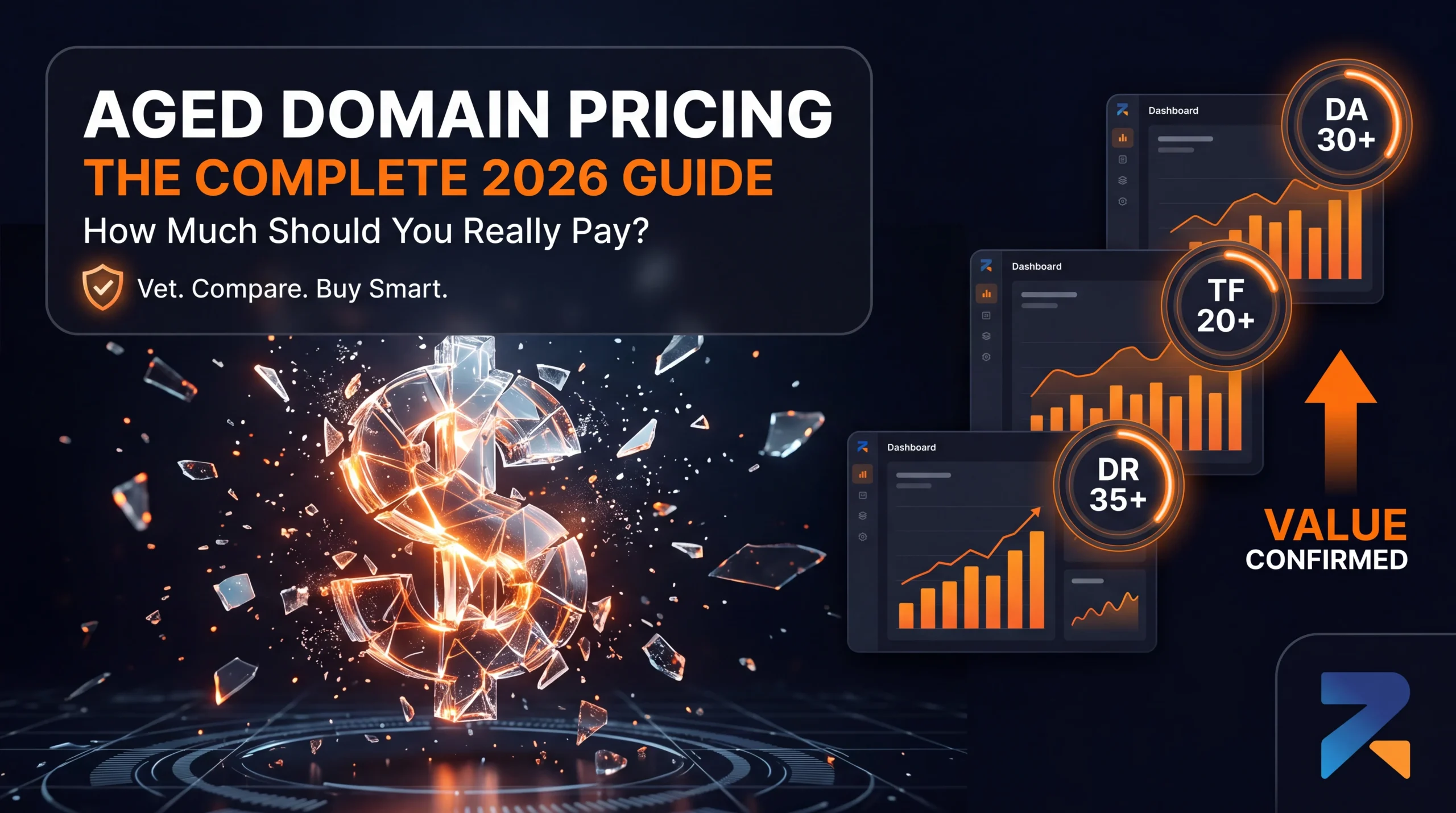
- Metrics from third-party tools — DA, DR, and TF are used as pricing shorthand across marketplaces, even though none of them directly measures the underlying backlink quality a buyer actually cares about.
Typical Price Ranges by Tier
These ranges are illustrative — actual pricing varies by marketplace, seller, and the specific combination of factors above — but they reflect the range visible on active aged domain marketplaces, including RexusDomain’s own live listings ($85–$2,200 at time of writing).
| Tier | Typical Price Range | What You’re Usually Buying |
|---|---|---|
| Entry-level | $85–$250 | Lower DA/DR, thinner or less relevant backlink profile, still clean of penalties |
| Mid-tier | $250–$800 | Moderate authority metrics, a documented content history, and reasonably relevant backlinks |
| Premium | $800–$2,200+ | Strong, niche-relevant backlink profile, verified clean history, higher authority metrics |
Domains priced well above this range typically carry additional value beyond core SEO metrics — brand-matchable names, exact-match keywords, or unusually rare backlink profiles from high-authority sources.
Why Price Alone Is a Bad Buying Signal
A cheap domain with a hidden penalty costs more in recovery time than a well-vetted domain at a higher price point, and an expensive domain with metrics that don’t hold up under audit is not automatically a good buy. Price should be evaluated alongside the due-diligence steps covered in how to audit an aged domain before you buy — checking Wayback Machine history, backlink profile, and penalty status — not as a standalone signal of quality.
Where Price Fits Into the Buying Process
Once you’ve settled on a budget range, the next steps are choosing where to buy, vetting the seller, and paying safely:
- Where to buy aged and expired domains — comparing marketplaces
- How to buy an aged or expired domain — the step-by-step process
- How to vet a trusted seller or marketplace — a 7-point checklist
- How to pay safely — escrow and payment method risk
Frequently Asked Questions
How much does a good aged domain cost?
Most aged domains with a clean history and moderate authority metrics sell in the $250–$800 range. Premium domains with strong, niche-relevant backlink profiles can run $800–$2,200 or more, while entry-level domains with thinner profiles start under $250.
Does an older domain always cost more?
No. Age alone is a weak pricing signal — a domain’s backlink profile, content history, and penalty status matter far more than how many years it has existed. A younger domain with a strong, clean history often outprices an older domain that sat parked or unused.
Why do some aged domains sell for far more than these ranges?
Domains priced well above typical ranges usually carry value beyond core SEO metrics — a brandable or exact-match name, an unusually strong backlink profile from high-authority sources, or category-specific demand that pushes price above what metrics alone would suggest.
Is a cheaper aged domain a worse buy?
Not necessarily, but price shouldn’t be evaluated on its own. A lower-priced domain that passes a full due-diligence check (backlink quality, indexation history, penalty status) can be a better buy than a higher-priced domain with unverified metrics.
Related Guides
Sources & Further Reading