
Aged Domains and Google’s Helpful Content System: What Actually Changed
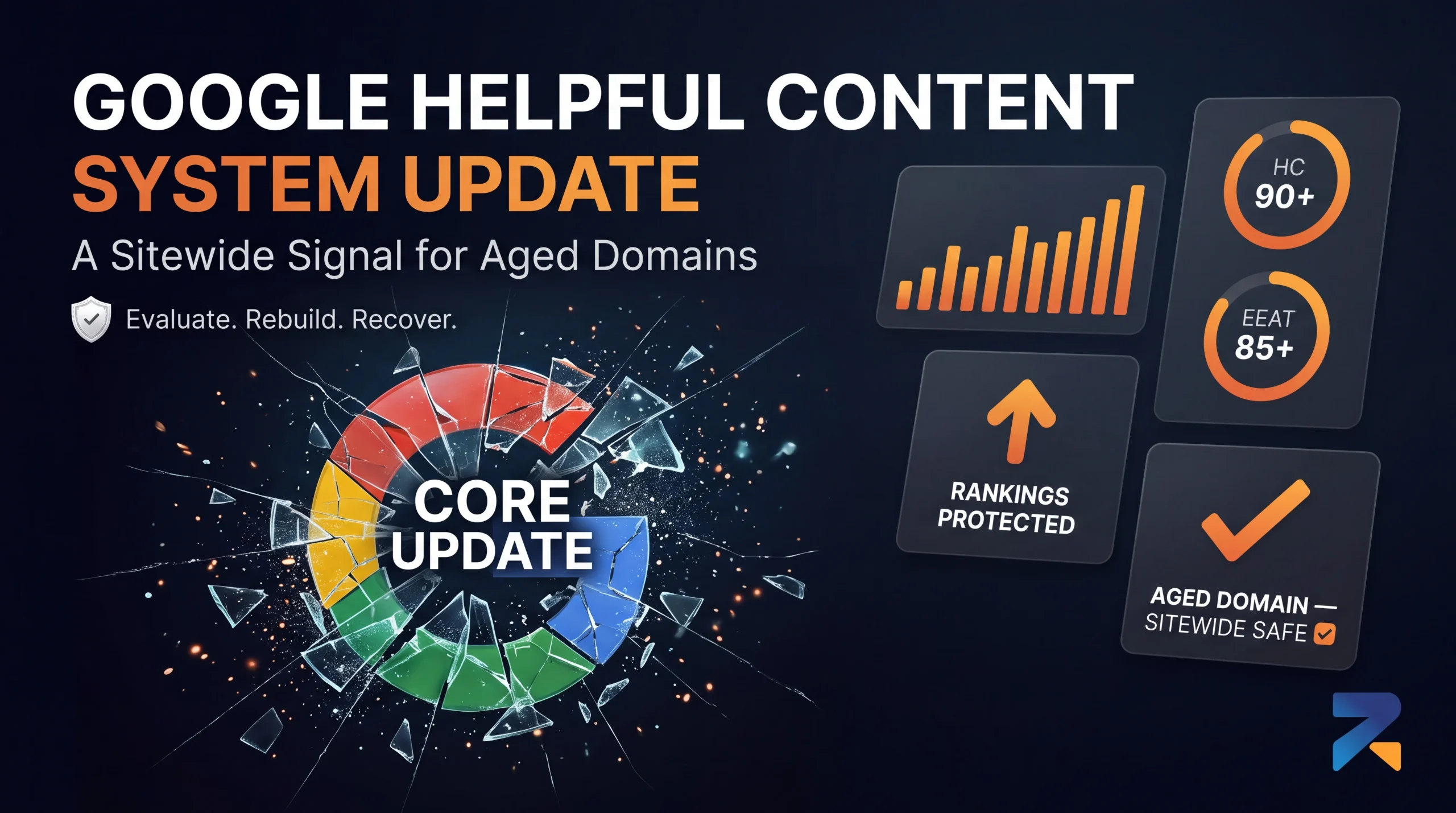
Google’s Helpful Content System, introduced in 2022 and merged into its core ranking systems in March 2024, evaluates whether a site’s content seems written primarily to satisfy search engines rather than genuine reader needs — and it applies this as a site-wide signal, which matters for aged domains because a domain rebuilt with thin or search-first content can drag down how the whole site is evaluated, not just the individual pages.
What the System Actually Evaluates
Unlike a page-level spam check, Google has described the Helpful Content signal as being applied sitewide — meaning the overall ratio and pattern of a site’s content contributes to how any individual page on that site is evaluated, not just the specific page being assessed. Since its merger into core ranking systems in March 2024, it’s no longer a standalone update that runs periodically but an integrated part of how every core update assesses content quality.
Why This Matters More for Rebuilt Aged Domains Than Fresh Sites
- Aged domains are often rebuilt fast — a common pattern is acquiring a domain and rapidly publishing a large volume of templated content to capitalize on the domain’s existing trust. This is exactly the pattern the Helpful Content signal is designed to catch, since volume-first, template-heavy publishing is a recognizable “written for search engines” signature.
- The site-wide nature means old content matters too — if an aged domain’s inherited prior content (from before you owned it) was itself thin or spammy, that legacy content can be part of what a sitewide evaluation is weighing, not just what you’ve newly published.
- Domain trust doesn’t buy exemption — an aged domain’s backlink and indexation history doesn’t shield new content from this evaluation; the signal is about content quality patterns, which are assessed independently of domain age or authority.
What “Helpful” Actually Looks Like in Google’s Guidance
Google’s own self-assessment questions for this system ask whether content was created primarily for people, whether it demonstrates firsthand expertise or experience, and whether a reader would feel they’d learned enough to achieve their goal. Content produced primarily to rank for a keyword, without adding genuine value beyond what’s needed to satisfy the query, is the pattern this system targets — regardless of how well-optimized it looks on other metrics.
Practical Implications for Rebuilding an Aged Domain
Pacing content publication, prioritizing depth and genuine usefulness over volume, and auditing any inherited legacy content for the same quality bar are more defensible than a rapid template-driven content push, specifically because the evaluation is sitewide rather than isolated to new pages.
Frequently Asked Questions
Is the Helpful Content Update still a separate Google update?
No. It was merged into Google’s core ranking systems in March 2024. It’s no longer a standalone periodic update but an integrated part of how core updates evaluate content quality.
Does the Helpful Content signal apply to individual pages or the whole site?
Google has described it as a sitewide signal — the overall pattern of a site’s content contributes to how individual pages on that site are evaluated, not just the specific page being assessed.
Can an aged domain’s authority protect new content from this evaluation?
No. The signal evaluates content quality patterns independently of a domain’s backlink authority or indexation history, so an aged domain’s trust doesn’t exempt newly published content from being assessed.
Does content inherited from a previous owner count toward this evaluation?
Since the signal is sitewide, legacy content left on the domain from before you owned it can factor into the overall pattern being evaluated, not just content you’ve published since acquiring the domain.
Related Guides
Sources & Further Reading