
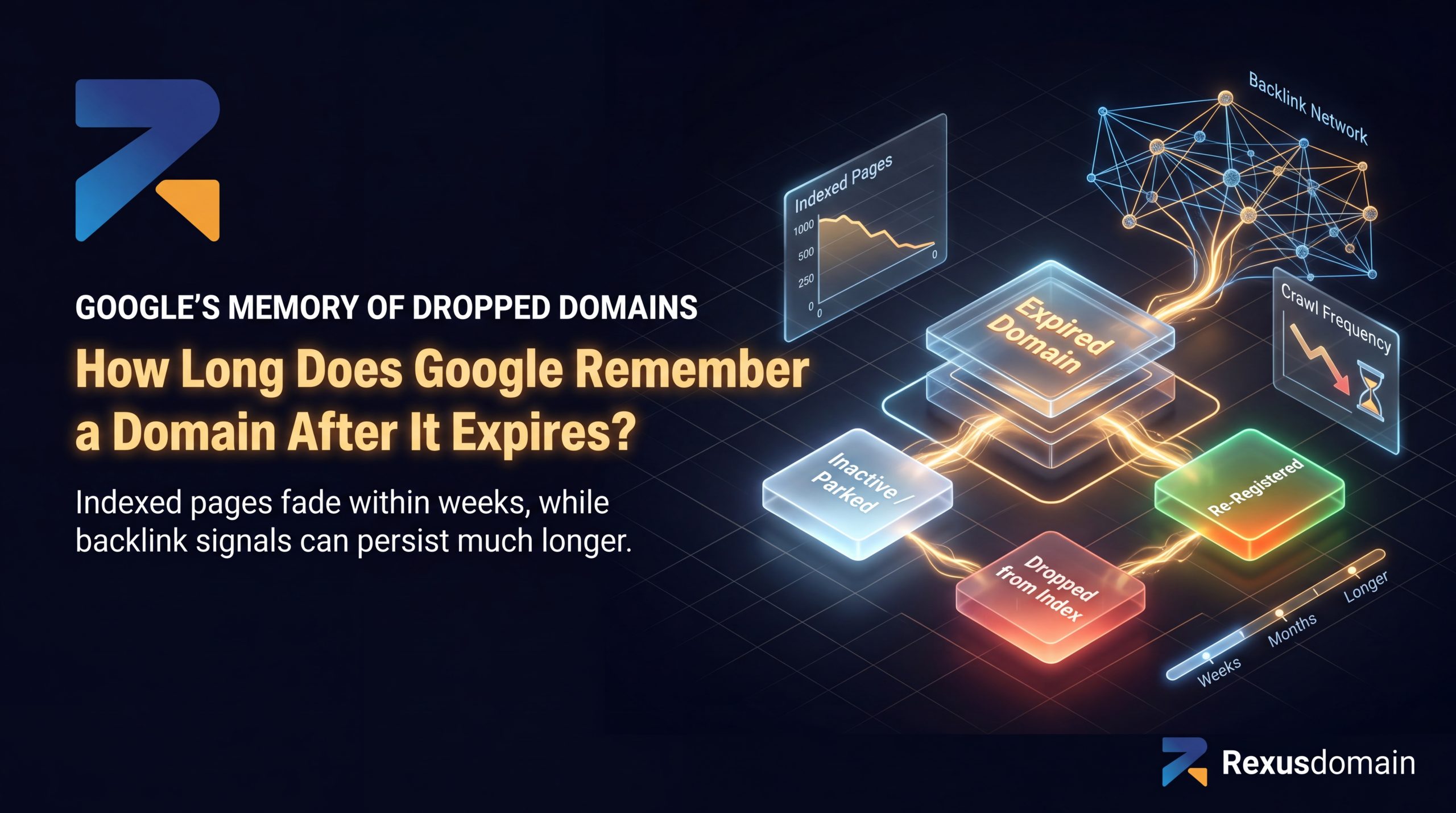

How Long Does Google “Remember” a Domain After It Expires and Drops?
Google doesn’t publish a fixed retention period for how long it retains crawl and index data after a domain expires and drops, but observed behavior suggests indexation and ranking signals begin degrading within weeks of a domain going inactive, while backlink data pointing to the domain from other sites can persist for months or longer independent of Google’s own index.
Last updated: August 2026.
What Actually Happens When a Domain Drops
When a domain expires and enters its redemption or pending-delete period before dropping, the site typically stops resolving to live content — visitors and crawlers alike get a parked page, an error, or nothing at all. Google’s crawlers will attempt to revisit the domain on their normal schedule and, finding no valid content, will gradually reduce crawl frequency and begin dropping previously indexed URLs from the index.
Two Separate Things Decay at Different Rates
- Indexed pages and rankings tend to degrade fastest — within weeks of a domain going inactive, individual URLs can start disappearing from search results as Google deprioritizes crawling a site that returns errors or blank pages.
- The domain’s backlink profile decays much more slowly, since that data lives on the linking pages themselves, not in Google’s index of the dropped domain. A backlink from another site pointing to the dropped domain remains crawlable and attributable to that domain’s URL for as long as the linking page exists, regardless of whether the domain itself is active.
This is why a domain that’s been dropped for a while can still show a strong backlink profile in third-party tools, even though its own pages are no longer indexed — the links pointing to it haven’t disappeared, only the domain’s own presence in the index has.
Does Re-Registering a Domain “Restart” Google’s Memory?
Not entirely. When a domain is re-registered and brought back with live content, Google typically re-crawls and re-evaluates it based on current signals, but the backlink profile that already existed (from before the domain dropped) is still part of what gets factored in once crawling resumes — it doesn’t need to be “rebuilt” since the links themselves were never removed.
Why the Length of the Gap Still Matters
Even though backlink data persists independently, a longer gap between a domain dropping and being reactivated correlates with more post-acquisition volatility in practice. This is generally attributed to the accumulated effect of stale content signals, some natural backlink decay as linking pages get updated or removed over time, and Google needing to re-establish crawl priority for a domain it hasn’t actively crawled in a while — not because Google literally forgot the domain.
Frequently Asked Questions
Does Google have a fixed time limit for remembering a dropped domain?
No published fixed period exists. Observed behavior suggests indexed pages and crawl priority degrade within weeks of inactivity, while backlink data (which lives on other sites, not in the dropped domain’s own index) persists much longer.
Do a domain’s backlinks disappear when it drops?
No. Backlinks live on the linking pages, not the dropped domain’s index entry, so they remain crawlable and attributable to the domain for as long as the linking pages exist, independent of the domain’s own status.
Does re-registering an expired domain reset its backlink history?
No. Existing backlinks pointing to the domain are still part of what Google evaluates once crawling resumes after re-registration – they don’t need to be rebuilt, since the links themselves were never removed.
Does a longer gap between expiration and re-registration hurt an aged domain?
It can correlate with more post-acquisition volatility, generally attributed to stale content signals and reduced crawl priority rather than Google forgetting the domain outright.
Related Guides
Sources & Further Reading