
How Domain Appraisal Tools Calculate Value (and Why They’re Often Wrong)
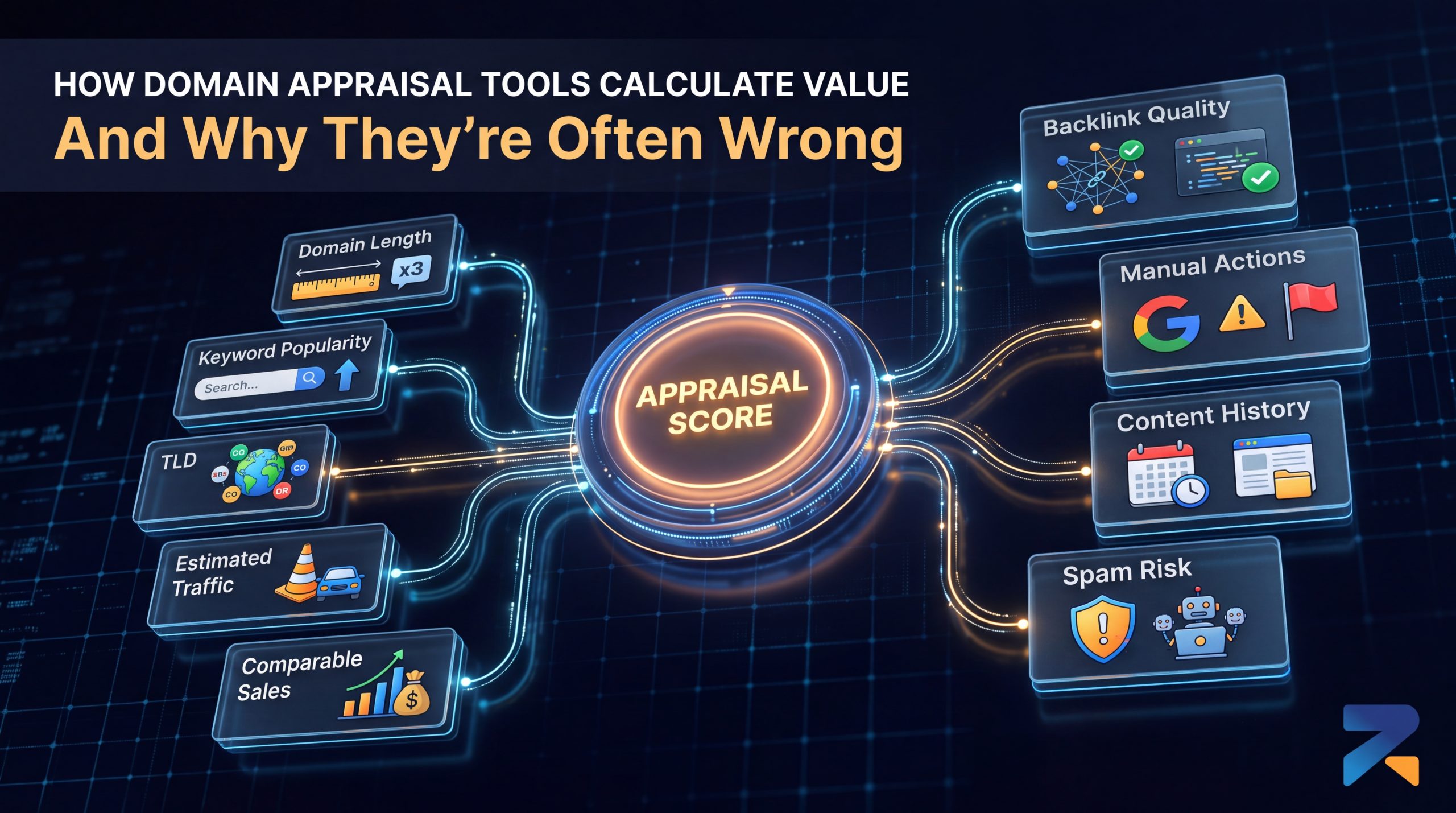
Automated domain appraisal tools like Estibot or GoDaddy’s appraisal feature estimate value using algorithms built on domain length, keyword popularity, TLD, comparable sales data, and basic authority metrics — not on the deep due-diligence factors (backlink quality, content history, penalty status) that actually determine what an aged domain is worth to an SEO buyer.
Last updated: August 2026.
What These Tools Actually Measure
Most automated appraisal tools weigh a combination of surface-level factors: domain length and memorability, presence of high-search-volume keywords, TLD (.com generally scored higher), estimated traffic, and comparable recent sales in similar categories. Some incorporate basic authority metrics like DA or DR pulled from third-party APIs. None of them can evaluate the things that matter most for an aged domain bought for SEO purposes.
Why the Numbers Are Often Wrong
- They can’t assess backlink quality, only quantity or basic authority scores. A domain with a large volume of low-relevance or spammy links can score well on an automated tool while carrying real SEO risk.
- They don’t check penalty history. A domain under an active or recent manual action can still receive a normal-looking appraisal, since these tools don’t query Search Console data.
- They don’t verify content history. A domain that sat parked for years versus one that was actively and relevantly used can appraise similarly if their surface metrics (length, keywords, TLD) are the same.
- Comparable sales data is thin and inconsistently reported, especially for aged/expired domains sold through private negotiation rather than public marketplaces, so the “comparable sales” input is often built on a small, skewed sample.
What Appraisal Tools Are Actually Useful For
They’re a reasonable starting point for pure domain-name value (brandability, length, keyword presence) — the kind of value that matters if you’re evaluating a domain primarily for its name rather than its SEO history. For a fresh, never-used domain, an appraisal tool’s estimate is more meaningful, since there’s no history to miss. For an aged domain being evaluated on its SEO merit, treat the appraisal number as one minor data point, not a verdict.
What to Check Instead for an Aged Domain’s Real Value
- Backlink profile quality via a dedicated tool (Ahrefs, Majestic, Semrush), reviewed manually rather than trusting a single composite score.
- Manual action and penalty status, confirmed directly in Search Console if the seller has access, or inferred from a sudden historical traffic drop.
- Content history via the Wayback Machine, to see whether the domain had genuine, relevant activity.
- Recent comparable sales in your specific niche, sourced from marketplace listings rather than an automated tool’s internal database.
Frequently Asked Questions
Are domain appraisal tools accurate for aged domains?
Not reliably. They’re built on surface-level factors like domain length, keywords, and TLD, and can’t assess backlink quality, penalty history, or content history — the factors that most affect an aged domain’s actual SEO value.
What do domain appraisal tools actually calculate?
Most combine domain length and memorability, keyword search volume, TLD, basic third-party authority metrics, and comparable sales data into a composite score. They don’t query Search Console or verify link quality directly.
Are appraisal tools more accurate for new domains than aged ones?
Generally yes, since a new domain has no history that the tool would need to miss. For an aged domain, the tool’s estimate ignores backlink quality and content history, which matter far more for SEO value.
Should I trust a seller’s appraisal-tool valuation when buying an aged domain?
Treat it as one minor reference point, not a verdict. Independently check the backlink profile, penalty status, and content history rather than relying on an automated appraisal score.
Related Guides
Sources & Further Reading