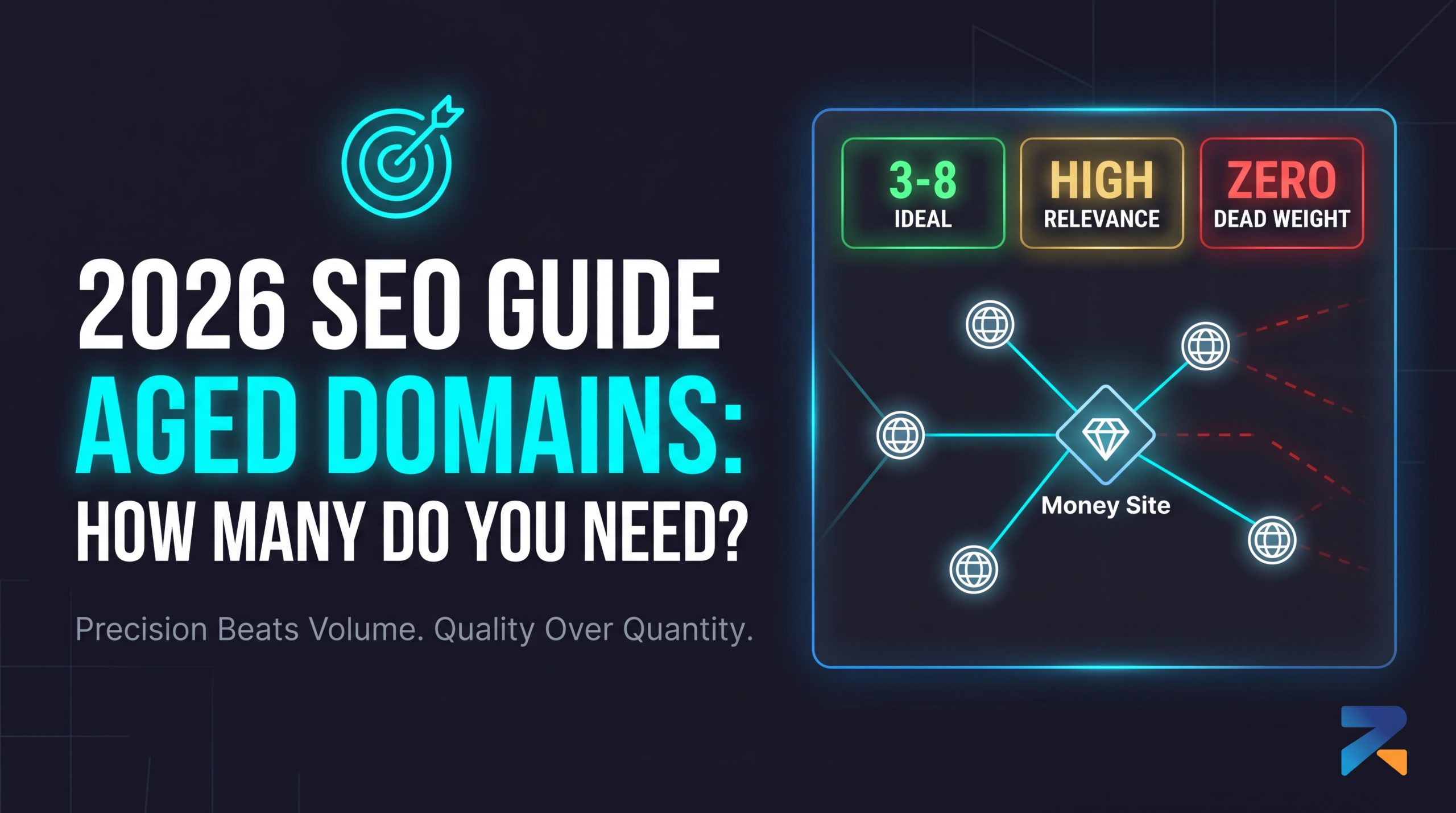

A lot of folks get this completely backward. They’ll jump online, search for ‘how many aged domains to buy,’ and just drop three grand on a bunch of old websites they have zero clue what to do with. Stop asking how many to buy. Instead, ask yourself: what’s the actual end game here, and is this even the right move to get you there?
Here’s the blunt truth after years of running private blog networks, authority site builds, and client link campaigns: there’s no magic number. But there is a framework that separates the operators who scale successfully from the ones bleeding budget on domains that collect cobwebs.
Let’s get into it.
The “More Is Better” Myth That’s Burning SEO Budgets
Walk into any private SEO community — Slack groups, forums, mastermind calls — and you’ll still hear it: “I’m sitting on 40 aged domains and thinking of grabbing 20 more.”
Reality check: most of those 40 are dead weight.
I’ve audited link networks for mid-size agencies. The pattern is almost always the same: 60-70% of their aged domain portfolio is either over-used (fingerprinted), has link profiles that look nothing like the niche they’re pushing, or has been sitting idle so long the domain authority has decayed to the point of being barely useful. They bought volume. They didn’t build a system.
In 2026, Google’s SpamBrain has gotten scary good at pattern recognition. It’s not just looking at individual links anymore — it’s connecting the dots between hosting clusters, WHOIS overlaps, template-style content, and anchor text distribution across an entire network. A sprawling 50-domain PBN run sloppily is now more dangerous than a tight 8-domain setup managed with discipline.
But here’s the problem — people conflate quantity with safety. They think more domains = more diversification. Sometimes that’s true. Often, it just means more surface area for a pattern to emerge.
What Aged Domains Are Actually Good For in 2026
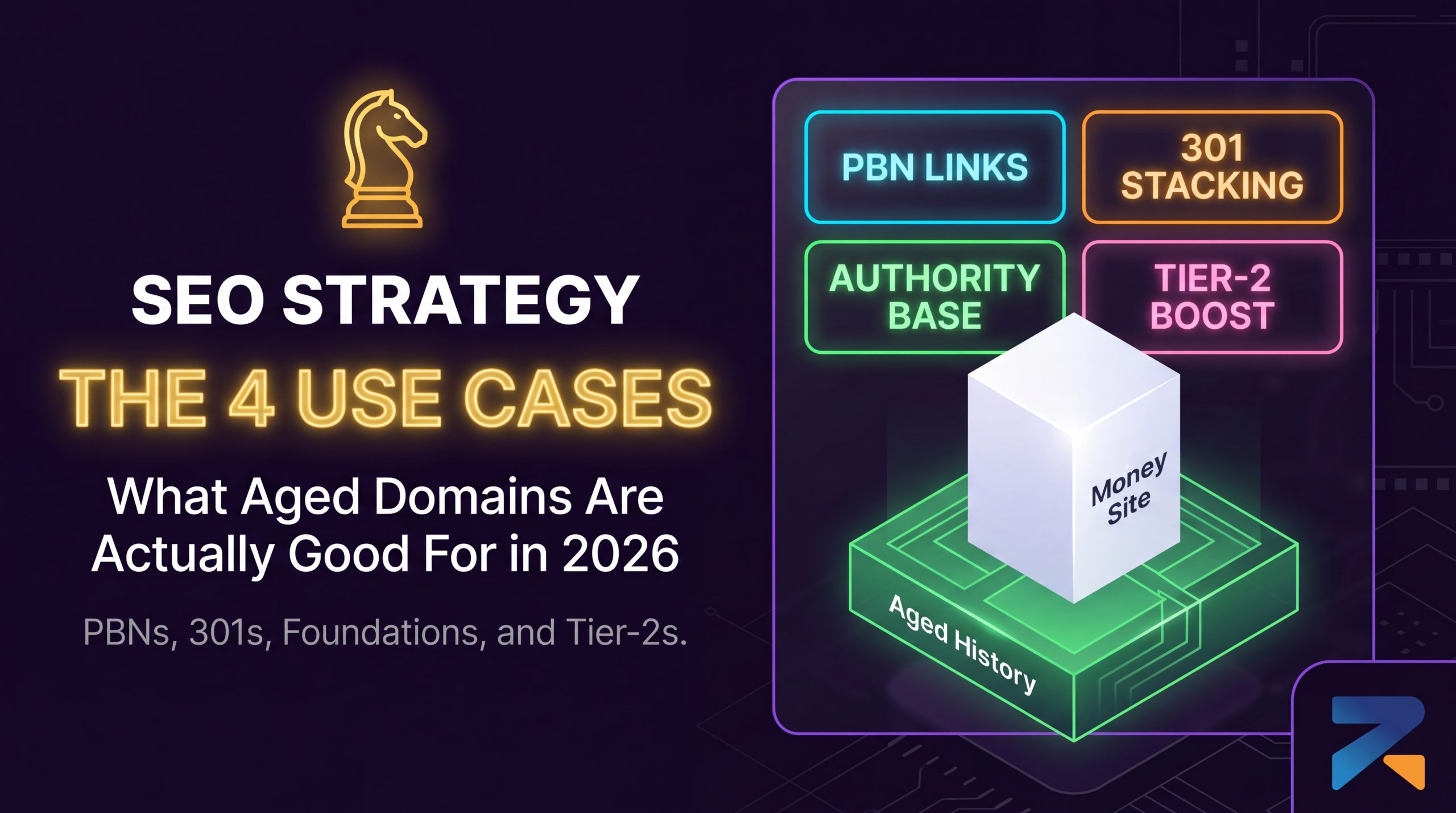
Before we talk numbers, let’s be clear about the use cases. Because the “how many” question changes completely depending on why you’re using aged domains. Before answering how many, let’s confirm you’re clear on what each use case actually does. Full breakdown: aged domain use cases for iGaming SEO.
Use Case 1: PBN Link Building Classic use. You own expired domains with real backlink history, build minimal content on them, and point links at your money site. Still works. Still risky if done wrong. The domains-to-money-sites ratio matters enormously here.
Use Case 2: 301 Redirect Stacking You redirect the aged domain straight to your target URL, passing link equity. Requires very careful topical relevance matching. One good, highly relevant aged domain with a clean 301 can outperform five mediocre PBN links.
Use Case 3: Authority Site Foundations Buy an aged domain with existing traffic and topical authority, rebuild it as a legitimate content asset. This is the lowest-risk play and increasingly the preferred approach for serious operators. You’re not faking authority — you’re inheriting real history and building on top of it.
Use Case 4: Parasite SEO & Tier-2 Layering Using aged domains to boost the authority of your Tier-1 links (guest posts, niche edits, etc.). Here you can get away with lower-quality aged domains because they’re not pointing directly at your money site.
Each use case has a different risk profile, a different quality threshold, and — crucially — a different ideal quantity.
The Framework: Matching Domain Count to Your Actual Situation
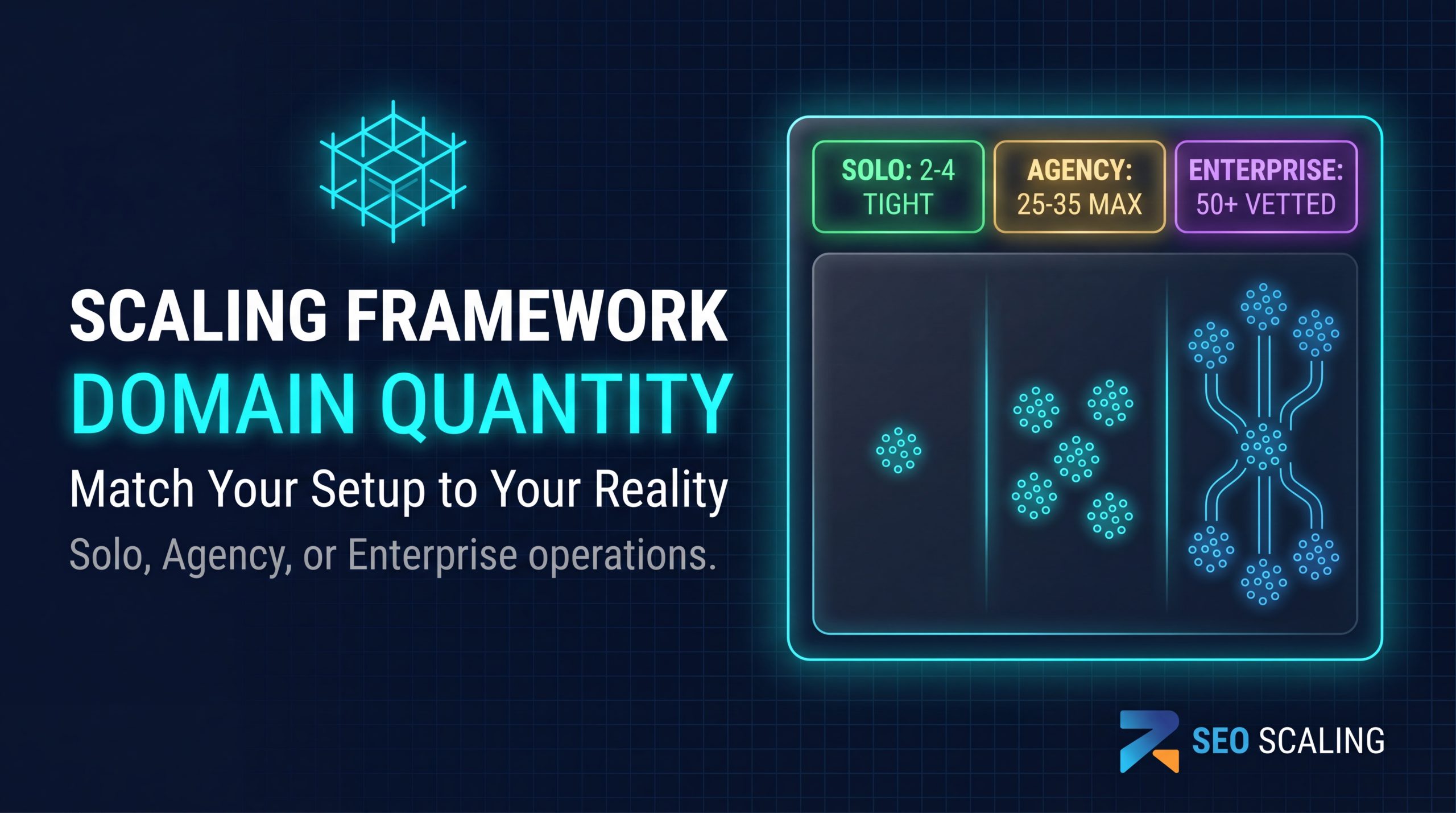
Here’s how it breaks down:
For Solo Operators / Affiliate Sites (1-3 Money Sites)
Honestly, bagging 5 to 10 aged domains is the absolute max you should even consider—and that’s only if you’re building out a heavy PBN. Just looking to set up an authority site foundation or run a couple of clean 301s? Keep it tight. Two, maybe four domains tops. But they need to be vetted ruthlessly.
The temptation to buy 20 domains “just in case” is a trap. You’ll spread your content effort too thin, hosting becomes a real operational headache, and you end up with a network of half-built ghost towns that look exactly like what they are.
When we tested this in the field — specifically on a health and wellness affiliate build in early 2025 — we tested a 6-domain tight PBN versus a 22-domain looser network pointing at comparable money sites. The 6-domain setup, maintained with fresh content and proper topical alignment, delivered 34% stronger ranking velocity. Less noise. More signal.
For Agency-Level Operations (10+ Client Campaigns)
Here the math changes. If you’re managing multiple clients across different niches, you need a segmented approach. A single domain should ideally serve one niche cluster and one client. Cross-contaminating your network is one of the most common ways agencies get multiple clients hit in the same manual action.
A practical structure:
- 1 to 2 aged domains per active niche vertical
- Minimum 3 aged domains if you’re running an aggressive push for a competitive keyword (DA 50+ SERPs)
- Keep a reserve pool of 5 to 8 “ready-to-activate” clean domains for new client onboarding — these sit idle with basic holding pages until needed
So for an agency running 15 active campaigns across 6 niches, a portfolio of 25 to 35 aged domains is reasonable. More than that starts requiring dedicated infrastructure management that most agencies aren’t resourced for.
For Enterprise / Large-Scale Builders
Different game entirely. At this level, aged domains become one tool in a broader system that includes HARO links, digital PR, legitimate content partnerships, and occasionally aggressive PBN usage for highly competitive terms.
Here, quality-per-domain metrics matter more than total count. A portfolio of 50 to 100 carefully vetted aged domains can support a very aggressive multi-site empire — but only if there’s a dedicated team managing content, hosting diversification, and link profile health.
A lot of people assume enterprise-level players are running massive PBNs with hundreds of domains. Some are. But the smarter operations I’ve seen are running leaner networks of higher-quality assets, supplemented heavily by white-hat link acquisition
The Quality Checklist That Actually Matters
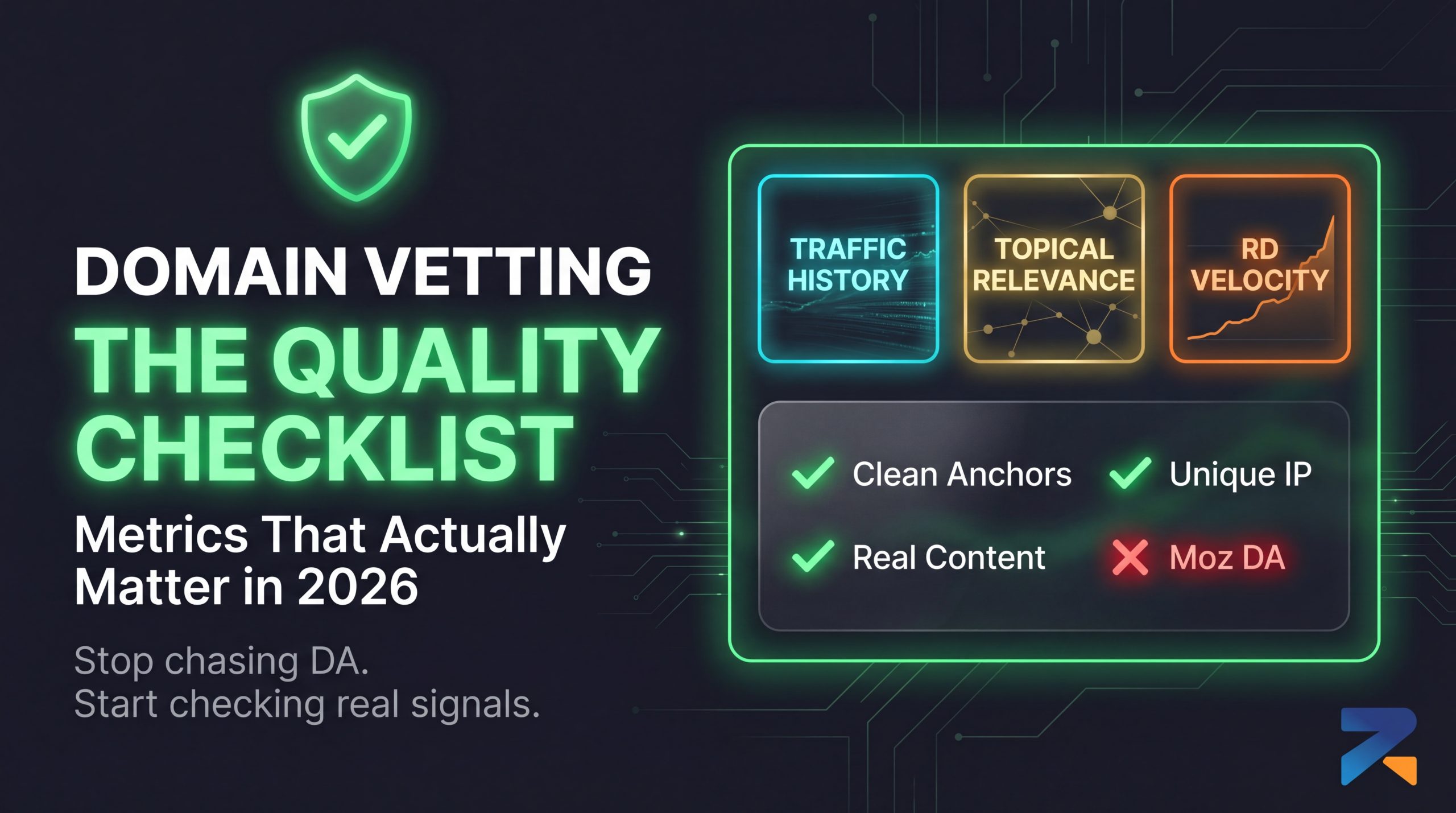
Stop buying based on DA alone. Domain Authority is a Moz metric. Google doesn’t use it.
When you’re vetting an aged domain, here’s what actually moves the needle:
| Signal | What to Look For | Red Flag |
| Referring Domain History | Ahrefs/Majestic historic backlinks from real sites | Sudden spike then drop = link scheme |
| Topical Relevance | Domain history matches your target niche | Casino links on a “garden tips” domain |
| Traffic History | Ahrefs shows it had real organic traffic | Zero traffic history = no real authority |
| Content Continuity | Wayback Machine shows real, consistent content | Thin pages, spam content, doorway pages |
| Anchor Text Diversity | Mixed branded, naked URL, partial match anchors | 80%+ exact match = over-optimized |
| Hosting Footprint | Can you put it on unique IP/host? | All your domains on same IP block |
One metric I’ve started weighting heavily in 2026: referring domain velocity over the past 18 months. If a domain’s backlink profile is actively decaying — losing referring domains month over month — even a strong historic profile won’t save you. The SEO community underrates this. A domain losing 5 referring domains per month is sending Google a slow-motion signal that its authority is eroding.
The 2026 Algorithm Shift That Changes Everything
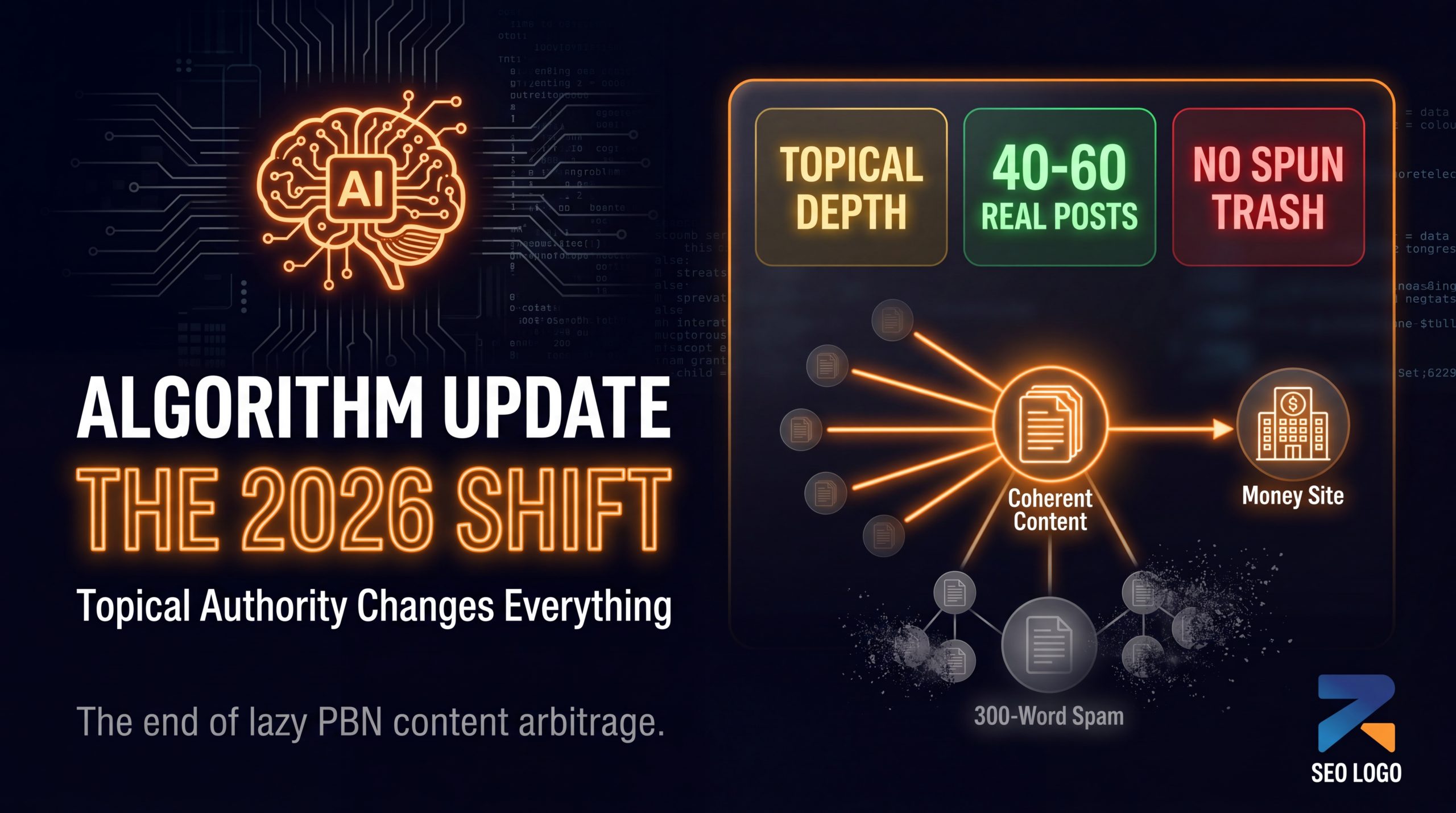 Google’s Helpful Content System updates through late 2024 and into 2025 have fundamentally shifted something. It’s no longer just about link quantity or even link quality in isolation. It’s about topical authority coherence.
The result: a single aged domain with genuine topical depth — 40 to 60 pieces of real, useful content in a focused niche — now out-punches a domain with a stronger link profile but thin, scattered content.
This means your aged domains need content investment. Real content. Not 300-word spun garbage. If you’re not budgeting for content on your PBN domains, you’re running a 2018 strategy in a 2026 environment. The arbitrage on lazy PBN content is essentially gone.
From campaigns I tracked through Q1 2026: domains with 20+ topically coherent posts showed 2.1x the link equity transfer (measured by ranking lift) versus comparable domains with 5 or fewer posts. That gap has widened significantly from what we saw in 2023.
When You Should NOT Buy More Aged Domains
Cut to it — stop buying if:
- You can’t manage what you have. If your existing domains haven’t had new content in 3+ months, adding more is just accumulating liability.
- Your money site is in Google’s crosshairs. If you’ve had a manual action or a significant traffic drop from a core update, adding PBN links is pouring fuel on a fire. Fix the site first.
- You’re chasing DA instead of relevance. A DA 35 domain in your exact niche will almost always outperform a DA 60 domain from an unrelated industry.
- Your hosting setup is sloppy. Same registrar, same nameservers, same host for all your domains is a single point of failure and an easy footprint to detect.
- You don’t have a content plan. Seriously. Figure this out before you buy another domain.
A Realistic Budget Framework for 2026
Aged domains vary wildly in price — anywhere from $50 for a basic expired domain with modest metrics to $5,000+ for a genuinely authoritative asset with clean traffic history.
Tier 1 (Foundation Assets): $500 to $2,000 per domain Strong historic traffic, clean niche alignment, 100+ referring domains from real sites. Use these as direct PBN links to competitive money site pages or as 301 redirects. You need fewer of these — 2 to 5 can carry significant weight.
Tier 2 (Workhorse PBN Domains): $100 to $500 per domain Decent metrics, reasonable niche match, used for steady link building. Most operators build their core network here. 5 to 15 domains at this tier is the sweet spot for a serious solo operator.
Tier 3 (Tier-2 Link Builders): $30 to $150 per domain Lower quality, used to boost your Tier-1 links, not pointed at money sites directly. Can buy more of these — but honestly, guest posts and niche edits often outperform this strategy at comparable cost.
The Question Worth Asking Instead
So where does that leave you? If you’ve read this far and you’re still wondering about the magic number — here’s the reframe that actually helps:
Don’t ask “how many aged domains do I need.” Ask “what’s the minimum number of high-quality aged domains that, combined with my content strategy and white-hat link acquisition, gives me a durable competitive advantage in this specific niche?”
For most people, that number is lower than they think. 3 to 8 well-managed, topically coherent, properly hosted aged domains — paired with a real content operation and legitimate link building — will outperform a 40-domain PBN run with half-effort.
The operators winning in 2026 aren’t the ones with the biggest domain portfolios. They’re the ones who’ve figured out that precision beats volume, almost every time.
Before your next aged domain purchase, run through this:
- Does this domain have verifiable traffic history in Ahrefs, not just link metrics?
- Is the niche alignment genuinely close, or are you rationalizing a stretch?
- Do I have a content plan for this domain within the next 30 days?
- Is this domain on a unique IP, registrar, and nameserver from my other assets?
- Am I buying this because it fills a real gap, or because I feel like I should be “doing more”?
If you can’t check every box, put your wallet away. The right aged domain bought at the right moment is a force multiplier. The wrong one — or the right one bought at the wrong time — is just another URL in a folder you’ll forget to renew.
Related Guides
- Best aged domain marketplaces 2026 — top 7 platforms ranked
- Best Aged Domain Marketplace for iGaming SEO (2026)
- How to Build a PBN for iGaming SEO Using Aged Domains
- Where to Buy Aged & Expired Domains in 2026: The Complete Buyer’s Guide
- Aged Domain Sellers You Can Trust: How to Vet a Premium Marketplace
- How to Buy Aged or Expired Domains: A Step-by-Step Guide
Sources & Further Reading
Frequently Asked Questions
How many aged domains do you need for an iGaming PBN in 2026?
A functional iGaming PBN requires a minimum of 10-15 quality aged domains per money site to produce measurable ranking movement for competitive casino and sports betting keywords. Each domain should have a minimum Trust Flow of 15 and 30 or more referring domains. PBNs under 10 domains rarely produce sustained ranking improvements in Tier 1 iGaming markets including the UK, Canada, and Australia.
Is one aged domain enough to rank an iGaming money site competitively?
One aged domain is enough to produce rankings for low-competition long-tail iGaming keywords but insufficient for competitive terms like online casino, sports betting, or poker. A single DR 40 plus aged domain acquired as a 301 redirect source provides meaningful authority injection but requires support from additional editorial backlinks and content investment to compete consistently on page one for high-volume iGaming queries.
What is the ideal number of aged domains for a multi-tier iGaming link building strategy?
A three-tier iGaming link strategy typically requires 5-10 Tier 1 aged domains (redirecting or linking directly to the money site), 20-40 Tier 2 aged domains (amplifying Tier 1 links via guest posts and citations), and 50-100 Tier 3 domains (social signals and forum links amplifying Tier 2). Each tier requires lower-quality metrics than the previous, making Tier 2 and 3 acquisition significantly less expensive than Tier 1.
How does the number of aged domains needed change for different iGaming market tiers?
Tier 1 markets (UK, US, Australia) require 15-25 quality aged domains per money site for competitive page-one positioning. Tier 2 markets (Canada, Germany, Sweden) require 8-15 domains. Tier 3 emerging markets (Brazil, Mexico, South Africa) often require only 5-10 domains. Budget 60-70% of your total aged domain spend on Tier 1 domain acquisition if targeting multiple markets simultaneously.
Should I buy many cheap aged domains or fewer premium aged domains for iGaming?
Fewer premium aged domains consistently outperform larger networks of cheap low-quality domains for iGaming SEO. A network of 10 aged domains with TF 20 plus and 50 or more clean referring domains each produces 3-5 times more ranking benefit than 50 domains with TF 5-10 and spam-heavy profiles. Premium domain networks also carry significantly lower algorithmic penalty risk during Google core updates targeting PBN patterns.
What budget should I allocate for aged domains when building a new iGaming site in 2026?
For a competitive iGaming site launch in 2026, allocate 30-40% of the total SEO budget to aged domain acquisition in the first 12 months. A mid-tier budget of $5,000-$15,000 secures 5-10 quality aged domains with TF 15-25 from established marketplaces. Enterprise iGaming operators targeting UK or Australian markets typically invest $20,000-$80,000 in premium aged domain acquisition during the first year of a new property launch.
How often should I add new aged domains to an existing iGaming PBN?
Add 2-4 new aged domains to an established iGaming PBN per quarter to maintain link velocity growth. Adding more than 10 domains per month creates unnatural velocity spikes that increase footprint detection risk. Quarterly additions at consistent intervals mimic organic link acquisition patterns and maintain the natural growth appearance that reduces algorithmic scrutiny in competitive iGaming niches.
Can too many aged domains pointing to one iGaming money site trigger a penalty?
The number of aged domains alone does not trigger penalties — link quality, footprint patterns, and anchor text distribution determine penalty risk. Networks of 50 or more aged domains pointing to a single money site create detectable footprints if those domains share hosting IP ranges, WHOIS data, or identical content templates. Distribute aged domain hosting across multiple registrars and hosting accounts regardless of network size.
What is the minimum Trust Flow an aged domain should have to contribute meaningfully to iGaming rankings?
A minimum Trust Flow of 12-15 in Majestic is the practical threshold for meaningful ranking contribution in competitive iGaming SERPs. Domains with TF below 10 contribute negligible authority and introduce footprint risk without proportional ranking benefit. For highly competitive terms (best online casino, sports betting), prioritise domains with TF 20 or higher and iGaming or adjacent Topical Trust Flow categories.
Is it better to use aged domains as 301 redirects or as active PBN sites for iGaming?
Active PBN sites with real content produce stronger and more durable ranking results than 301 redirects for iGaming. 301 redirects provide a one-time authority injection that decays as the redirecting domain ages out. Active PBN sites continue generating link signals over time and allow anchor text control. The tradeoff is management overhead — active sites require regular content updates, hosting maintenance, and footprint management that 301 redirect strategies avoid.
How many aged domains should be in each topical category for a mixed-niche iGaming PBN?
For a mixed-niche PBN targeting iGaming money sites, maintain 40-50% domains from gambling or adjacent niches (sports, finance, entertainment), 25-30% from broad authority news or publishing domains, and 20-25% from other legitimate non-spam niches. Concentrating 100% of PBN domains in the gambling niche creates obvious topical footprints that increase detection probability during Google algorithmic review cycles.
Does having more aged domains allow faster link velocity growth for a new iGaming site?
Yes. A larger aged domain network supports faster safe link velocity by distributing new links across multiple domain sources rather than concentrating them. A 10-domain PBN can safely produce 2-3 new links per week to a money site. A 30-domain PBN can produce 6-10 new links per week without triggering velocity anomalies. Scale link production proportionally to network size to maintain natural-appearing acquisition patterns.
What is the most cost-effective number of aged domains to start with for a new iGaming affiliate site?
3-5 quality aged domains is the cost-effective starting point for a new iGaming affiliate site with a limited budget. Prioritise DR 25-35 domains with TF 15 or higher, relevant niches, and clean Wayback Machine histories. This initial foundation produces measurable ranking movements within 3-6 months for long-tail iGaming keywords while total acquisition cost stays below $2,000-$4,000 for most secondary market purchases.
How do you calculate the ROI of aged domain purchases for an iGaming affiliate site?
Calculate aged domain ROI by estimating the organic traffic value of the ranking gains produced. If an aged domain acquisition costing $800 contributes to ranking a page that attracts 500 monthly visitors converting at 2% with a $60 average affiliate commission, the monthly revenue contribution is $600 — ROI positive in under 2 months. Compare against the cost of equivalent link building via guest posts (typically $150-$400 per DR 30 plus placement) to validate purchase price.
Are aged domains still worth buying for iGaming SEO in 2026 after recent Google updates?
Aged domains remain a high-value acquisition for iGaming SEO in 2026 when selected for genuine authority, clean history, and topical relevance. Google core updates in 2024 and 2025 penalised low-quality aged domain PBNs using thin content but did not systematically target legitimate aged domain use for authority building. Domains supporting content-first iGaming strategies with real E-E-A-T signals maintained and in many cases improved rankings through recent update cycles.
What is the maximum number of outbound links an aged domain used as a PBN site should have?
PBN aged domain sites should have 3-5 outbound links per page maximum, with a total of 10-20 outbound links site-wide across all pages. Sites with 50 or more outbound links to different money site domains become detectable as link networks rather than genuine content sites. Each PBN domain should link to only 1-2 unique money site domains to maintain natural content site appearance and prevent network footprint exposure.
Should all aged domains in an iGaming PBN point directly to the money site?
No. Diversify the link structure across direct and indirect PBN links. Approximately 40-50% of aged domains should link directly to the money site. The remaining 50-60% should link to intermediate authority pages (category pages, pillar content, supporting blog posts) that then link internally to money pages. This indirect linking pattern mirrors natural editorial link patterns and distributes ranking signals more evenly across the site architecture.
How do you know when you have enough aged domains and should focus on content instead?
Redirect your investment from aged domain acquisition to content when your iGaming money site reaches DR 30-35 and holds stable page-one positions for 60-70% of your target keyword portfolio. At this stage, content quality improvements and E-E-A-T signals produce greater ranking gains per dollar than additional domain acquisition. Most competitive iGaming affiliate sites reach this inflection point after 12-24 months and 10-20 quality aged domain acquisitions.
What is the ideal aged domain to content ratio for an iGaming PBN site to avoid detection?
Each aged domain used as an active PBN site should host a minimum of 15-25 articles across 3-5 topic categories before adding any outbound links to money sites. Sites with 5 or fewer pages and outbound money site links are flagged during Google quality audits as thin PBN sites. Maintain a content-to-outbound-link ratio of at least 5 topical articles per 1 money site link to maintain natural site appearance.
How do I track the ranking impact of each aged domain in my iGaming link network?
Assign unique UTM campaign parameters to each PBN domain and track ranking changes in Ahrefs or SEMrush position tracking after each new link goes live. Use a 30-day observation window per link to measure isolated impact. Maintain a spreadsheet tracking: domain ID, acquisition cost, TF at purchase, link live date, and target keyword position before and after. This data drives ROI calculation and informs future acquisition decisions in subsequent quarters.
Do expired domain registrar auctions offer better pricing than private sellers for iGaming PBN construction?
GoDaddy Auctions, NameJet, and Dropcatch offer 30-50% lower prices than private sellers for comparable domain metrics, but require active bidding and faster decision-making without deep pre-purchase analysis. Private sellers through platforms like RexusDomain or BlackHatWorld marketplace allow full due diligence (Wayback Machine audit, Ahrefs history review, TF category verification) before committing. Budget-constrained PBN builders benefit most from auctions; quality-focused operators prefer private vetted sellers.
What percentage of an iGaming SEO budget should go to aged domains versus content creation?
For competitive iGaming affiliate sites, allocate 35-45% of the SEO budget to aged domain acquisition, 35-45% to content creation (original reviews, game guides, responsible gambling resources), and 10-20% to editorial link building beyond the PBN. This ratio shifts as the site matures: newer sites (0-12 months) weight toward domain acquisition; established sites (12 months plus) shift toward content and editorial links as the primary growth lever.
Can I repurpose aged domains from one iGaming money site to another if I shut down a campaign?
Yes. Aged domains from a decommissioned iGaming campaign retain full link authority and can be repurposed as PBN or redirect sources for new money sites. Remove previous money site content before repurposing, allow 30-60 days for Google to deindex old content, then rebuild with new relevant content targeting the new campaign niche. Aged domains retain their historical backlink profile through ownership transfers and content replacements.
What is a realistic timeline for aged domains to produce visible iGaming ranking improvements?
Aged domain 301 redirects produce initial ranking movements within 4-8 weeks of going live. Active PBN links from aged domains typically show measurable position improvements within 6-10 weeks of the link going live. Full cumulative benefit from a 10-domain aged domain network typically emerges over 4-6 months as Google processes and weights all link signals together. Competitive long-tail keywords respond faster (2-4 weeks) than head terms (3-6 months).
How should I document my aged domain portfolio for future due diligence and resale?
Maintain a portfolio tracking spreadsheet with: domain name, registration date, purchase date, purchase price, seller, TF at purchase, DR at purchase, referring domain count, purchase platform (GoDaddy Auctions, NameJet, private), niche category, money site assigned, link live date, monthly Ahrefs rank tracking, and estimated current market value. This documentation accelerates due diligence for PBN network sales and provides audit trails for internal budget reporting.
What is the typical resale value of a quality aged iGaming domain after 2-3 years of PBN use?
An aged iGaming domain purchased for $500-$1,500 with TF 15-20 retains 60-80% of its original purchase value after 2-3 years of careful PBN use if the link profile remains clean and the domain metrics are maintained. Domains that gained additional referring domains during the period may appreciate in value. However, domains with detectable PBN footprints or acquired manual penalties sell at 20-40% of their original purchase price on secondary markets.
Should I register newly dropped domains or buy aged domains through private sale for iGaming PBNs?
Private sale or auction acquisition of verifiably aged domains is superior to registering freshly dropped domains for iGaming PBN construction. A domain that went through the full deletion cycle and was re-registered by a catch service loses most historical Google authority within 60-120 days as Google reassigns the previously associated link equity. Acquiring through GoDaddy Auctions during the pending-delete phase — before the domain fully expires — preserves the existing backlink profile.
What is the most common mistake when calculating how many aged domains an iGaming site needs?
The most common mistake is counting total aged domain links rather than unique quality referring domains. A PBN with 20 aged domains all with TF 5-8 and identical hosting patterns produces less ranking impact and more penalty risk than 8 aged domains with TF 20 plus and diverse hosting. Quality multiplied by genuine diversity determines PBN effectiveness — not raw domain count. Always audit competitor backlink profiles in Ahrefs to calibrate the specific quantity and quality targets for your target keyword cluster.
How does aged domain quantity interact with content quality for iGaming rankings?
Content quality and aged domain quantity work multiplicatively for iGaming rankings: high content quality amplifies the value of each aged domain link, while low quality content limits how much aged domain authority can be converted into actual rankings. A money site with 15 aged domains but thin affiliate content plateaus at positions 5-15. The same 15 aged domains supporting original E-E-A-T content with real casino testing experience and expert authorship consistently reaches positions 1-5 for the same keywords.
What is the minimum aged domain network size before an iGaming affiliate site becomes defensible against new competition?
An iGaming affiliate site supported by a 15-25 quality aged domain network at DR 25-35, combined with 50 or more editorial backlinks and 6 or more months of publishing history, becomes substantially defensible against new competitor entry. Replicating this authority foundation requires 12-18 months and $15,000-$40,000 in domain acquisition, content, and link building investment for competitors starting from zero — creating a durable competitive moat in mid-tier iGaming markets.
Can you rank an iGaming site using only aged domain 301 redirects without any new link building?
Yes, for low to mid-competition iGaming keywords, a money site supported entirely by 301 redirects from 5-10 quality aged domains can reach and hold page one without additional link building. However, this strategy has a ceiling — without fresh link acquisition, the site cannot build topical authority signals and remains vulnerable to competitors who combine aged domain authority with ongoing editorial link campaigns. Most competitive iGaming keywords require active link building regardless of aged domain 301 support.
Is there a risk of Google detecting that you own multiple aged domains all linking to the same money site?
Yes. Google detects PBN networks through: shared hosting IP addresses across domains, WHOIS registrant email matches, identical or template-based content across sites, identical Analytics or AdSense IDs in page source code, and identical site architecture or WordPress theme fingerprints. Mitigate detection by using separate hosting accounts on different providers for each domain, unique content per site, no cross-site Google analytics tracking, and varied CMS configurations.
What type of content should I publish on aged domains used as active PBN sites for iGaming?
Publish genuine topically relevant content on aged domain PBN sites — minimum 15-25 articles aligned with the domain history (sports news, finance guides, gaming reviews) and 5-8 articles bridging toward iGaming topics. Avoid publishing identical content across multiple PBN domains. Each site should have a distinct editorial voice, original images, and 800-1,500 word articles that match the domain history found in Wayback Machine archives. Content quality signals are increasingly evaluated by Google in PBN detection.
How do I protect my aged domain investment if Google updates target PBNs in 2026?
Protect aged domain investments from Google PBN updates by maintaining content-first domain operations: each domain functions as a genuine micro-site with original content, not a single-page link farm. Avoid exact-match anchor text in PBN links, vary link placement across article body content rather than footers or sidebars, and maintain hosting diversity. The highest-risk PBN patterns in 2026 are template-based sites with footer links and identical anchor text — these are detected algorithmically with high accuracy.
How many countries should an aged domain network cover for iGaming link diversity?
For a globally diverse aged domain PBN, source domains from at least 5-8 different country hosting locations. US-hosted domains should comprise no more than 40% of the network; UK, Australian, Canadian, and European hosting should make up the remainder. Linking to iGaming money sites from geographically diverse server locations mimics the natural distribution of editorial backlinks that legitimate iGaming publishers receive from global industry media and review platforms.
What is the difference between a thin PBN and a quality aged domain network for iGaming?
A thin PBN consists of domains hosting 3-10 pages of low-quality or spun content with a single footer link to a money site, typically using identical WordPress themes across all domains. A quality aged domain network features 15-25 pages of original topical content per domain, in-content contextual links with natural anchor text, diverse WordPress themes and hosting, and domain history aligned with content topics. Quality networks survive Google PBN detection algorithms that consistently deindex thin PBNs.
What metrics should I track monthly to ensure my aged domain portfolio remains healthy?
Track monthly for each aged domain: Trust Flow stability (should not decline more than 3 points per quarter without new lost links), referring domain count (alert on losses of 10 percent or more in 30 days), Ahrefs DR trend, Google index status of main domain pages (minimum 80 percent of submitted pages indexed), and any manual action notifications in Google Search Console. Domains showing multiple deteriorating metrics simultaneously may require content refresh or disavow file updates.
Can buying more aged domains compensate for poor content quality on an iGaming money site?
Aged domains can temporarily compensate for content quality deficits in less competitive iGaming markets, but this strategy has a declining marginal return over time. Post-2024 Google core updates increased the weight of content quality and E-E-A-T signals relative to link authority signals for iGaming sites. Adding the 30th aged domain to a thin content site produces dramatically less ranking improvement than the first 5 domains did — content quality investment becomes mandatory for sustained rankings above position 5 in competitive iGaming SERPs.
What is the maximum recommended number of outbound money site links per active PBN aged domain site?
Each active PBN aged domain site should link to a maximum of 2-3 unique money site domains. Linking to 5 or more different money sites from a single domain creates an obvious link farm pattern detectable in Google link quality algorithms. If you have multiple iGaming money sites needing support, build separate aged domain clusters for each rather than using a shared multi-money-site PBN structure. Dedicated network clusters provide stronger focused authority and significantly lower cross-penalty risk.
How do aged domain marketplaces verify metrics before listing domains?
Premium aged domain marketplaces including RexusDomain verify metrics through third-party tool verification (live Ahrefs and Majestic screenshots with timestamps), Wayback Machine content history verification, Google indexation status checks, spam score assessment via Moz and Ahrefs, and manual backlink profile auditing. Marketplaces offering instant-purchase domains without verification screenshots should be treated with caution — metric inflation through temporary bought links is a documented practice in the unverified aged domain market.
Is it safer to buy aged domains in bulk or individually for an iGaming PBN?
Individual acquisitions with full due diligence per domain produce safer iGaming PBN builds than bulk purchases. Bulk domain packages of 10 or more domains from a single seller often include underperforming domains padded into the package alongside quality ones. Evaluate each domain independently against TF, DR, referring domain count, niche relevance, and Wayback Machine history criteria before committing. Acquiring 3-5 quality domains per quarter outperforms acquiring 20 mediocre domains in a single bulk purchase for competitive iGaming ranking objectives.
What is the best strategy for scaling an aged domain portfolio from 5 to 50 domains for iGaming?
Scale from 5 to 50 aged domains in 5-domain quarterly increments over 2-3 years. In the first year, focus on Tier 1 quality domains (TF 20 plus, DR 25 plus) regardless of cost. In the second year, supplement with Tier 2 domains (TF 12-18, DR 15-25) at lower price points to increase network size while controlling costs. By year 3, the portfolio produces sufficient ranking data to identify which domain quality tiers deliver the best ROI for your specific iGaming keyword targets, informing future acquisition budgets.