

Do Old Social Media Backlinks Still Count for an Aged Domain?
Google has stated directly that social media signals (likes, shares, follower counts, and most social backlinks) are not a direct ranking factor, so an aged domain’s history of social media mentions provides little to no SEO value on its own — what actually matters is whether that social activity ever drove genuine, crawlable backlinks from indexed web pages.
Last updated: August 2026.
What Google Has Actually Said About Social Signals
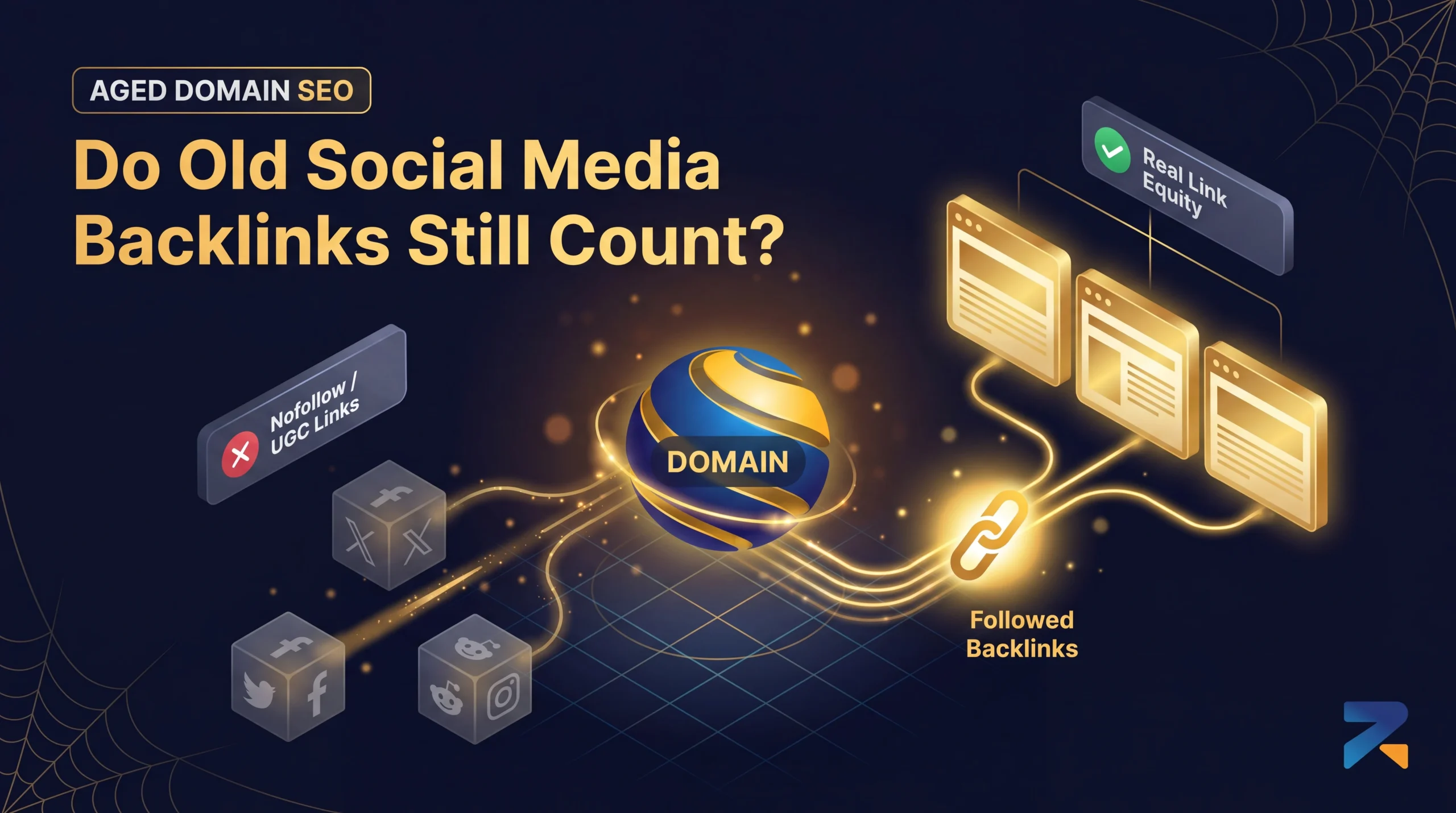
Google representatives, including John Mueller, have repeatedly stated that social media engagement metrics are not used as a direct ranking signal. Most social platforms also apply `nofollow` or `ugc` attributes to outbound links by default, meaning links shared on Twitter/X, Facebook, Reddit, and similar platforms typically don’t pass the kind of link equity a standard followed backlink would.
Why This Matters for Aged Domain Buyers
Some domain listings highlight a domain’s “social media history” — follower counts on an old associated account, or a high volume of historical shares — as a value signal. This is largely irrelevant to the domain’s actual SEO standing:
- Follower counts and shares aren’t crawlable ranking inputs. They don’t appear anywhere in Google’s documented ranking systems.
- Most social links are nofollow by default, so even heavy historical social sharing doesn’t translate into standard link equity.
- An old, dormant social account tied to the domain provides no SEO value simply by existing — it isn’t a signal Google’s crawlers evaluate as part of the domain’s authority.
What Does Still Matter From Social Activity
Social platforms can indirectly help SEO, but only through a specific mechanism: content shared widely enough on social media sometimes gets picked up, referenced, or linked to by independent websites, blogs, or press coverage — and those resulting links, if followed and from indexed pages, do carry normal link equity. It’s the secondary, earned backlink that matters, not the social share itself. When evaluating an aged domain, check its actual backlink profile (via Ahrefs, Majestic, or similar) rather than any social metrics a seller highlights.
How to Evaluate a Domain’s Real Link Value Instead
Focus due diligence on the same fundamentals that apply to any backlink audit: the number and quality of referring domains, whether links are followed, the topical relevance of linking sites, and whether the link profile shows any spam patterns. Social media history is, at best, a footnote to that process, not a substitute for it.
Frequently Asked Questions
Do social media shares count as backlinks for SEO?
Most social platforms apply nofollow or ugc attributes to links by default, so shares on Twitter/X, Facebook, and similar platforms generally don’t pass standard link equity the way a followed backlink from a website would.
Does a domain’s follower count on an old social account affect its SEO value?
No. Follower counts and social engagement metrics are not part of Google’s documented ranking systems. An aged domain’s associated social account history has no direct bearing on its SEO standing.
Can social media activity ever help SEO indirectly?
Yes, indirectly. Content that gets shared widely can attract attention from other websites, which may then link to it with a standard followed backlink — it’s that resulting link, not the social share itself, that carries SEO value.
Should I check a domain’s social media history before buying it?
It’s not a priority. Focus due diligence on the domain’s actual backlink profile, content history, and penalty status. Social media metrics a seller highlights rarely reflect real SEO value.
Related Guides
Sources & Further Reading