
Your traffic just dropped 40%. Google Search Console shows the cliff — impressions fell off starting the exact day the update rolled out. You’ve read the generic recovery guides. “Improve your E-E-A-T.” “Publish more helpful content.” “Wait for the next update.”
None of that tells you what to actually do when you’re an iGaming operator running a site on a niche that Google scrutinizes harder than almost anything else on the internet.
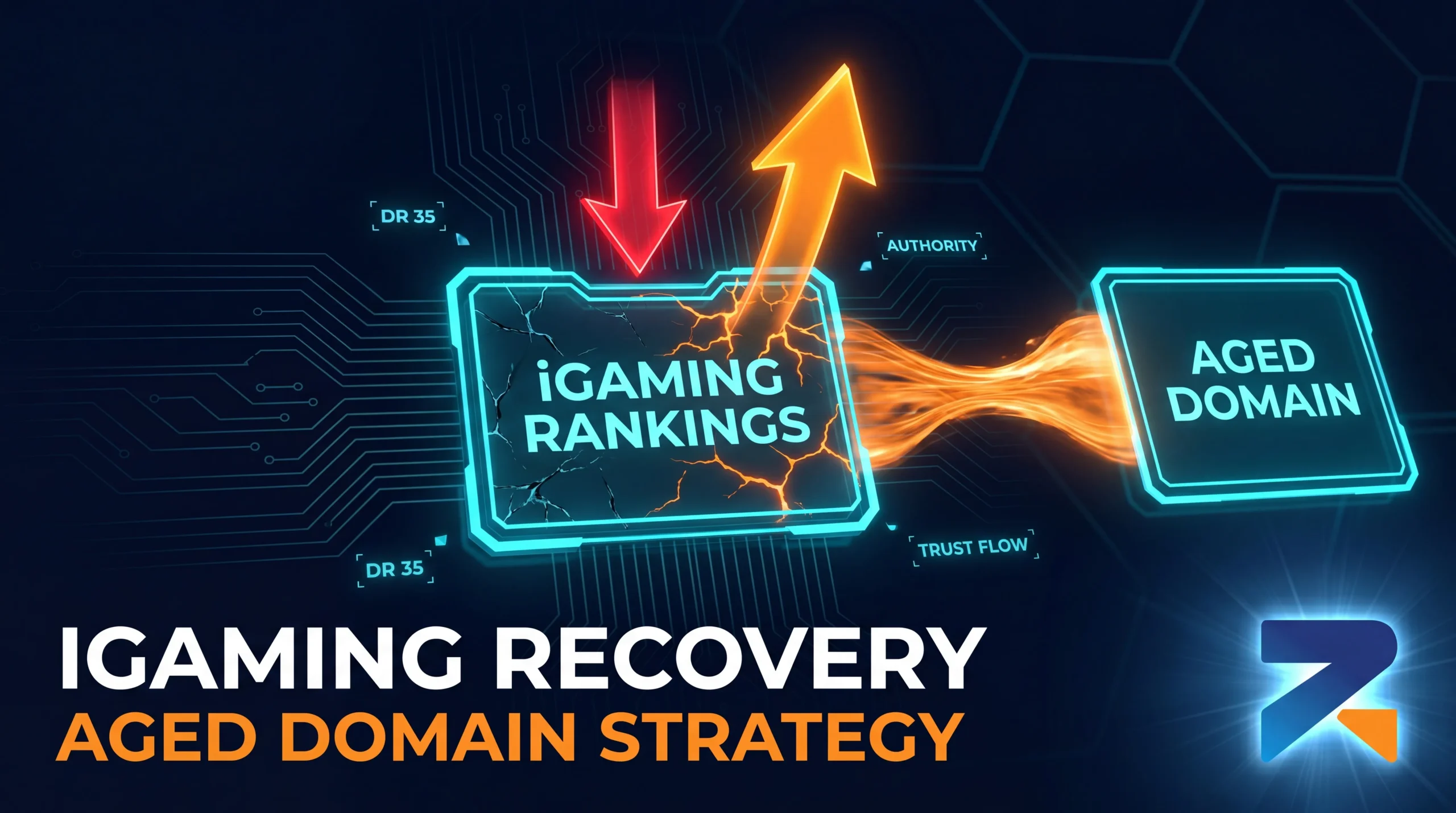
Here’s what those guides don’t cover: for iGaming affiliates and operators, aged domains are one of the most underused recovery tools in the stack. Not as a replacement for fixing your content. Alongside it. While your on-page work slowly earns back trust, an aged domain can inject authority into the exact parts of your setup that the update weakened. Done right, it closes the gap between now and whenever Google decides to reward your recovery.
This is the specific playbook for iGaming — not generic SEO advice repackaged with “casino” pasted in.
Why Core Updates Hit iGaming So Much Harder
Google classifies iGaming as YMYL content — Your Money or Your Life. Gambling involves real financial decisions, and Google applies a higher quality threshold to the entire niche. Every core update recalibrates how Google evaluates trust, expertise, and authority. In YMYL verticals, those recalibrations land with more force.
The March 2026 Core Update is a clear example. Across general web, over 55% of sites experienced noticeable ranking changes. In iGaming affiliate SERPs specifically, the shifts were sharper — thin bonus comparison pages and AI-heavy review content took drops of 40–70% in some tracked markets. The May 2026 update continued the same pattern: content that exists to rank rather than inform gets pushed down, and iGaming has more of that content per SERP than almost any other niche.
There’s a second problem unique to iGaming. Many operators can’t easily rebuild topical authority from scratch because their sites are deliberately lean — single landing pages, minimal editorial content, geo-specific pages targeting one or two keywords. When Google’s recalibration hits those pages, there’s no surrounding content ecosystem to cushion the fall.
That’s exactly the gap aged domains can fill.
The Two Recovery Paths Most Operators Don’t Think About Together
When an iGaming site loses rankings after a core update, the standard response is to fix the affected pages — rewrite them, improve E-E-A-T signals, update content, and wait. That works. Eventually. Google has confirmed that improvements made after a core update may not register until the next rollout, which typically means 3 to 6 months minimum before you see the result of on-page work.
Most operators treat this as the only option. It isn’t.
The second path is an authority augmentation strategy: while you’re fixing on-page issues, you use aged domains to shore up the backlink and authority signals that the update eroded. The two paths aren’t in competition — they work in parallel. On-page fixes address the content signals Google downgraded. Aged domain integration addresses the authority signals that now need reinforcement.
The mistake operators make is thinking recovery is purely a content problem. After a core update, it’s often an authority problem too. Your competitors who survived or gained rankings didn’t just have better content. They had stronger, cleaner domain authority backing those pages.
Before deploying these recovery strategies, it helps to understand what makes aged domains structurally different from fresh ones in the first place: aged domains for iGaming SEO explained.
Three Ways Aged Domains Actually Accelerate iGaming Recovery
This isn’t theory. These are the three specific tactics operators use in practice.
1. The 301 Redirect Authority Injection
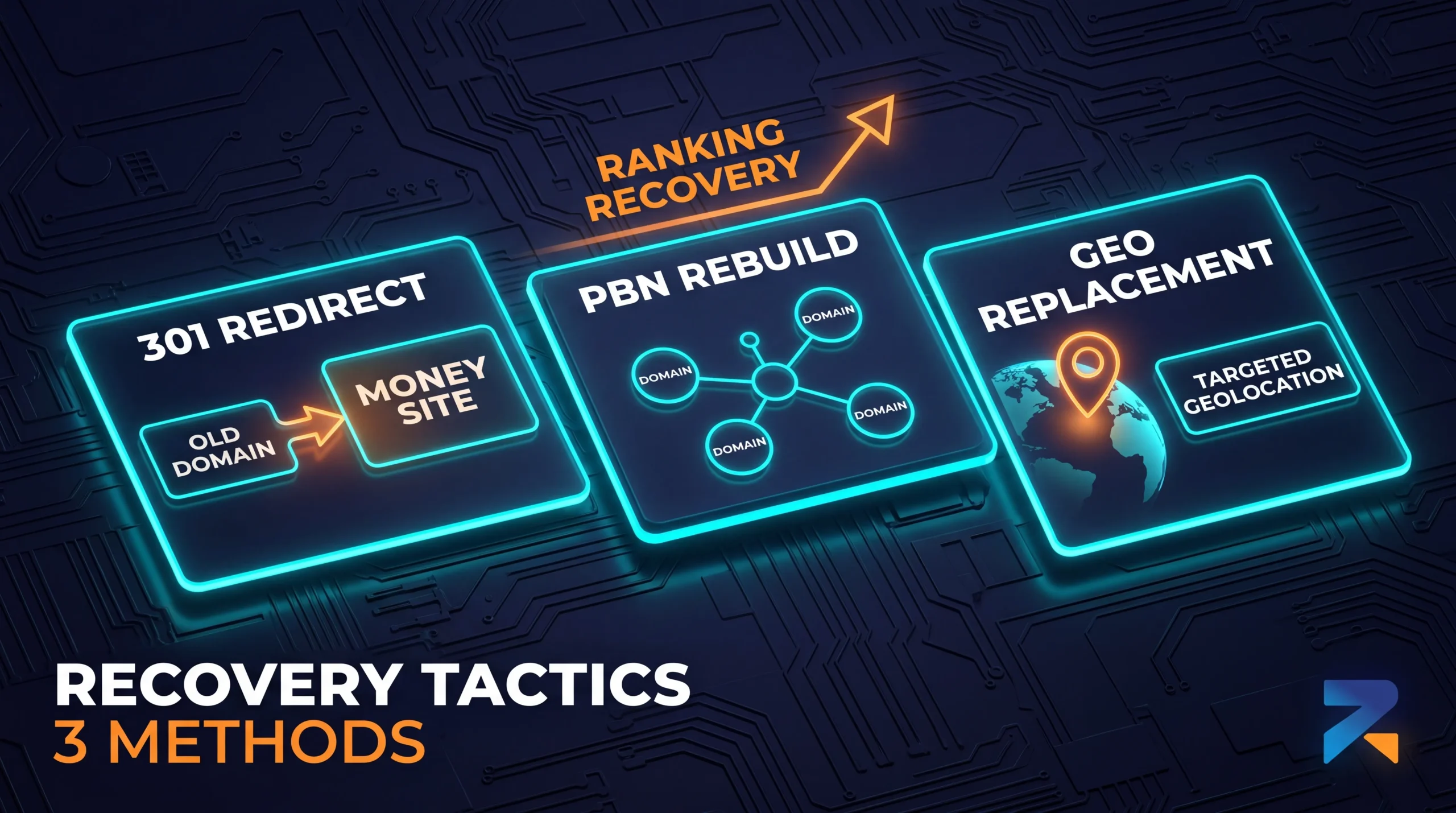
If your money site lost rankings but the domain itself hasn’t been penalized — just algorithmically downgraded — a 301 redirect from a clean aged domain is the fastest authority move available.
What this does: the referring domains and Trust Flow from the aged domain transfer to your money site. Google re-evaluates your money site’s authority profile now that it’s receiving clean inbound signals from a trusted source. You’re not waiting months for new outreach links to be discovered and weighted. The authority transfer starts registering within the typical crawl window.
The critical qualifier: the aged domain must be topically relevant. A sports media domain redirecting to a sports betting affiliate transfers cleanly. A tech news domain redirecting to a casino site creates a topical mismatch that weakens the transfer. In post-update recovery specifically, this relevance requirement is more important than before the update — Google is scrutinizing link relevance more carefully in the current quality evaluation framework.
2. Tier 1 PBN Rebuild After Penalty Risk
Some iGaming operators run PBN setups that used lower-quality domains acquired quickly and cheaply. Core updates often coincide with link spam evaluations that identify and devalue those links. If your rankings dropped and your link profile includes links from thin, irrelevant, or low-trust domains, you may be dealing with both an algorithmic content hit and a link quality hit simultaneously.
The recovery play here is to replace the weak tier with clean aged domains that have verifiable histories, genuine referring domains, and topical relevance. One DR 30 aged domain with 80 real referring domains from relevant sources outperforms ten low-quality PBN domains that got caught in the update’s link spam sweep. The rebuild takes time, but starting with clean inventory is the only approach that compounds rather than resets again at the next update.
3. Replacement Geo Pages on Fresh Authority
This is the most aggressive option and the right one when the pages that got hit are genuinely unrecoverable in the short term.
In iGaming, particularly in Southeast Asian markets, a landing page targeting a competitive keyword can be so thoroughly downgraded in a core update that the realistic recovery window is 6 to 12 months of sustained work. For an operator running time-sensitive campaigns or dealing with competition from sites that gained rankings in the same update, that timeline is commercially unacceptable.
The alternative: build a replacement page on a new aged domain targeting the same keyword in the same geo. Use the clean authority of the aged domain to get the replacement page ranking while the original site recovers. This isn’t abandoning the original money site — it’s running a parallel asset during the recovery window, then consolidating once the original site has rebuilt its authority.
Operators in the Indonesian and Thai markets use this constantly. A single landing page on an aged domain with DR 25–35 and 100+ relevant referring domains can be ranking competitive iGaming keywords in 3 to 6 weeks. That’s the window between now and when your original site might recover. That gap is what the replacement page covers.
The Recovery Diagnostic: What You Need to Know Before Buying Anything
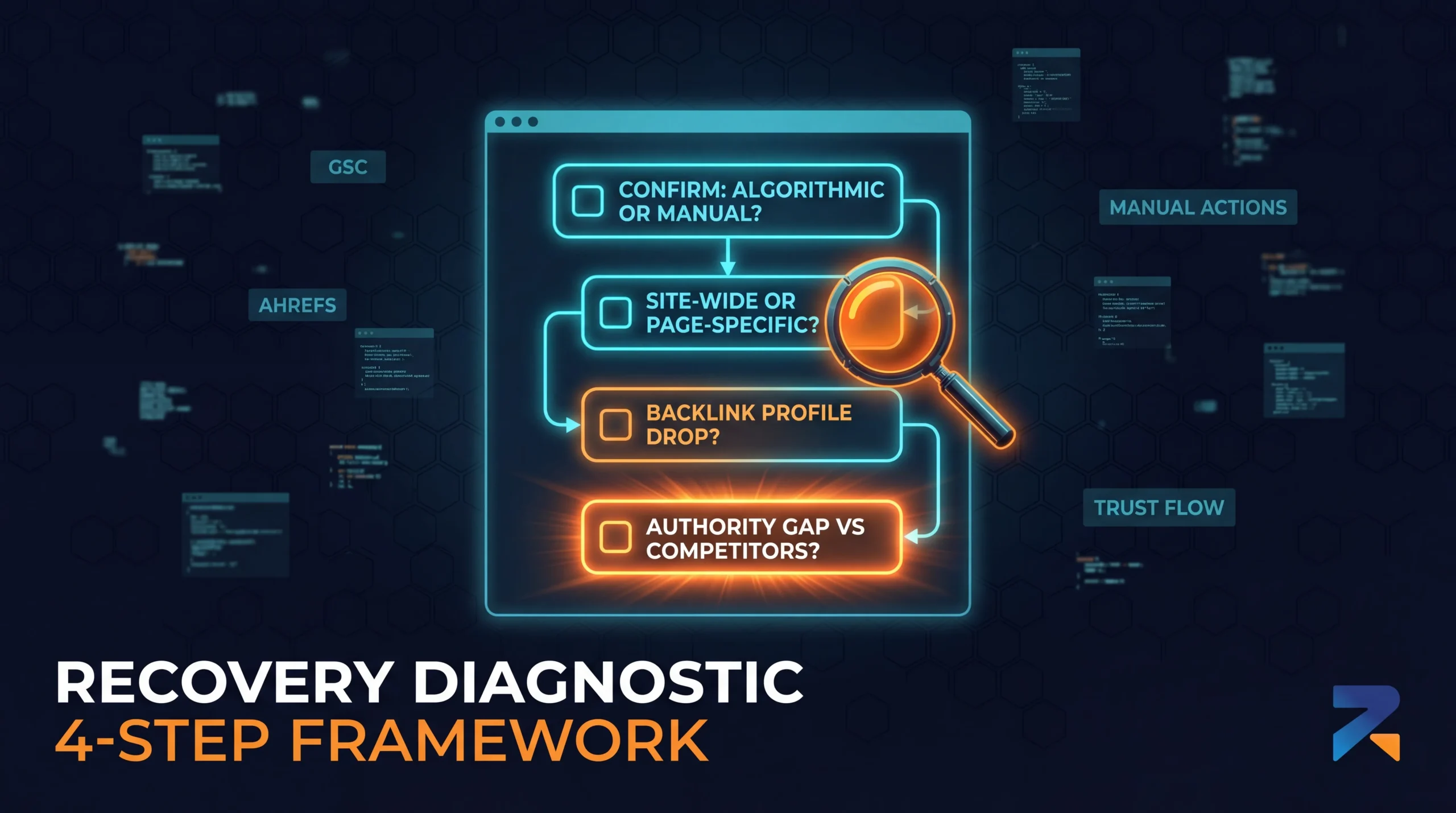
Don’t buy a domain before you’ve diagnosed what actually happened. Applying an aged domain to the wrong problem wastes both the domain and the time.
Step 1: Confirm it’s algorithmic, not a manual action. Open Google Search Console and check the Manual Actions report. If there’s a manual action notice, aged domains won’t help — you need to address the penalty directly and file a reconsideration request. Algorithmic drops and manual penalties look similar in traffic data but require completely different responses.
Step 2: Identify what got hit. Was it site-wide or page-specific? Site-wide drops that hit your homepage and category pages simultaneously usually point to a trust or authority signal issue — this is where aged domain authority injection is most relevant. Drops isolated to specific content pages are more likely a content quality issue — fix the pages first.
Step 3: Check your backlink profile. Run the domain through Ahrefs or Majestic. Did referring domain counts drop around the update? Sudden referring domain losses alongside ranking drops suggest link devaluation, not just content downgrading. That’s the scenario where a PBN rebuild with clean aged domains is the right call.
Step 4: Compare to competitors who gained. Look at who moved up in your target SERPs during the update window. Check their DR, their referring domain count, their content depth. If the gap between you and them is primarily an authority gap, aged domain integration closes that faster than content work alone.
What Not to Do After a Core Update Hits Your iGaming Site
Don’t rewrite everything immediately. The impulse to fix all affected pages in the first two weeks leads to publishing rushed content that doesn’t actually improve quality signals. Google needs time to recrawl and re-evaluate. Frantic bulk rewrites introduce inconsistency and often create new issues alongside fixing old ones.
Don’t blast new backlinks onto a weakened site. A core update downgrade followed immediately by a sharp increase in new inbound links creates a velocity pattern that looks like a recovery manipulation attempt. Build new authority gradually, starting with the most affected pages.
Don’t redirect a penalized aged domain onto your site. This one keeps burning operators who skip the pre-purchase audit. An aged domain with a clean surface appearance but a buried history of spam or manipulation will transfer that signal to your money site at the worst possible time. Every domain used in a post-update recovery play needs to pass a full audit — Wayback Machine content check, backlink spam score review, blacklist verification — before it touches your setup.
Don’t wait for the next core update to “fix” things passively. Recovery doesn’t happen automatically. Google has stated that improvements can take effect between updates, but only if you’ve actually made improvements. Passive waiting is how a recoverable situation becomes a permanent drop.
The Practical Recovery Stack
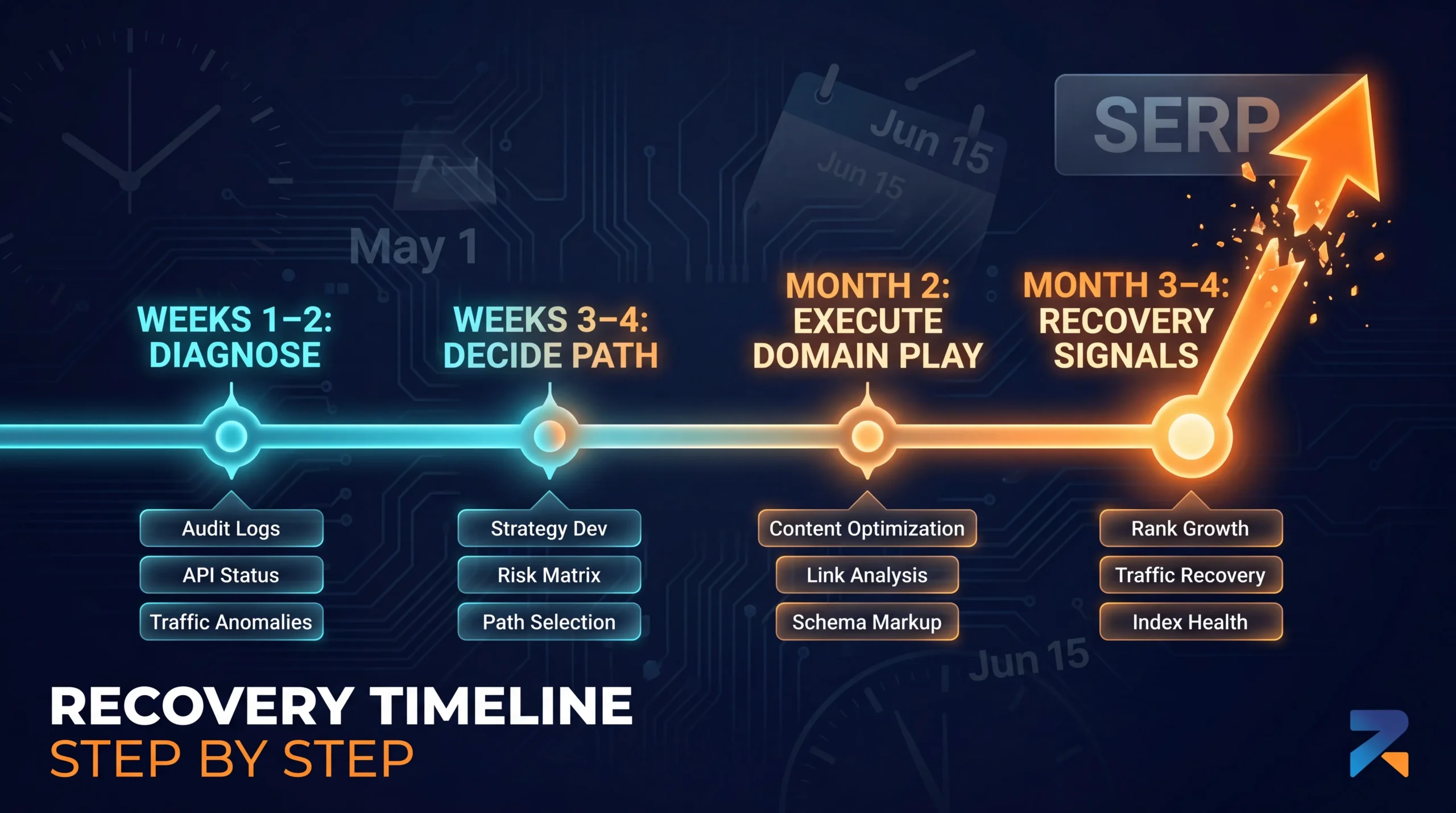
Here’s the sequence operators who’ve navigated core update hits successfully tend to follow.
First two weeks: run the diagnostic. Confirm algorithmic vs. manual. Identify which pages and which signals were affected. Pull the competitor analysis. Don’t touch content yet — just collect data.
Weeks 3 to 4: decide which recovery path applies. If it’s a content quality issue, begin the on-page improvement work on the 5 to 10 highest-value affected pages. If it’s an authority issue, begin identifying aged domains for the appropriate integration — 301 redirect, PBN tier rebuild, or replacement geo page.
Month 2 onward: execute the authority play. A 301 redirect from a clean aged domain takes effect within the typical Googlebot crawl window for an established site. A replacement landing page on a clean aged domain with proper optimization can begin ranking within 3 to 6 weeks. Build the new link equity gradually with anchor text distribution that doesn’t spike unnaturally against the domain’s existing pattern.
Month 3 to 4: monitor for recovery signals in Search Console. Look for impressions recovering on affected keywords before clicks recover — impressions come back first. If the on-page work and authority augmentation are working together, you should see impressions beginning to trend upward before the next core update arrives.
One realistic expectation: full recovery often requires the next core update to confirm the improvements. That’s not a reason to delay — it’s a reason to start now so the work is already done when Google’s systems re-evaluate.
The Operators Who Recover Fastest
They’re not the ones with the most content. They’re not the ones who rewrote the most pages.
They’re the ones who diagnosed their specific problem accurately, acted on both the content and the authority side in parallel, and used clean domain assets to bridge the gap while the slower content signals rebuilt.
An aged domain won’t fix a content quality problem on its own. But in iGaming, where authority is the actual barrier to ranking in the first place, waiting for content improvements to rebuild authority from zero after a core update hit is the longer and more expensive path.
The right assets cut that recovery window in half.
If you need clean, pre-audited aged domains with verified metrics and topical relevance for iGaming recovery — browse the inventory at Rexusdomain. Every domain has been checked for spam history, referring domain quality, and manual action status before it reaches the listing.
Related Guides
- Best aged domain marketplaces 2026 — top 7 platforms ranked
- Best Aged Domain Marketplace for iGaming SEO (2026)
- Where to Buy Aged & Expired Domains in 2026: The Complete Buyer’s Guide
- Aged Domain Sellers You Can Trust: How to Vet a Premium Marketplace
- How to Buy Aged or Expired Domains: A Step-by-Step Guide
Sources & Further Reading
Frequently Asked Questions
Can an aged domain help an iGaming site recover after a Google core update hit?
Yes, in two ways. First, acquiring a 301 redirect from an authoritative aged domain injects proven link equity into the penalised site without new link building. Second, migrating to a cleaner aged domain with superior authority signals can accelerate SERP recovery by resetting the site’s authority baseline above the threshold that triggered the original core update ranking loss.
How long does iGaming SERP recovery take using an aged domain after a core update?
Recovery via aged domain typically takes 3-6 months following the next core update cycle. Google reassesses penalised sites during subsequent updates rather than continuously. Using an aged domain with DR 30+ and a clean history can compress recovery by one full update cycle — meaning 3-month recovery instead of 6-9 months when relying solely on content improvements and new link building.
What type of aged domain works best for iGaming core update recovery?
For core update recovery, prioritise aged domains with: (1) previous iGaming or adjacent niche content history; (2) Trust Flow 20+ in recreation or finance categories; (3) diverse referring domains from real editorial sites; (4) no gaps in Wayback Machine archive history; (5) no previous manual actions. Domain age above 8 years with continuous content history provides the strongest recovery signal.
Should I redirect an aged domain to a penalised iGaming site or rebuild on the aged domain?
If the penalised site has strong brand recognition and existing organic traffic, a 301 redirect from the aged domain is the faster recovery path. If the fresh domain has minimal brand value and traffic, rebuilding entirely on the aged domain is cleaner — it avoids passing any legacy penalty signals through the redirect and gives you a fresh algorithmic evaluation on higher-authority infrastructure.
Do core update recoveries from aged domains hold over time?
Recovery gains from quality aged domains are generally durable if the underlying content quality meets E-E-A-T standards. Sites that recover via aged domain but maintain thin content, doorway pages, or unnatural link profiles see rankings re-penalised at the next core update. Aged domain authority is an amplifier — it accelerates both positive recovery and negative re-penalisation based on content quality signals.
Which Google core updates most affected iGaming sites using aged domains?
The March 2024 and June 2025 core updates most significantly impacted iGaming PBN strategies using aged domains, targeting sites with thin affiliate content and unnatural link profiles regardless of domain age or authority. Sites using aged domains for legitimate content-first iGaming operations — original reviews, game guides, responsible gambling resources — largely maintained rankings through both updates.