
You bought the domain. Audit passed. Deployment done. And now every instinct is telling you to start building links immediately because the domain cost money and you want results yesterday.
That instinct is exactly what gets people penalized.
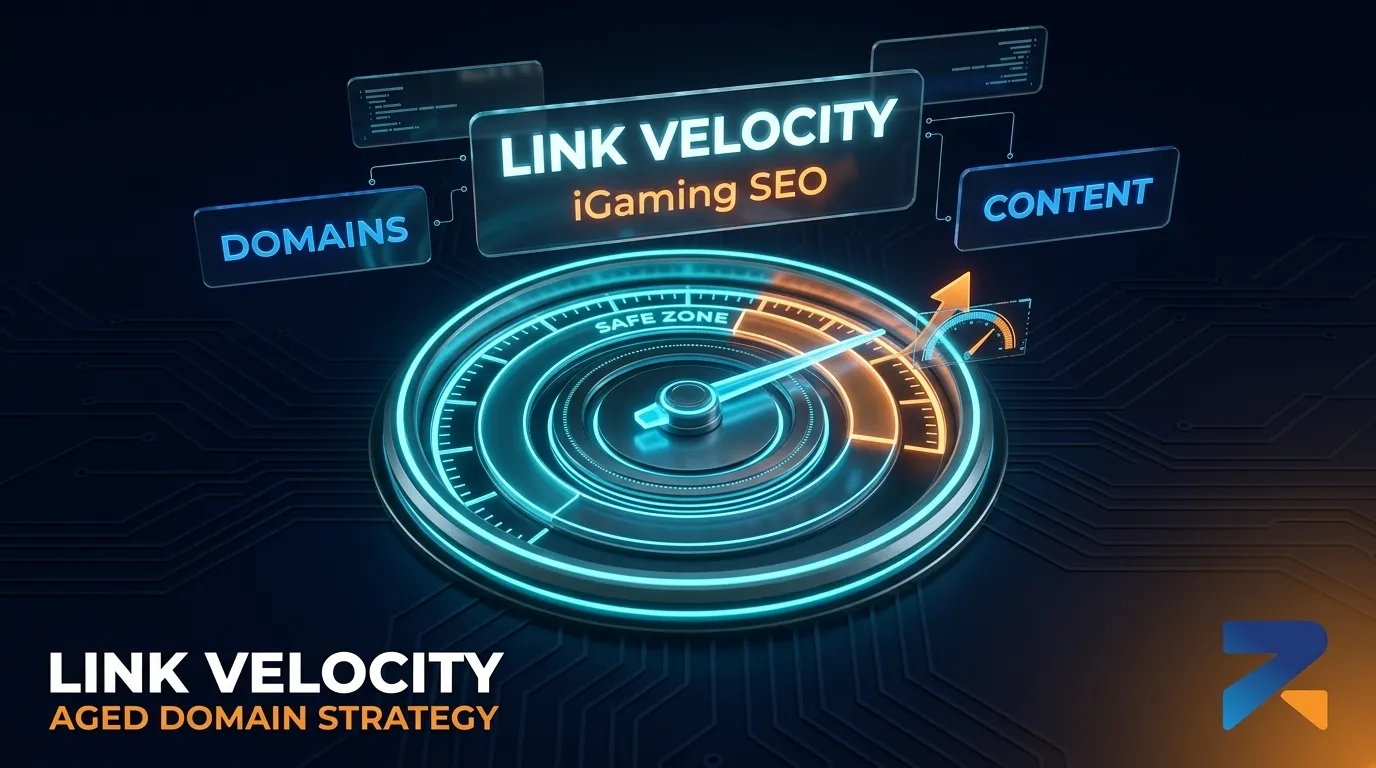
Link velocity — how fast you acquire backlinks after going live — is one of the cleanest signals Google uses to separate organic growth from manufactured authority. And the cruel part? The stronger the aged domain, the louder this signal speaks. A velocity anomaly on a fresh domain might drift under the radar for months. On a domain with 8 years of crawl history and 200 referring domains? Google has a detailed baseline to compare against. Deviations from that baseline are obvious.
Most guides on aged domains don’t touch this. They cover what to buy, how to audit, how to deploy. Then they stop. Nobody talks about what happens in weeks 2 through 16, when the choices you make about link acquisition either compound the authority you’ve inherited or quietly set up a manual review that arrives three months later and costs you everything you built.
This is that conversation.
Why Velocity Hits Differently on an Aged Domain
A fresh domain starts with no link history. Whatever velocity you establish in month one becomes the baseline. There’s nothing to compare it against.
An aged domain is different. Google has been crawling it for years. It knows exactly how links arrived historically — how many per month, from what types of sites, at what cadence. That entire history is the baseline. When you take ownership and the link pattern suddenly changes, the algorithm notices.
Here’s the thing. Most operators think aged domain authority protects them from scrutiny. It doesn’t. It increases it. A domain Google trusts is a domain Google watches more carefully when behavior shifts. That’s not speculation — it’s visible in the pattern of manual actions that consistently hit higher-DR domains disproportionately to lower-DR ones in iGaming.
The goal isn’t to avoid building links. It’s to build them at a rate that reads as organic given the domain’s existing history.
The First 30 Days: Do Less Than You Think
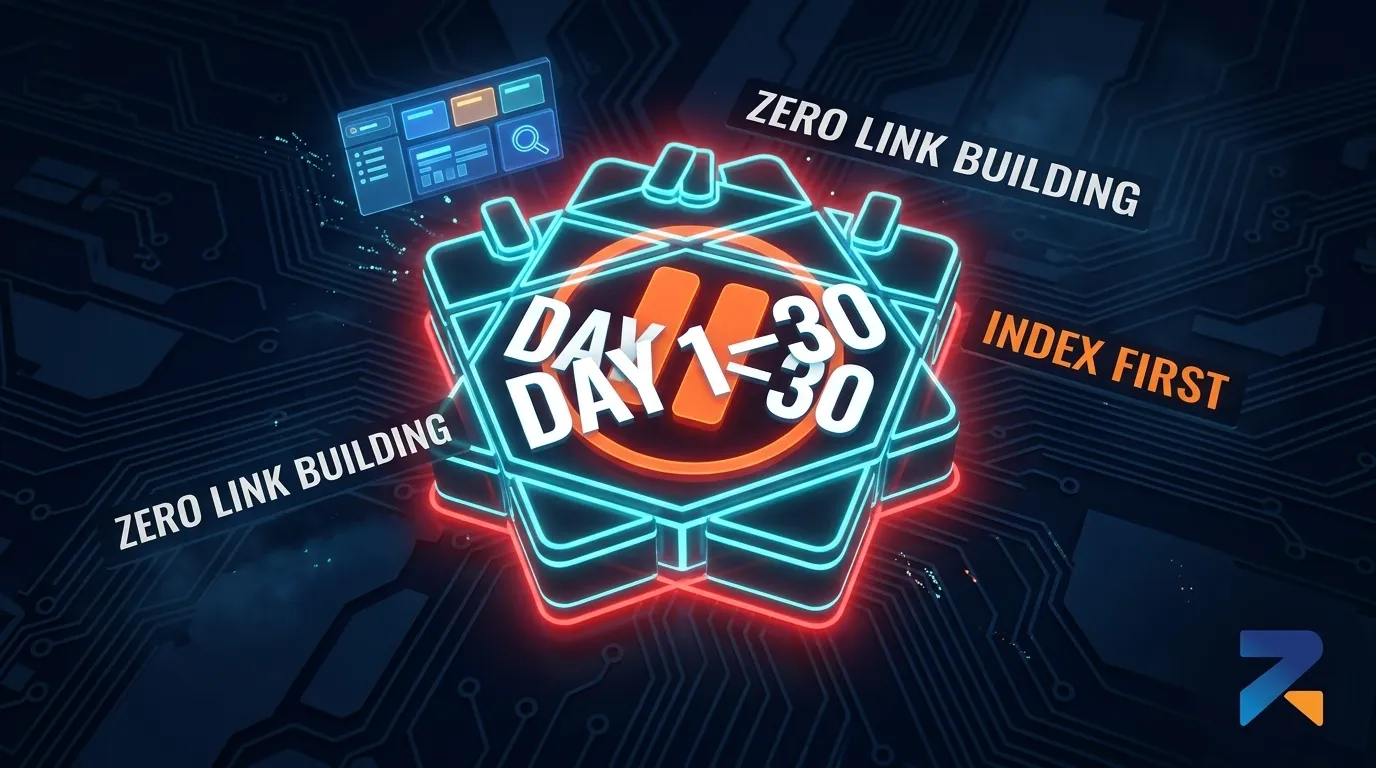
The first 30 days after deploying on an aged domain should involve zero active link building. Not slow link building. None.
This sounds wrong. But there’s a clear logic to it.
When a domain transfers ownership and a new site goes live, Google re-crawls it with fresh attention. It’s reassessing the entity — what the site is now, what it covers, whether the content matches the topical history of the domain. During this period, the crawl budget is active, GSC data is being freshly populated, and any new links acquired are being processed against a baseline that hasn’t yet stabilized under the new deployment.
Pushing links during this window creates exactly the kind of noise you don’t want. You get velocity on top of a transition, on top of new content, on top of changed site architecture. Each of these is a change signal. Stack them and the algorithm can’t cleanly evaluate any of them.
What to do in the first 30 days instead: publish your content, get pages indexed, monitor GSC for coverage errors and manual actions, and track whether the residual referring domain count is stable post-transfer.
Months 1 Through 3: Establishing Your Velocity Baseline
After 30 days of clean indexing with no link activity, you have something valuable: a baseline under your ownership. Now you can start building — carefully, and with a specific framework.
The number that matters most isn’t links per month. It’s referring domains per month. Google cares about domain diversity, not raw link count. Ten links from one site in a month is barely a data point. Ten links from ten different sites in a month is meaningful velocity.
For a single landing page deployment on an aged domain with DR 25-40, a safe starting range is 3 to 5 new referring domains per month in months 1 through 3. Make sure your anchor text ratios that hold up in iGaming are already mapped before the first link goes live — velocity without a ratio plan is just a faster way to get flagged.
For a full money site deployment, the spread is slightly wider — 5 to 8 new referring domains per month — because you have multiple pages absorbing the links, which naturally distributes the velocity signal across URLs rather than concentrating it behind one page.
These are starting ranges, not ceilings. The ceiling gets higher as the baseline grows. An aged domain receiving 4 new referring domains per month consistently for four months can safely accelerate to 8 to 12 per month in month five without the pattern looking manufactured. The velocity increase is proportional to the established baseline. That’s what organic growth looks like.
Single Landing Page vs Full Money Site: The Velocity Math Is Different

This distinction matters and almost nobody talks about it. The velocity math changes completely depending on which deployment model you chose before you went live.
A single landing page concentrates all of the domain’s authority behind one URL. That’s its strength for ranking. It’s also its vulnerability for link velocity. Every new link acquired points to the same page, which means velocity is visible and concentrated in one place. Google sees 20 new links to a single URL from 20 different referring domains in 6 weeks, and that pattern is harder to read as natural than the same 20 links distributed across 8 pages.
The implication: single landing page deployments need slower, more disciplined velocity. The 3 to 5 referring domains per month figure applies here. Don’t rush it. The domain’s existing authority is already doing heavy lifting — you don’t need to build as fast as you think.
Full money site deployments have a built-in buffer. Links land on homepage, category pages, reviews, and editorial content simultaneously. The same 20 links over 6 weeks across a 50-page site looks like natural editorial interest. The velocity ceiling is higher because the signal is spread.
In iGaming, operators running single landing page strategies in SEA markets — targeting one keyword in Indonesia or Thailand — consistently make this mistake. They treat their landing page like it’s a money site with pages to absorb link diversity, and they get velocity spikes on a single URL that Google reads clearly.
When to Push Harder: The Acceleration Window
After months 1 through 3 of conservative, consistent velocity, you enter what most experienced iGaming SEOs would call the acceleration window. If GSC is showing growing impressions, if your target keywords are registering in positions 8 through 25, and if your referring domain count has grown steadily without any drops — you’re in a stable position to increase cadence.
In months 4 through 6, doubling the starting velocity is reasonable. If you were at 4 referring domains per month, moving to 8 to 10 is consistent with the baseline you’ve established. The growth looks like a site that’s gaining traction, not a site that’s being manufactured.
There’s one condition on this: the acceleration has to match ranking movement. A domain that’s been live for 4 months with no ranking improvement and you’re suddenly pushing 15 new referring domains in a month looks like an attempt to force something that isn’t working organically. Google reads intent from patterns, and “stuck site suddenly flooded with links” is a recognizable pattern.
If you’re not ranking by month 3 on an aged domain with a decent DR, the problem isn’t your link velocity. It’s the deployment model, the content quality, or the domain’s history. Adding links faster won’t fix those.
The Anchor Text and Velocity Interaction
Link velocity and anchor text strategy don’t exist in isolation. How fast you build and what anchors you use are evaluated together.
The danger zone: exact match anchors at high velocity. This is the combination that kills iGaming rankings most reliably. Five exact match anchors landing in a 30-day window on a single landing page with a DR 35 aged domain is a manual review risk regardless of how natural each individual link looks.
The safer pattern: use exact match anchors sparingly and spread them across the velocity timeline. One exact match anchor in month 2, another in month 5, another in month 8. Between those, build with branded, naked URL, LSI, and generic anchors at your established velocity. The exact match anchors land in a profile that already looks organic, which means they do their job — reinforcing keyword relevance — without triggering the pattern recognition that comes from multiple exact match anchors arriving in a short window.
Operators who’ve been doing this correctly for years in iGaming describe the rhythm as “earn the right to use exact match.” You build a natural-looking profile first, then place keyword-specific anchors into it. You don’t open with them.
Red Flags: Signs You’re Moving Too Fast

These are the patterns that consistently precede manual reviews in iGaming. Know them.
Referring domain count jumping 30% or more in a single month. Even if the links are from legitimate sites, a sudden spike in acquisition rate stands out against historical data. This is especially dangerous in months 1 through 3 when there’s no established baseline under the new owner.
Multiple links from similar site types arriving in the same week. Ten casino-adjacent sites all linking to your money site within a 7-day window reads like a coordinated network even if the sites themselves are legitimate. Spread acquisition over time, not just across domains.
New links arriving before the site is properly indexed. Links pointing to pages that return 404s or pages that aren’t in the index yet are wasted at best. At worst, they’re a signal that links were acquired before content existed — which is a fingerprint of purchased link campaigns, not organic discovery.
A velocity spike immediately after a ranking drop. This is panic link building and Google sees it constantly in iGaming. A site loses positions after a core update and the operator pushes 20 new links in the next 3 weeks. The correlation is visible. It rarely recovers the rankings and often accelerates the decline.
The Practical Framework: What This Looks Like Month by Month

Lay it out flat, no ambiguity:
Days 1–30: Zero active link building. Publish content, get indexed, monitor GSC and referring domain stability. Identify internal link structure if it’s a full money site.
Months 1–3: 3 to 5 new referring domains per month for a single landing page. 5 to 8 for a full money site. Anchor mix heavily weighted toward branded, naked URL, and generic. No exact match anchors yet.
Months 4–6: Double the starting velocity if ranking movement is visible. Introduce first exact match anchor in month 4 or 5 once the profile looks established. Continue diversifying anchor types and target pages.
Month 6 onward: Velocity can scale proportionally to site growth and ranking traction. The baseline you’ve built over 6 months is now substantial enough to absorb higher acquisition rates without anomaly detection. This is when operators running long-game strategies start pushing harder — and it works because the groundwork is already there.
The operators who understand this don’t get hit by manual reviews. The ones who treat an aged domain like a magic ranking switch and blast links in the first two months consistently do.
Getting your link velocity right is one half of the equation. The other half is making sure the domains you’re building from are clean enough to be worth the effort. Every domain in the Rexusdomain inventory is pre-audited, verified, and transferred within 24 hours — so the foundation you’re building this velocity strategy on top of is actually solid. Browse available domains at rexusdomain and filter by the DR and niche relevance your target market needs.
Related Guides
Sources & Further Reading
Frequently Asked Questions
What is link velocity and why does it matter for iGaming sites on aged domains?
Link velocity is the rate at which a domain acquires new referring domains over time. For iGaming sites on aged domains, maintaining a consistent velocity of 10-30 new referring domains per month signals organic growth to Google. Sudden spikes above 100 new referring domains in 30 days — regardless of quality — trigger algorithmic scrutiny and can suppress rankings even on aged domains with strong existing authority.
What link velocity is safe for a new iGaming site launched on an aged domain?
Safe link velocity for a new iGaming site on an aged domain is 10-20 new referring domains in the first month, scaling to 20-40 by month 3, and 30-60 per month by month 6. Start conservatively and scale proportionally to ranking improvements. Aged domains support higher initial velocity than fresh domains due to existing authority, but exceeding 80-100 new referring domains in any 30-day period remains risky regardless of domain age.
Does an aged domain allow faster link velocity than a fresh domain for iGaming?
Yes. Aged domains support 2-3 times higher safe link acquisition velocity than fresh domains. A fresh iGaming domain should not exceed 10-15 new referring domains per month in the first 6 months. An aged domain with DR 30 plus and 12 months of indexation history can absorb 30-50 new referring domains monthly without triggering velocity anomaly flags. The existing link profile provides the authority context that makes new link growth appear proportional rather than manipulative.
Can link velocity drops harm an aged iGaming domain as much as velocity spikes?
Yes. Sudden drops in link velocity signal algorithmic devaluation or content de-indexation to Google. An aged iGaming domain that acquired 40 links per month for 6 months and then drops to zero for 60 days may see ranking losses as Google interprets the pause as a signal of site abandonment. Maintain consistent baseline link acquisition — even 5-10 new referring domains monthly during slower periods — to preserve velocity signals on aged domain properties.
How do I measure link velocity for an iGaming site in Ahrefs?
In Ahrefs Site Explorer, use the Referring Domains report with the date range filter set to month-by-month comparison. The Overview section shows a timeline graph of referring domain acquisition. Export monthly new referring domain counts for the past 12 months to calculate average velocity. Compare your velocity trend against top-ranking competitors for target iGaming keywords — competitor velocity benchmarks indicate the safe growth rate for your niche and market tier.
What causes unnatural link velocity spikes on aged iGaming domains and how do I avoid them?
Unnatural spikes on aged iGaming domains result from: publishing a viral piece that attracts bulk editorial links, running large outreach campaigns simultaneously, activating multiple PBN links at once, and buying bulk link packages. Avoid by staggering link delivery over 30-45 day windows rather than publishing all links on the same day. For PBN link additions, activate 3-5 new links per week maximum regardless of total network size, spreading delivery across multiple calendar weeks.
Does Google penalize iGaming sites for naturally occurring link velocity spikes after viral content?
No. Google distinguishes between algorithmically suspicious velocity spikes (identical anchor text from low-quality sources over 72 hours) and organic viral events (diverse anchors from real editorial sites over 2-4 weeks). Publishing genuinely useful iGaming research data, original statistics, or breaking regulatory news can produce 200 or more editorial links rapidly — this natural pattern is not penalised. Only artificial bulk link patterns with manipulative anchor text distributions attract algorithmic action.