
Is Domain Age a Google Ranking Factor? What Google Has Actually Said
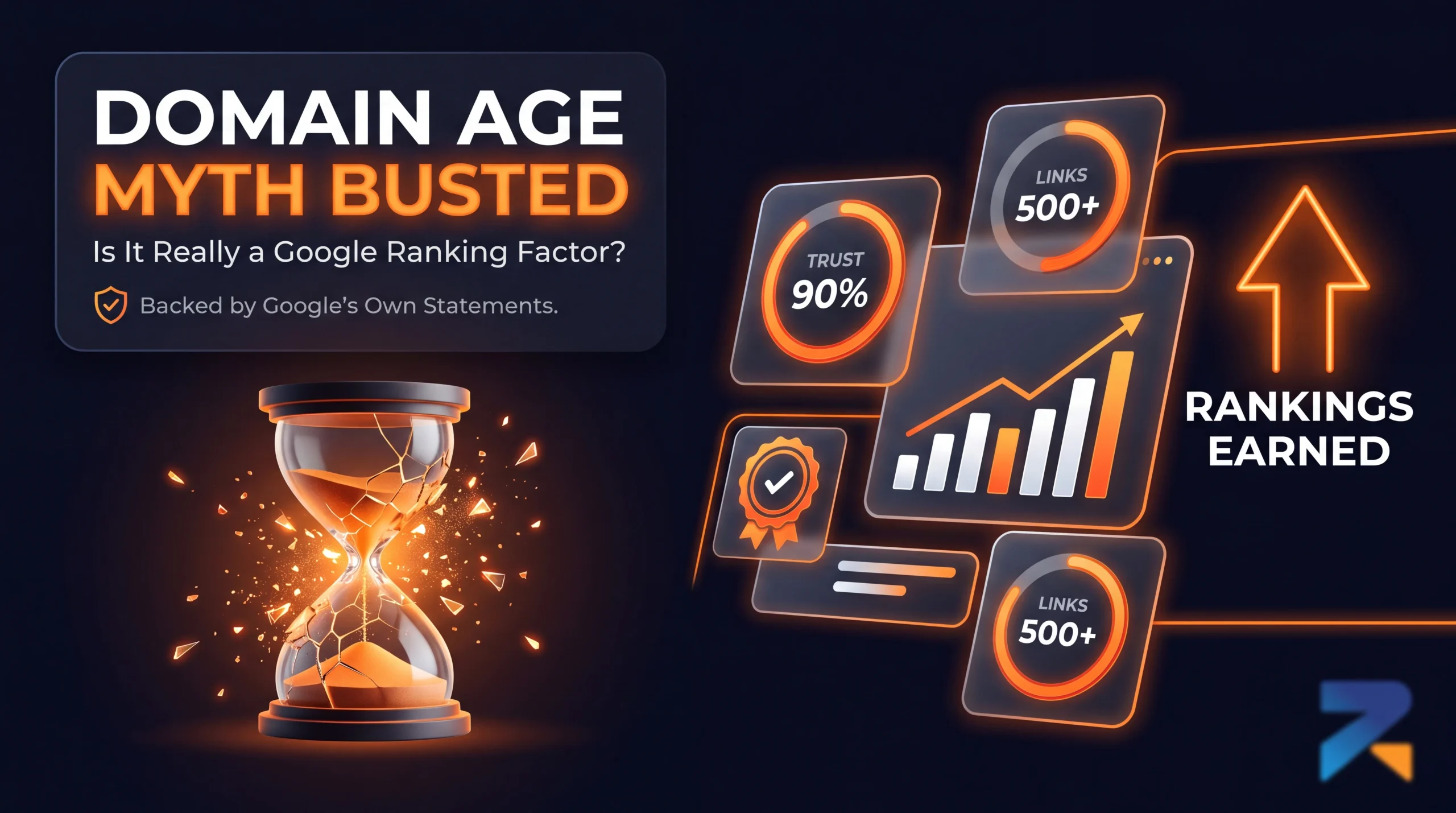
Google has stated multiple times, including directly from John Mueller in Webmaster Central hangouts, that domain age itself is not a ranking factor what actually correlates with older domains ranking well is the backlink profile, content depth, and trust signals they’ve had more time to accumulate, not the age number stored anywhere in Google’s systems.
Last updated: August 2026.
What Google Has Said, Directly
This isn’t ambiguous guidance. John Mueller addressed it explicitly in a 2019 Google Webmaster Central hangout, saying Google doesn’t use domain age as a ranking signal, and has repeated versions of that answer in subsequent Search Central office hours when the question resurfaces. There’s no Google patent, algorithm documentation, or public statement that describes “years since registration” as an input to ranking.
Then Why Do Aged Domains Rank Well?
The confusion comes from correlation being mistaken for causation. Domains that have existed longer have simply had more time to accumulate the things that actually do influence rankings:
- A larger, more established backlink profile — more time means more opportunities to earn links, assuming the domain was actively used.
- More indexed content and crawl history — search engines have had longer to discover, crawl, and build confidence in the site’s content.
- More historical trust signals — a longer track record without spam violations or manual actions is itself informative, but it’s the clean history that matters, not the raw number of years.
A domain that’s 10 years old but was parked for 9 of them has none of these advantages which is exactly why age alone doesn’t predict ranking performance, and why a 3-year-old domain with genuine content and links can outperform a much older one.
The Domain Registration Length Myth
A related and separate myth is that registering a domain for multiple years in advance (rather than one year at a time) signals legitimacy to Google and helps rankings. Google has also directly denied this a 2018 Search Console Help Community response from a Google representative addressed it directly, and Matt Cutts made similar statements years earlier. Registration length is a WHOIS-visible fact, but it isn’t used as a ranking signal.
What This Means for Buyers
If you’re evaluating an aged domain, the number of years since registration is not the metric to prioritize. What actually matters is what happened during those years: was the domain actively used with genuine content, did it earn topically relevant backlinks, and does it have a clean history free of penalties. Two domains registered the same year can be worth very different amounts depending entirely on their usage history treat age as context for a due-diligence check, not as a standalone quality signal.
Frequently Asked Questions
Does Google use domain age as a ranking factor?
No. Google has stated directly, including from John Mueller in Search Central hangouts, that domain age itself is not used as a ranking signal. What correlates with older domains ranking well is the backlink profile, content history, and trust signals they’ve had more time to accumulate not the age number itself.
Does registering a domain for multiple years help SEO?
No. Google has directly denied that domain registration length is a ranking factor. It’s a fact visible in WHOIS data, but there’s no evidence or official statement indicating Google uses it to influence rankings.
If age isn’t a ranking factor, why do aged domains often outperform new ones?
Because age is a proxy for accumulated signals, not a signal itself. An aged domain with a strong backlink profile, deep indexed content history, and no penalty history tends to outperform a brand-new domain with none of that but a young domain with the same signals would perform comparably.
Should I avoid a younger aged domain in favor of an older one?
Not automatically. A 3-year-old domain with a genuinely strong, relevant backlink profile and clean history is generally a better buy than a 10-year-old domain that sat parked or unused for most of its life. Evaluate the usage history, not just the registration date.
Related Guides
Sources & Further Reading