
Do Dead Backlinks From Now-Defunct Sites Still Count Toward an Aged Domain’s Authority?
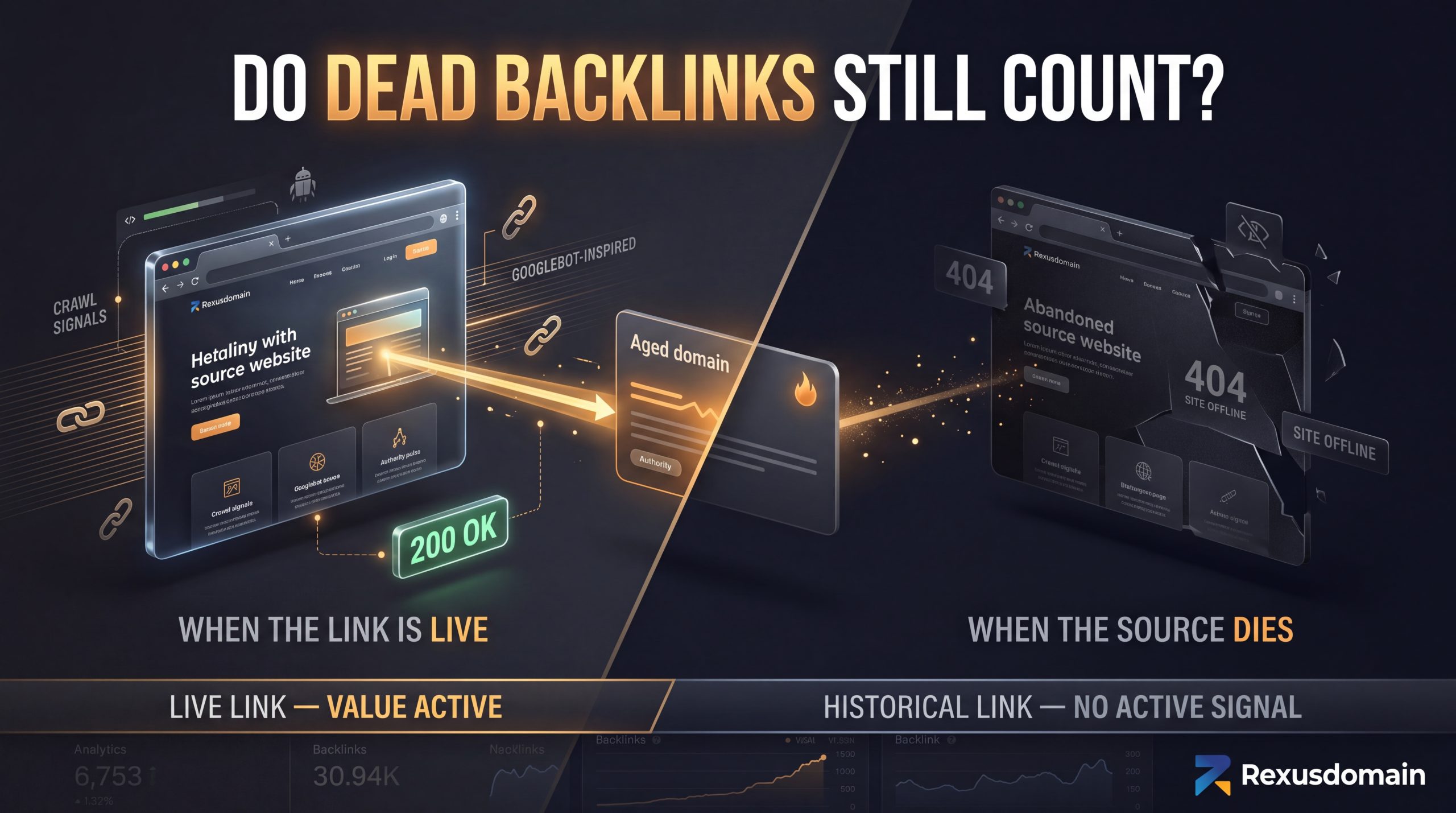
No — a backlink only passes SEO value while the linking page is live and crawlable by Google. Once the source site goes offline, gets deleted, or the specific page returns a 404, Google eventually stops counting that link once it re-crawls and confirms the page is gone, even though third-party tools like Ahrefs or Majestic may keep showing the link in historical data long after it stops mattering.
Last updated: September 2026.
Why a Backlink Needs a Live Source Page to Count
Google’s ranking systems evaluate backlinks by crawling the linking page and confirming the link exists there — it’s not a permanent record stored independently of the source. When a linking page disappears, whether through site closure, a redesign that dropped the page, or the domain itself expiring, Google’s next crawl of that URL returns an error, and the link is no longer factored into the target’s authority once that’s confirmed.
Why This Matters More for Aged Domains
- Backlink profiles accumulate over years, and a meaningful share of an aged domain’s historical links often point from sites that have since gone offline, changed ownership, or restructured their URLs without preserving old links.
- Third-party metrics lag reality. Tools like Ahrefs and Majestic maintain their own crawl indexes, which update on their own schedule — a link that’s been dead for months in Google’s eyes can still show as “live” in a backlink checker until that tool’s crawler revisits the source and confirms it’s gone.
- This inflates apparent authority for casual buyers. A domain’s DR or DA score reflects the backlink data a tool has crawled, not necessarily what Google currently counts — which is one reason third-party metrics alone are an unreliable way to evaluate an aged domain’s real link equity.
How to Check Whether an Aged Domain’s Backlinks Are Actually Live
- Export the domain’s backlink list from a tool like Ahrefs or Majestic, then spot-check a meaningful sample of the highest-value links by visiting the source pages directly.
- Look specifically for 404s, expired-domain parking pages, or redirects to unrelated sites — all signs the link is no longer contributing anything.
- Weight your evaluation toward more recently-crawled links in the tool’s data, since a link the crawler verified last month is more likely still live than one last confirmed years ago.
- Don’t treat total backlink count or referring domain count alone as a proxy for current authority — a domain with fewer but verifiably live, relevant links is often worth more than one with a large but partly-dead historical profile.
Frequently Asked Questions
Do backlinks from websites that no longer exist still help my aged domain’s SEO?
No. A backlink only passes value while Google can crawl and confirm the linking page still exists. Once the source site goes offline or the page 404s, Google stops counting that link once it re-crawls and detects the change.
Why do backlink tools still show dead links as active?
Third-party tools like Ahrefs and Majestic maintain their own crawl schedules, which can lag behind Google’s. A link may appear “live” in a tool’s data for months after it’s actually stopped counting in Google’s index.
Should I disavow dead backlinks on an aged domain?
Generally no — disavow is meant for manipulative or spammy links tied to a penalty risk, not simply dead ones. A dead link naturally stops passing value on its own without needing disavowal.
How can I tell if an aged domain’s high DR score reflects real, live authority?
Spot-check a sample of the domain’s highest-value backlinks by visiting the source pages directly to confirm they’re still live and actually linking to the domain, rather than relying on the DR score alone.
Related Guides
Sources & Further Reading