
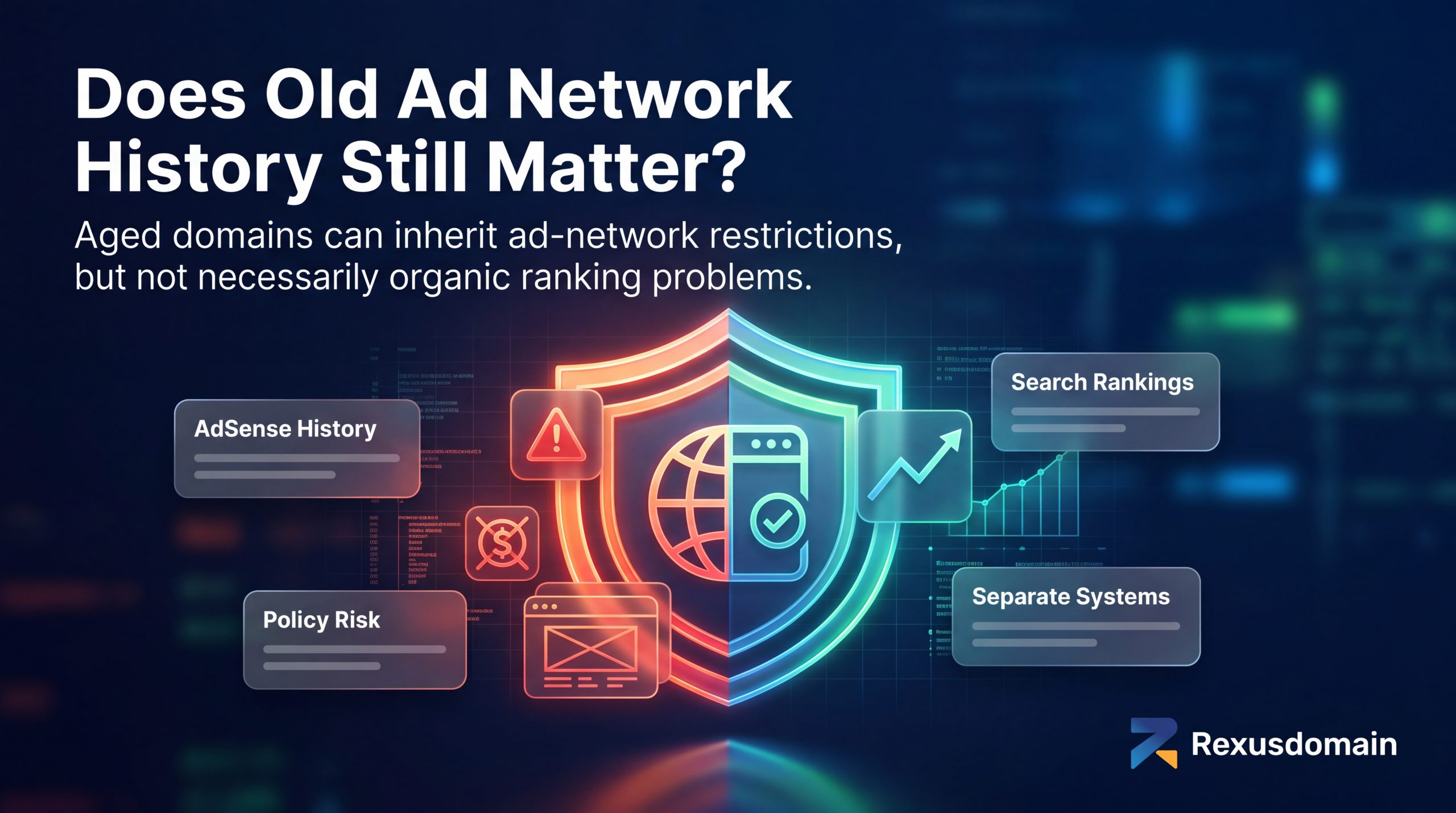

Does an Aged Domain’s Old Ad Network History Affect Its Reputation?
Occasionally, yes — a domain previously banned from AdSense or a major ad network for a policy violation can carry that specific network’s ban forward to a new owner, since ad network bans are generally tied to the domain itself rather than the account that committed the violation. This is a separate risk from Google’s organic search ranking systems, which don’t factor in ad network history.
Last updated: September 2026.
Why Ad Network Bans Can Follow a Domain
AdSense and similar ad networks maintain their own policy enforcement systems, separate from Google Search’s ranking algorithms. When a domain is banned from AdSense for a serious violation (invalid traffic, prohibited content, repeated policy breaches), that ban is frequently recorded against the domain itself, not just the AdSense account that ran ads on it — meaning a new owner attempting to monetize the same domain with AdSense can inherit the restriction even though they had no involvement in the original violation.
This Is Separate From Organic Search Ranking
It’s worth being precise about the distinction: an AdSense ban affects your ability to monetize a domain through that specific ad network — it has no documented effect on how Google Search ranks the domain organically. A domain can be permanently banned from AdSense while still ranking normally in search results, since the two systems evaluate different things for different purposes.
How to Check an Aged Domain’s Ad Network History Before Buying
- Ask the seller directly whether the domain, or any site previously hosted on it, was ever banned from AdSense or another major ad network — this is a reasonable and common due-diligence question in domain sales.
- Attempt a test AdSense application (or ask the seller to) before finalizing a purchase if ad monetization through that specific network is central to your plans for the domain.
- Check the Wayback Machine for signs of the kind of content typically associated with ad network bans — aggressive pop-ups, invalid-traffic-generating schemes, or prohibited content categories.
- Have a monetization backup plan. If AdSense risk is a concern, alternative ad networks or direct sponsorship deals aren’t affected by an AdSense-specific ban, since each network enforces its own policies independently.
Frequently Asked Questions
Can a new domain owner inherit a previous AdSense ban?
Yes, in many cases. AdSense bans are often tied to the domain itself rather than the account that violated policy, meaning a new owner can find the same domain restricted from AdSense even without any involvement in the original issue.
Does an AdSense ban affect a domain’s organic Google Search rankings?
No. AdSense policy enforcement and Google Search’s organic ranking algorithms are separate systems. A domain can be banned from AdSense while still ranking normally in organic search results.
How can I check if an aged domain has ad network issues before buying?
Ask the seller directly about ad network history, review the domain’s Wayback Machine history for red-flag content patterns, and consider a test application to the ad network you plan to use if monetization is central to your plans.
Are all ad networks affected the same way by a domain-tied ban?
No. Each ad network enforces its own separate policies, so a ban from one network (like AdSense) doesn’t necessarily affect eligibility with a different ad network or direct sponsorship arrangements.
Related Guides
Sources & Further Reading