
Can You Erase an Aged Domain’s Previous Niche Footprint?
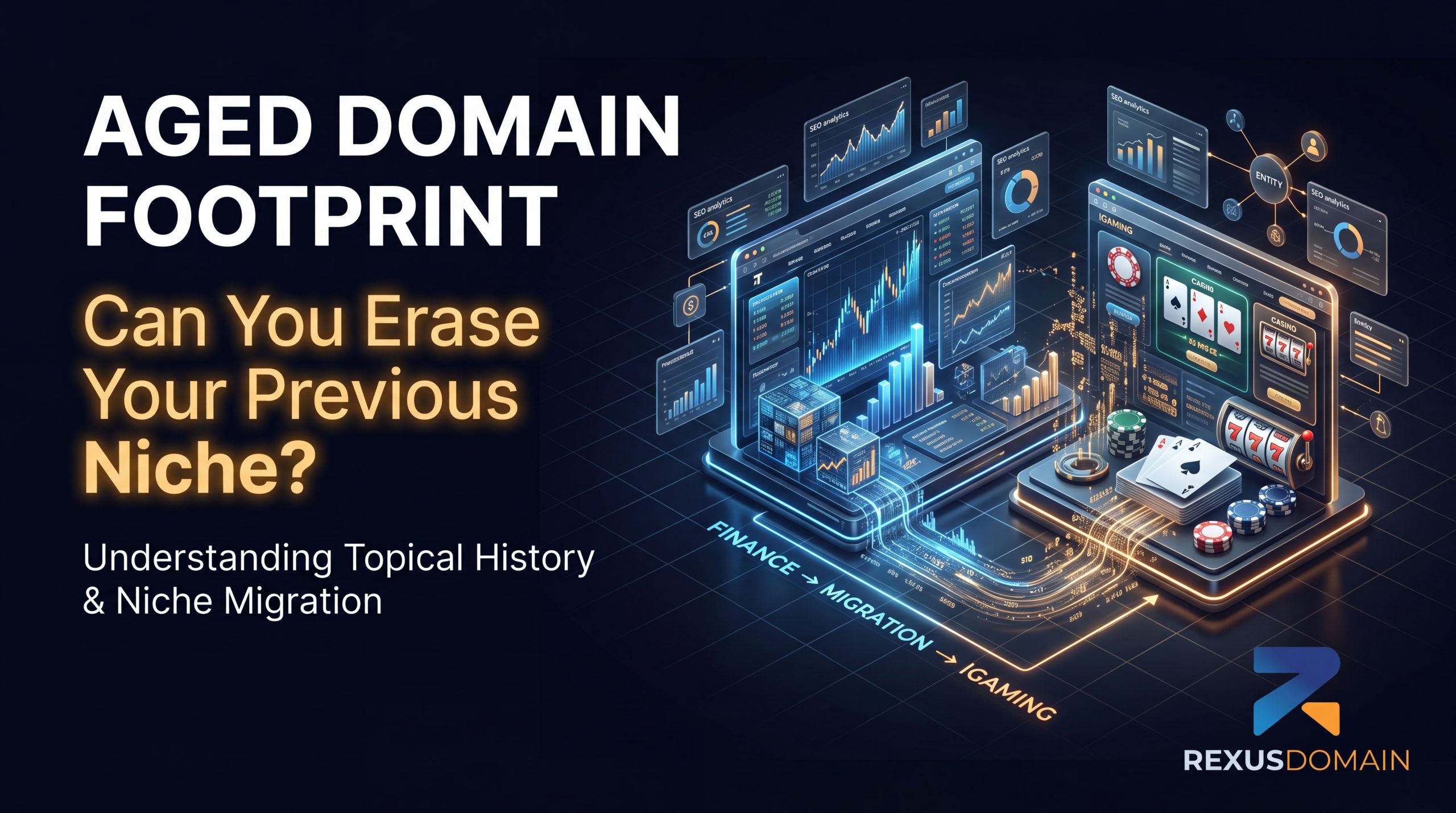
Picture this scenario. You just secured an aged domain with a mouth-watering backlink profile. For eight straight years, it was a heavy hitter in the finance niche. Perfect metrics. Full of confidence, you gut the site and relaunch it as an iGaming blog.
The million-dollar question: Will Google’s algorithm simply forget the domain’s past? Can you wipe out the old topical history just by flooding it with new content?
The hard truth: Not quite.
You can’t use a neuralyzer to wipe Google’s memory. But that footprint does fade over time. Let’s break down how algorithmic memory actually works in the 2026 SEO environment and what tactics actually move the needle.
Why Google Holds a Grudge (Understanding Entity & Topical Clustering)
Search in 2026 moved past simple keyword matching a long time ago. Google thinks in Entity Graphs and topical clusters.
When a domain spends eight years covering stocks, mutual funds, and investments, Google bakes “financial entities” deep into its DNA. Pivoting radically to iGaming is like forcing a Wall Street investment banker to suddenly deal blackjack in Vegas. The system gets confused. This topic confusion will immediately throttle your rankings.
3 Inevitable Growing Pains During the Transition
Prepare to see some weird anomalies in Google Search Console (GSC) while you try to flip the niche:
-
The New-Niche Sandbox: Your iGaming content might be perfectly optimized, but it gets stuck on page 5. Why? The domain’s topical authority is anchored in finance, not gambling.
-
Ghost Rankings: This is incredibly frustrating. Suddenly, your homepage ranks on page one for an obscure long-tail keyword like “how to calculate CD interest rates”—even though you deleted all the finance articles months ago. That is lingering entity memory in action.
-
Tanking Crawl Rates: Googlebot hates confusion. When crawlers expect stock market data but find online slot reviews instead, they drop your crawl frequency. Their confidence score in your site’s relevance takes a massive hit.
The Real Recovery Timeline
How long does it take for Google to finally view your site as an iGaming entity? It all depends on how heavy that past footprint was.
If the domain was a neglected, low-tier finance blog for two years, you might neutralize it in 3 to 6 months. But an 8-year-old authority monster? Pack some patience. You are looking at 6 to 24 months before those old signals stop choking your new content’s ranking potential.
Recovery Strategy: How to “Force” the Reset
If you already spent the money and are committed to the domain, you have to play aggressively to overwrite the old signals.
-
Ruthless Pruning (With Caution): Delete and serve a 410 (Gone) or Noindex status for old content that has zero overlap with the new niche. Do not blanket 301 redirect them to your new homepage. That just funnels conflicting financial signals straight into your iGaming front door.
-
The Bridge Strategy: Don’t jump straight from stocks to casinos. Build transitional content clusters. Write about “Financial Risk Management in Sports Betting” or “The Economics of Crypto Casinos.” Give the algorithm a logical thread to follow.
-
Inject New Entities: You need massive fresh signals. Build new backlinks from established iGaming authorities, naturally mention casino entities in your copy, and ensure your Schema Markup explicitly declares the site’s new identity.
Realistically, the “niche gap” dictates your Return on Investment.
If the gap is moderate—like pivoting from E-commerce to SaaS—it is entirely worth the effort. Build solid content clusters, wait 6 to 12 months, and the domain will bounce back stronger.
But if the gap is as extreme as Finance to iGaming?
Honestly, save your money. Buy a fresh domain or hunt down an aged domain that actually fits your industry from day one. Spending two years trying to brainwash Google usually ends up burning both your budget and your sanity. Starting with a blank canvas is often much more profitable than trying to scrape the paint off a dry masterpiece.