
Do WHOIS Privacy Changes Affect an Aged Domain’s SEO?
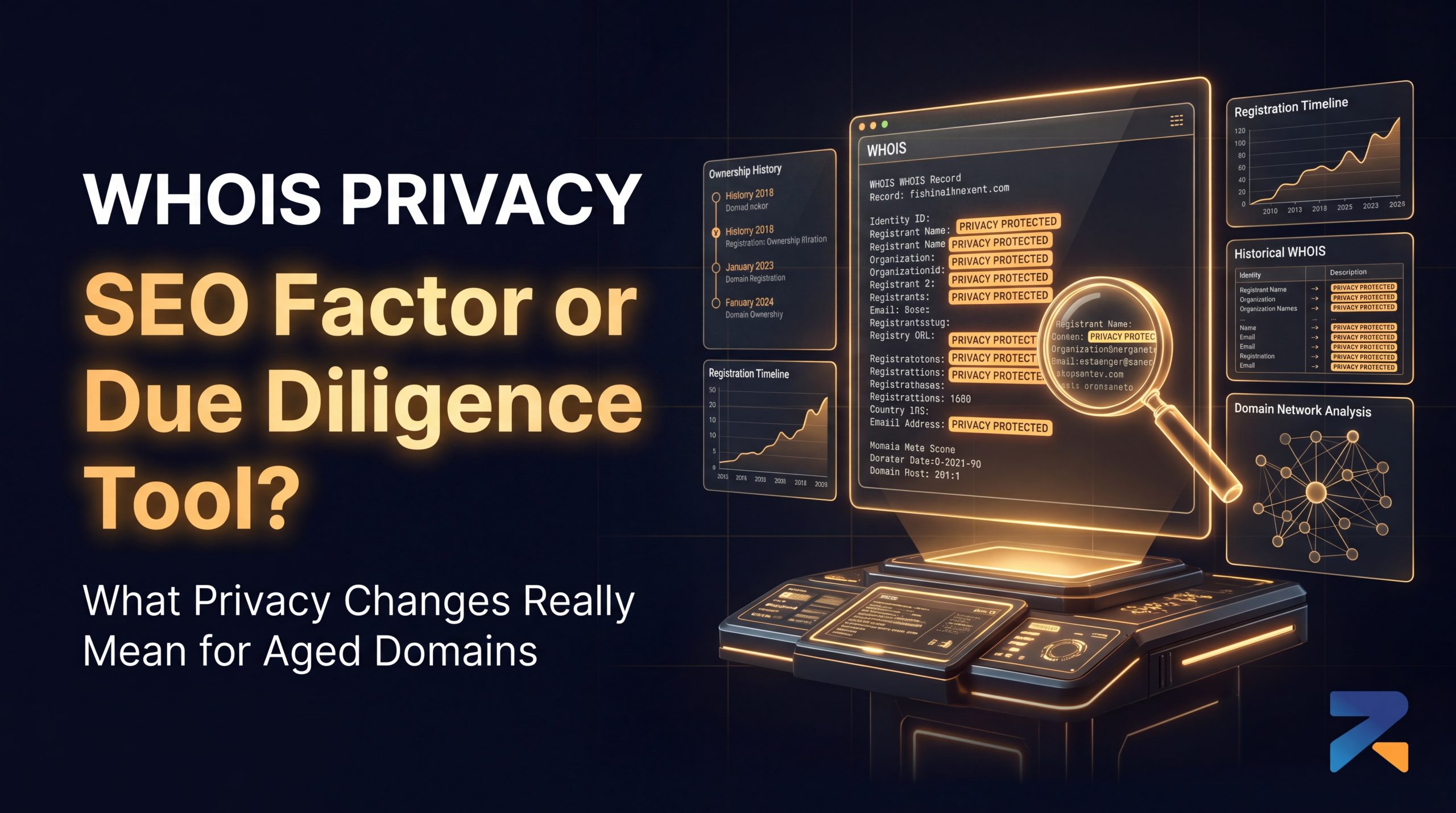
No — Google has stated that WHOIS privacy status is not a ranking factor, and toggling privacy protection on or off after buying an aged domain has no direct effect on how it’s evaluated in search. The practical impact is on due diligence, not rankings: privacy protection limits what a buyer can independently verify about a domain’s ownership history before purchase.
Last updated: September 2026.
What Google Has Actually Said About WHOIS and Rankings
Google representatives, including John Mueller, have repeatedly confirmed that WHOIS registration data — including whether privacy protection is enabled — plays no role in the algorithm’s evaluation of a site. This lines up with how most aged domains actually look: privacy protection became the registrar default for the vast majority of domains after GDPR-driven changes to WHOIS policy in 2018, meaning the majority of legitimate domains now carry privacy protection with no SEO consequence.
Where WHOIS Privacy Actually Matters
- Buyer due diligence. Privacy protection hides the registrant’s identity, which makes it harder to independently verify how many times a domain has changed hands, or to cross-reference an owner against other domains they control (useful for spotting past PBN or link-network involvement).
- Historical WHOIS lookups. Services like WhoisXML or DomainTools can sometimes surface historical (pre-privacy) WHOIS records, which is one of the few ways to research ownership history on a domain that currently has privacy enabled.
- Trust signals for site visitors, not search engines — some users and B2B buyers manually check WHOIS for transparency before doing business with a site, though this is a minor factor compared to on-site trust signals like reviews and clear contact information.
Should You Enable or Disable WHOIS Privacy After Buying an Aged Domain?
There’s no SEO reason to choose either way — the decision comes down to your own privacy preference and any regulatory or contractual requirements specific to your niche. Enabling privacy protection is the more common default and carries no downside for search visibility.
Frequently Asked Questions
Does hiding WHOIS information hurt an aged domain’s search rankings?
No. Google has confirmed WHOIS privacy status is not a ranking factor. Enabling or disabling privacy protection has no direct effect on how a domain is evaluated in search.
Why do most aged domains have WHOIS privacy enabled by default?
Registrars widely adopted WHOIS privacy as the default setting following 2018 GDPR-related changes to domain registration data policy, so most domains registered or renewed since then carry privacy protection automatically.
Can I still research a domain’s ownership history if WHOIS privacy is enabled?
Sometimes. Historical WHOIS lookup services can occasionally surface pre-privacy registration records, though this isn’t guaranteed for every domain and depends on when privacy protection was enabled.
Should I disable WHOIS privacy on an aged domain I just bought?
There’s no SEO benefit either way. The choice depends on your own privacy preference, since it has zero measurable effect on search rankings.
Related Guides
Sources & Further Reading