
The click you used to win is getting intercepted before it ever reaches you.
A user types “is BetWhatever legit” or “best payout slots.” Six months ago they scrolled, compared, and clicked through to a site that ranked. Today, Google answers the question above the fold with an AI Overview, or the user never opens Google at all they ask ChatGPT, Perplexity, or Gemini and get a synthesized answer with three or four cited sources. If your domain isn’t one of those sources, you don’t exist in that conversation.
This is the shift nobody in iGaming can afford to ignore. Ranking #1 still matters. But #1 underneath an AI Overview that already gave the user their answer is worth a fraction of what it was. The game moved from “rank the page” to “become the source the machine trusts enough to quote.”
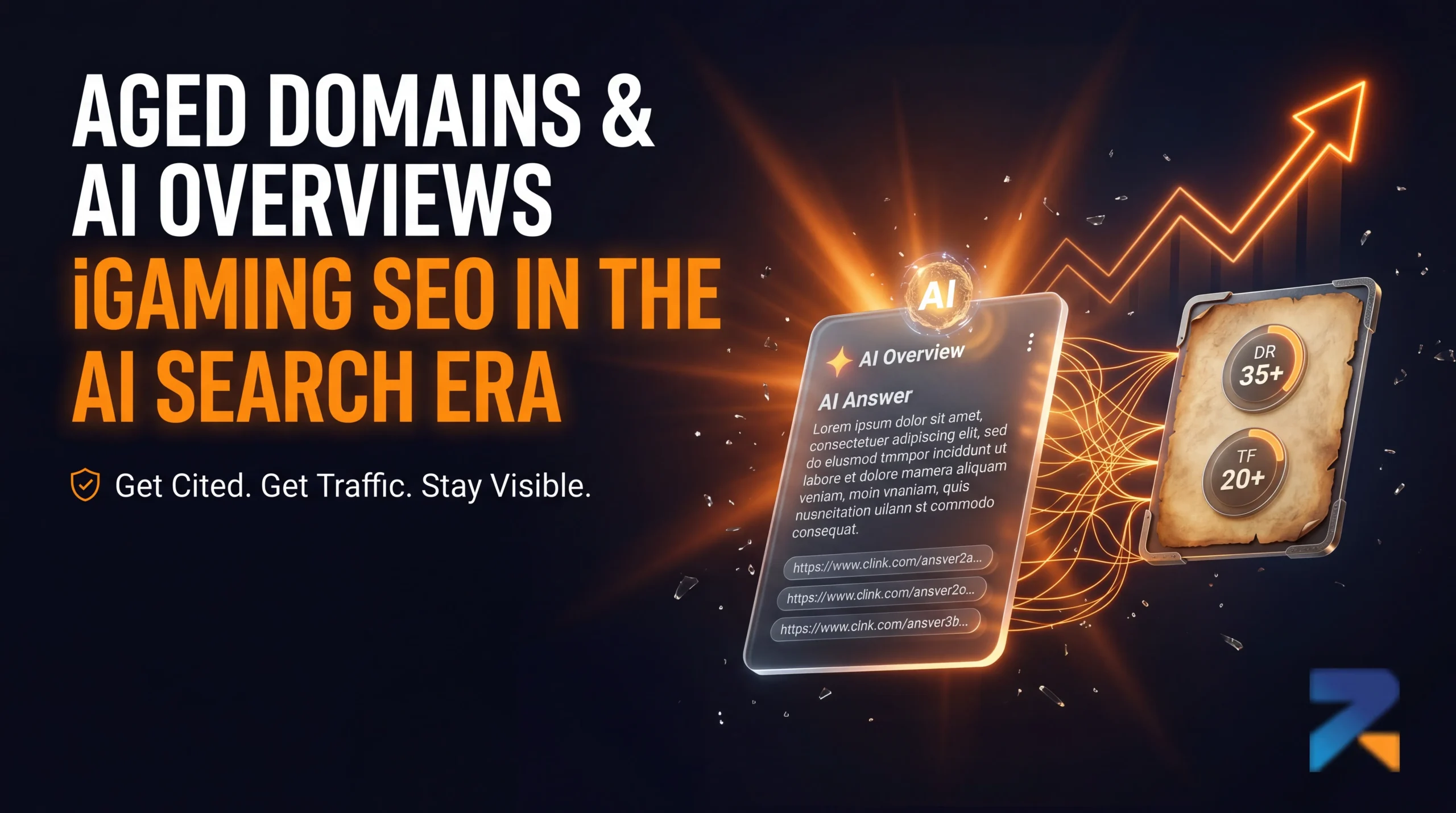
And here’s where it gets interesting for anyone running aged domains: the signals that AI engines use to decide who gets quoted are almost exactly the signals an aged domain already carries. Trust. Entity recognition. Topical history. Google’s existing model of who you are. That’s not a coincidence and it’s why authority you bought is suddenly worth more than authority you’re still trying to build.
What AI Overviews Actually Changed for iGaming Search
AI Overviews don’t rank pages. They extract answers and cite sources. That’s a fundamentally different mechanism, and most operators are still optimizing for the old one.
Under the classic model, you fought for position. Ten blue links, you wanted to be in the top three, and CTR followed position predictably. Under the AI Overview model, Google reads the top-ranking content, synthesizes an answer, and attaches a handful of citation links. The user reads the synthesized answer. Click-through on the organic result below can fall by a third or more when an AI Overview sits on top of it.
Zero-click searches were already the majority of Google traffic before any of this. They’ve only climbed since. So you’re now competing for two completely different outcomes: getting cited inside the AI answer, and capturing the shrinking pool of clicks that still happen below it.
In iGaming this hits harder than in most niches. Google classifies gambling content as YMYL Your Money or Your Life which means it applies maximum scrutiny to who it trusts as a source. A brand-new domain with no track record doesn’t get quoted in a YMYL AI Overview. It barely gets indexed. The bar for inclusion is built on exactly the trust signals new domains don’t have yet.
Why Google Suppresses AI Overviews on Some Gambling Queries — But Not All
Here’s the nuance most people miss: Google doesn’t show AI Overviews uniformly across gambling searches. It splits by intent, and understanding that split tells you exactly where to point your effort.
On hard transactional queries “casino bonus,” “register sportsbook,” anything with clear money-or-harm exposure Google frequently suppresses the AI Overview entirely or keeps it extremely conservative. The YMYL guardrails are tightest there. That’s actually good news for your money pages: the SERP for those terms still behaves much like it did, so classic ranking on a trusted aged domain keeps doing its job.
On informational and comparison queries, it’s the opposite. “How does a no-deposit bonus work,” “what’s the difference between RTP and house edge,” “is offshore betting legal in [country]” these trigger AI Overviews far more readily. And these are exactly the top-of-funnel queries your content hub uses to pull users in before sending them toward the money pages.
So the threat isn’t evenly distributed. Your transactional layer is relatively insulated. Your informational layer the content that feeds your funnel is where AI Overviews are quietly eating your clicks. Most operators are defending the wrong part of the site.
How AI Engines Decide Who Gets Quoted
AI Overviews and the LLM answer engines don’t pull sources at random. They lean on a model of authority that’s been compounding for years and that model heavily favors established entities over new ones.
Three things drive citation selection, and aged domains touch all three.
Entity recognition

Google’s Knowledge Graph and the training data behind LLMs both work on entities recognized “things” with a known identity. A domain that’s existed for years as a sports media property, a finance publication, or a betting resource is a known entity. Google has a model of what it is and what it’s about. A domain registered last month is a stranger. AI systems quote entities they recognize, because quoting an unknown source is a risk they’re tuned to avoid, especially on YMYL topics.
Topical authority continuity
AI engines reward sources that demonstrate sustained depth on a subject, not a single optimized page. An aged domain that built its backlink profile and content history inside a relevant niche sports, finance, gaming carries topical continuity that a fresh domain has to manufacture from zero. This is the same reason niche relevance matters so much when you buy: the authority transfers cleanly because the topic was already there.
Existing trust and link signals
The link graph still underpins everything. AI Overviews disproportionately cite domains with strong, real referring-domain profiles, because those links are the trust proxy Google has always used. A domain that arrives with verified authority and a clean link history starts the AI-search race already qualified. One that’s still grinding through the sandbox isn’t even on the track.
Put those three together and you get the uncomfortable truth for fresh-domain operators: AI search rewards the head start. The compounding advantage of authority didn’t go away in 2026. It got bigger.
Where Aged Domains Give You the Edge in AI Search
An aged domain doesn’t guarantee you a citation. But it qualifies you to compete for one on day one while a new domain is still trying to convince Google it’s real., while a new domain is still trying to convince Google it’s real.
We’ve seen this play out in practice. Two affiliates target the same cluster of informational casino keywords. One builds on a fresh .com. The other builds the identical content on an aged sports-media domain with a clean history and DR in the 30s. Three months in, the fresh domain is barely indexed for the cluster and shows up in zero AI Overviews. The aged domain is ranking for half the cluster and getting cited as a source on a handful of the informational AI answers which is feeding it the referral traffic the fresh site can’t touch.
The mechanism is simple. AI Overviews source from content that already ranks well and sits on a trusted domain. To get cited, you first have to rank. To rank fast in iGaming, you need authority you didn’t spend a year building. The aged domain collapses that timeline, which means it reaches “citable” status months before a fresh competitor does.
There’s a second-order effect too. When your domain gets cited in AI Overviews and pulled into LLM answers, those mentions reinforce your entity authority which makes future citations more likely. Authority compounds in AI search the same way it always compounded in rankings. Starting from a trusted base means you start that compounding loop earlier.
What to Actually Do: An AI-Search Content Playbook for iGaming
Knowing the theory is useless without execution. Here’s what changes in how you build and structure content on your aged domain.
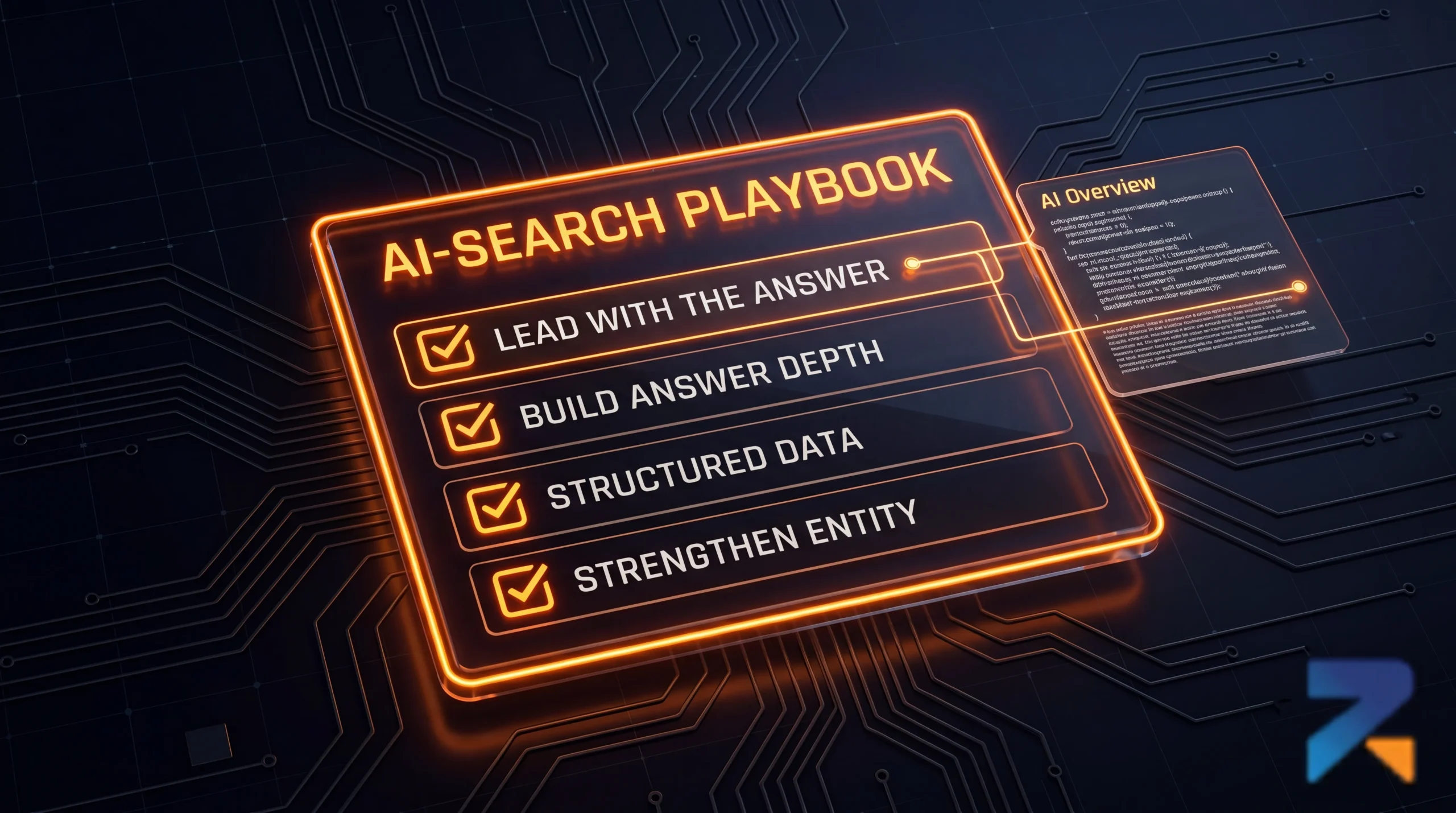
Lead with the answer. AI Overviews extract concise, direct answers to specific questions. Bury your answer under 400 words of intro and you won’t get pulled. Open each section with a clean, quotable, one-to-two-sentence answer, then expand. Front-load the substance.
Build genuine answer depth, not keyword pages. A single thin page targeting “best slots” won’t get cited. A cluster RTP explained, volatility explained, payout mechanics, fair-play verification signals the topical depth AI engines look for. This is where building the money site properly on your aged domain and structuring the content hub does double duty: it ranks, and it qualifies you for citation.
Use structured data and clear formatting. Q&A blocks, definition-style answers, comparison tables, and proper heading hierarchy all make your content easier to extract. FAQ schema on informational pages is no longer optional. Machines quote what they can parse cleanly.
Strengthen the entity, not just the page. Consistent brand naming, an author/about presence, and brand mentions across the web all feed Google’s entity model. An aged domain gives you a recognized starting entity your job is to keep reinforcing it rather than diluting it with anonymous, brandless content.
Protect your transactional layer with classic SEO. Since Google suppresses AI Overviews on most hard-money gambling queries, your bonus and registration pages still live or die on ranking. Keep your backlink profile and link types strong there. AI search changed the funnel’s top, not its bottom.
The Mistake Operators Are Making Right Now
Two camps, both wrong.
The first panicked and concluded SEO is dead, so they stopped investing in domain authority and content depth. That’s exactly backwards. AI search raised the authority bar it didn’t remove it. The operators who pull back on authority are handing citations to the ones who don’t.
The second went the other way and started chasing AI Overview visibility on their transactional money pages the exact queries where Google suppresses AI Overviews for YMYL reasons. They’re optimizing for a feature that will rarely appear on those terms while ignoring the informational layer where it actually shows up and bleeds them clicks.
Don’t do either. Map your queries by intent. Defend the transactional layer with authority and ranking. Restructure the informational layer to win citations. And do all of it on a domain Google already trusts, because in YMYL AI search, the unknown domain doesn’t get a vote.
Aged domains were always about skipping the trust-building wait. AI search just raised the price of not having that trust. The sites that get quoted by the machines in 2026 are overwhelmingly the ones that already had authority when the machines started reading and that authority is exactly what a pre-audited, niche-relevant aged domain hands you on day one.
If you’re building for the AI-search era, start from a domain that’s already a recognized entity instead of spending a year becoming one. Browse pre-audited aged domains on Rexusdomain and filter by DR, niche relevance, and clean history the same signals that decide whether the machines quote you.
Frequently Asked Questions
Do AI Overviews appear on gambling and casino searches? Selectively. Google tends to suppress or heavily restrict AI Overviews on hard transactional gambling queries because of YMYL policy, but it shows them readily on informational and comparison queries exactly the top-of-funnel terms most iGaming content hubs target. That’s where the click erosion is happening.
Does an aged domain help me get cited in AI Overviews? Indirectly but significantly. AI Overviews source from content that already ranks on trusted domains. An aged domain with clean history and niche relevance reaches “citable” ranking status months faster than a fresh domain, so it qualifies to be quoted far earlier in its life.
Is traditional SEO still worth it if AI is answering queries? Yes more than ever for iGaming. AI search rewards the authority signals that traditional SEO builds: strong referring domains, topical depth, and entity recognition. The operators cutting SEO spend are the ones who’ll disappear from AI answers entirely.
Should I optimize my money pages or my informational pages for AI search? Informational pages. Google suppresses AI Overviews on most transactional gambling terms, so your money pages still win on classic ranking. Your informational content is where AI Overviews appear and where you compete for citations.
Related Guides
- Best aged domain marketplaces for acquiring AI Overview—ready authority in iGaming
- Best Aged Domain Marketplace for iGaming SEO (2026)
- How to Build a PBN for iGaming SEO Using Aged Domains
- Where to Buy Aged & Expired Domains in 2026: The Complete Buyer’s Guide
- Aged Domain Sellers You Can Trust: How to Vet a Premium Marketplace
Sources & Further Reading
Frequently Asked Questions
How do aged domains help with Google AI Overviews for iGaming?
Aged domains with established backlink authority, topical history, and entity recognition in Google’s Knowledge Graph are significantly more likely to be cited in AI Overviews than fresh domains. Google AI Overviews pull from sources Google already trusts — and that trust is built over years of indexed content, backlink signals, and entity recognition.
Are iGaming sites cited in Google AI Overviews?
Transactional iGaming queries (casino bonuses, specific operator names) rarely trigger AI Overviews due to YMYL guardrails. However, informational iGaming queries — ‘how does RTP work,’ ‘what is wagering requirement,’ ‘is online betting legal in [country]’ — frequently generate AI Overviews, and aged domains with established topical authority compete effectively for these citations.
What content structure helps aged domains get cited in AI Overviews?
Content that gets cited in AI Overviews typically features: a direct answer in the first 40–60 words, structured data (FAQPage or HowTo schema), clear H2/H3 heading hierarchy matching natural query phrasing, statistics with cited sources, and an updated-within-6-months freshness signal. AI Overviews prioritize extractable passages over general-purpose prose.
Does deploying an aged domain on a new iGaming site affect AI search visibility?
Yes — an aged domain’s pre-existing entity recognition and backlink authority accelerates AI search visibility compared to fresh domains. AI systems like Google’s AI Overviews and Perplexity draw from established entities in their knowledge models. A domain with years of indexed content history is already a known entity; a fresh domain is unknown by definition.