
Does a ccTLD’s Country Signal Reset When Ownership Changes?
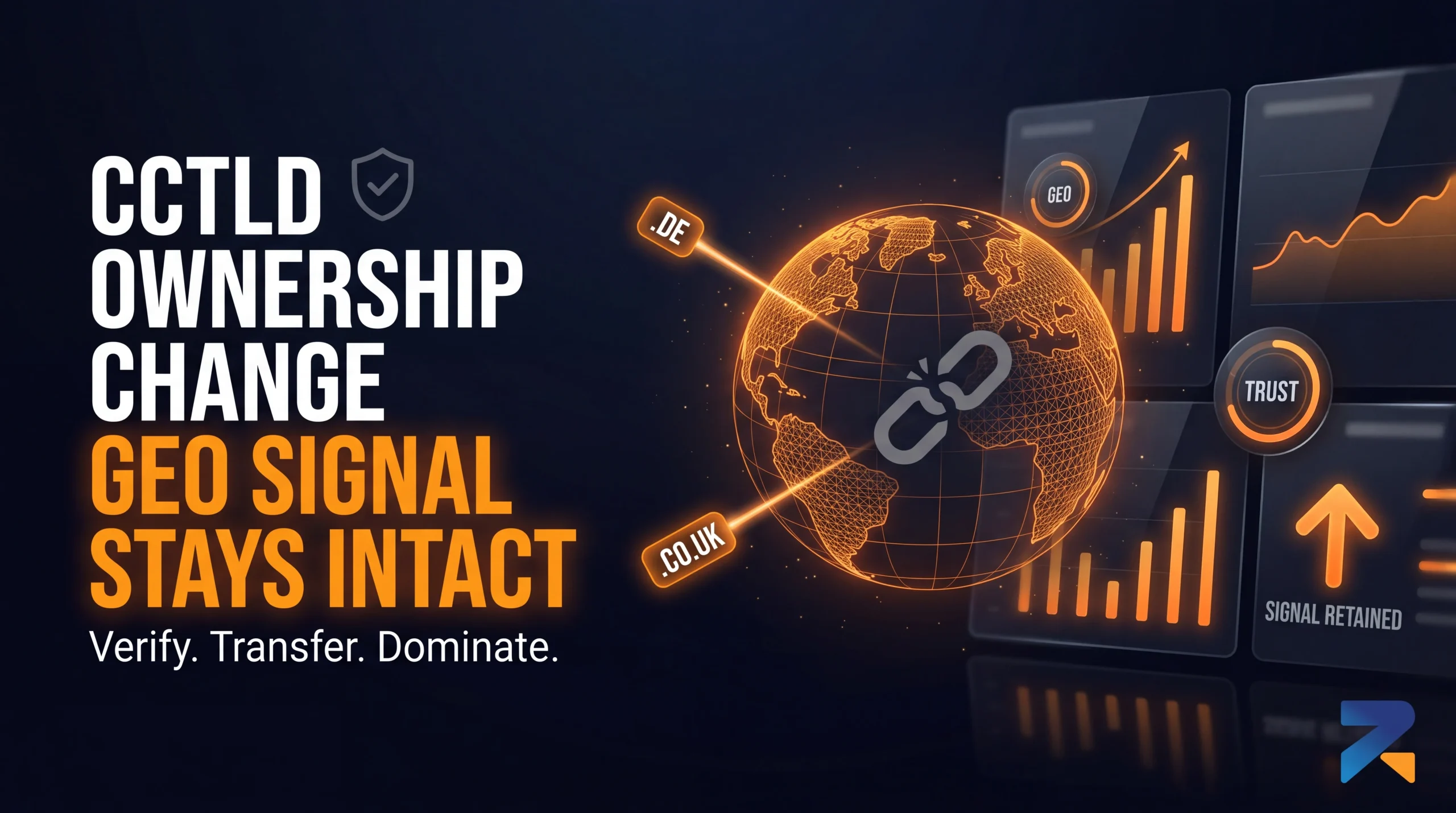
No a country-code top-level domain’s geographic targeting signal is tied to the TLD extension itself (and any explicit geo-targeting settings applied to it), not to who owns the domain, so a ccTLD like .co.uk or .de keeps signaling the same country association to search engines regardless of how many times ownership changes hands.
How ccTLD Geographic Signals Actually Work
Google treats country-code TLDs as a strong, largely automatic geographic signal a `.de` domain is generally understood to target Germany, a `.co.uk` domain the UK, independent of hosting location or explicit configuration. This signal comes from the TLD registration itself, which is a fixed characteristic of the domain, not an attribute tied to the current registrant.
Why Ownership Changes Don’t Affect It
Unlike backlink profiles or content history, which are accumulated signals that could theoretically be affected by how a domain is used over time, the ccTLD geographic signal is structural it’s determined by which country-code registry the domain is registered under. A new owner taking over a `.de` domain doesn’t need to do anything to “maintain” this signal, and there’s no mechanism by which a change in registrant would alter it, since the registry and TLD itself haven’t changed.
What Can Actually Change the Effective Geo-Targeting
- Explicit geo-targeting settings in tools that support them (for generic TLDs used with international targeting configurations) are separate from ccTLD signals and would need to be reconfigured by the new owner if applicable.
- Content language and localization if a new owner changes the site’s content to a different language or region than the ccTLD implies, this can create a mismatch between the TLD signal and the actual content, which is a real consideration but doesn’t change the TLD signal itself.
- hreflang implementation for multi-region sites is independent of ccTLD and needs to be set up or maintained by whoever currently owns the domain, regardless of past ownership.
Implications for Buying an Aged ccTLD Domain
If you’re acquiring an aged domain specifically for its ccTLD geographic value (for example, a `.de` domain to target German search results), that value transfers cleanly with the domain it’s not diminished or reset by the ownership change itself. What you should verify instead is whether the domain’s prior content and backlink profile is actually relevant to that same geography, since a `.de` domain with an entirely English-language backlink profile from unrelated regions may not fully capitalize on the ccTLD’s targeting advantage even though the signal itself is intact.
Frequently Asked Questions
Does buying a ccTLD domain reset its country targeting signal?
No. The ccTLD’s geographic signal comes from the TLD registration itself, which doesn’t change with ownership. A .de or .co.uk domain keeps its country association regardless of how many times it changes hands.
Do I need to reconfigure geo-targeting after buying an aged ccTLD domain?
The ccTLD signal itself needs no reconfiguration. However, separate settings like hreflang implementation for multi-region content are independent of the ccTLD and do need to be set up or maintained by the current owner.
Can a ccTLD domain’s content mismatch hurt its geographic value?
It can create a mismatch worth addressing, though it doesn’t change the underlying TLD signal. A .de domain with entirely non-German-relevant content or backlinks may not fully capitalize on its ccTLD advantage even though the signal remains intact.
Is a ccTLD’s geographic signal stronger than a generic TLD’s geo-targeting settings?
Google has described ccTLD signals as a strong, largely automatic geographic indicator, generally considered more reliable than optional geo-targeting configurations available for generic TLDs.
Related Guides
Sources & Further Reading