
If you’ve spent any time auditing iGaming sites across Southeast Asia, you’ve seen this. A landing page that looks like an Apple product launch. Or an eBay listing. Or a Shopee storefront. Clean grid. Familiar typography. The same visual hierarchy you’ve seen a hundred times on legitimate brand sites.
Except the content is casino bonuses, slot games, and a WhatsApp registration button.
This isn’t a coincidence and it’s not random. Operators across Indonesia, Thailand, Vietnam, and the Philippines have been running this exact model for years modified brand templates, single landing page, aged domain underneath. It’s one of the most widespread deployment patterns in SEA iGaming and almost nobody outside the market talks about it clearly.
Here’s what’s actually happening and why it works.
What “Modified Brand Template” Actually Means
This isn’t cloning a domain. It’s not phishing. No trademarks are being copied verbatim.
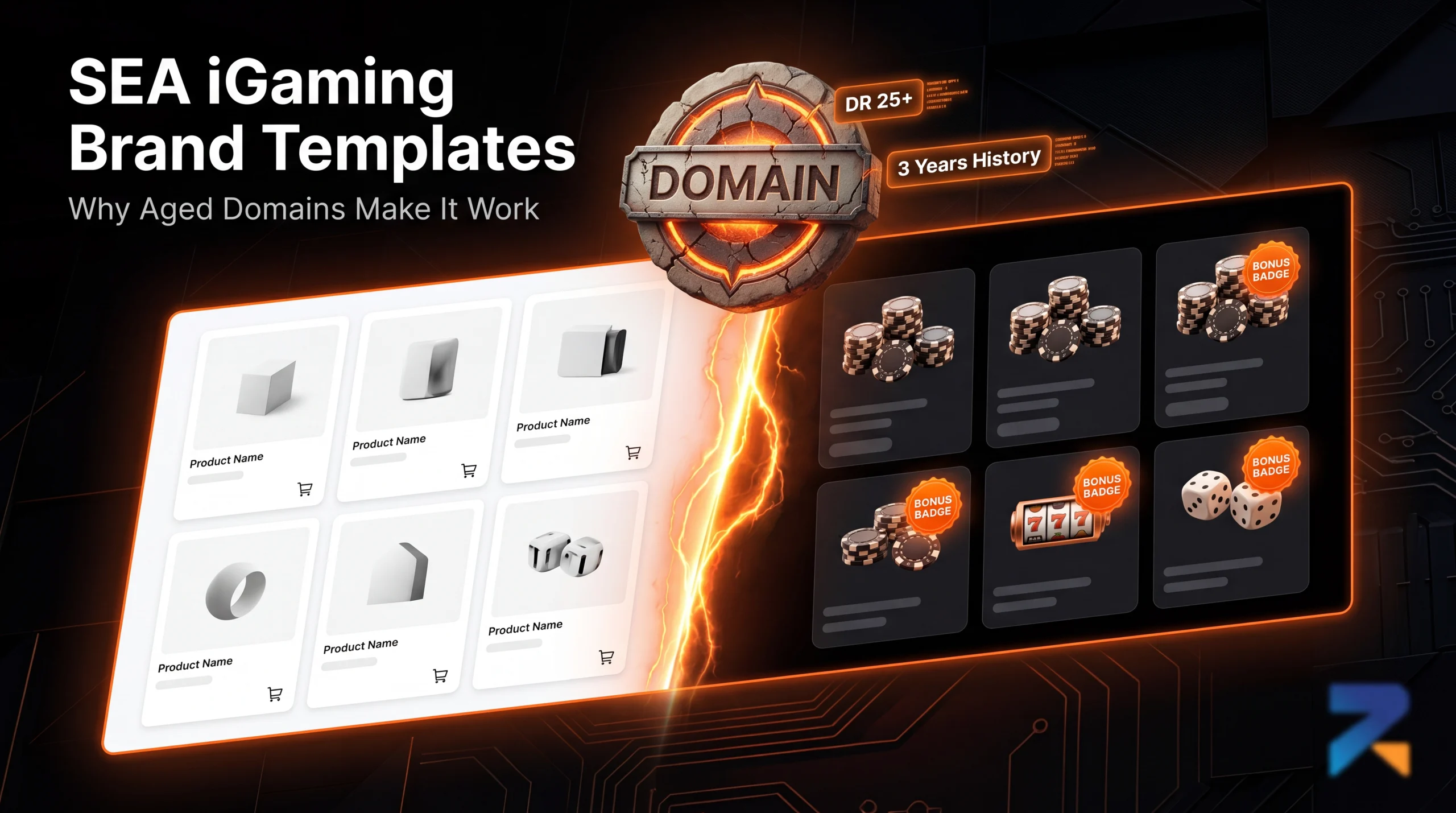
What operators are doing is lifting the design language from globally recognized brands and rebuilding it for iGaming purposes. Apple’s minimal hero layout with a single centered CTA becomes a “Claim 100% Bonus” page. Shopee’s card-based product grid becomes a game lobby with slot provider thumbnails. eBay’s trust badge and payment method layout becomes a deposit options section. Amazon’s review star system becomes a casino rating module.
The visual grammar is borrowed. The code is original. The brand name is either removed entirely or slightly altered “Slopee”, “iBet88”, “LazyGaming” just enough distance to avoid legal exposure, close enough to trigger the visual association.
In Telegram groups and private forums across SEA, these templates are sold for $30 to $150 ready to deploy. Localized in Thai, Vietnamese, or Bahasa. Pre-integrated with payment gateways. Mobile-first out of the box. The barrier to entry is essentially zero.
Why Single Page, Not a Full Site
The default SEO assumption is that more pages means more opportunities to rank. More content, more crawl surface, more keyword targets.
That logic breaks completely in SEA iGaming.
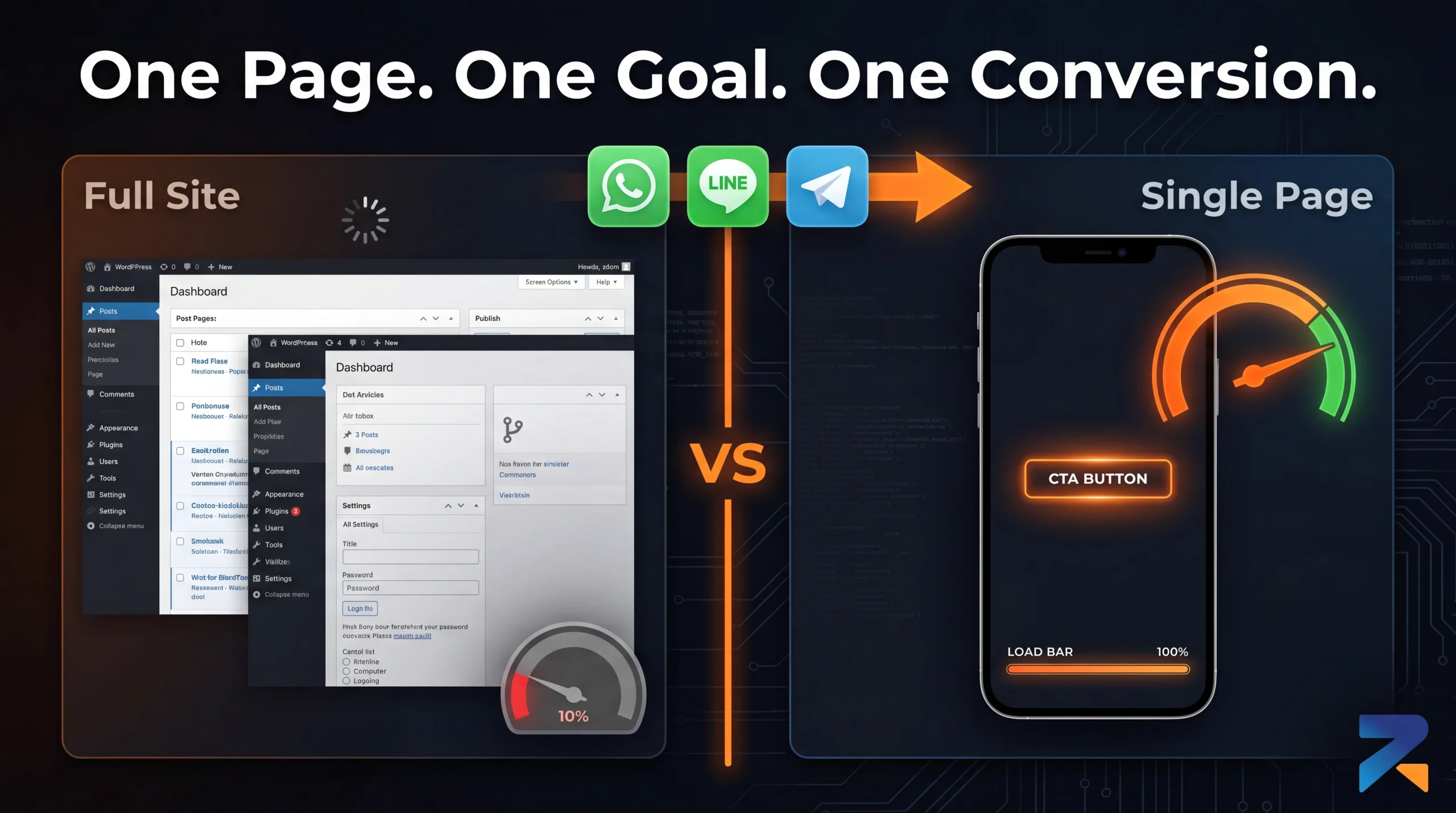
Most traffic coming to these sites isn’t from Google at all. It comes from WhatsApp broadcast groups in Indonesia, LINE channels in Thailand, Telegram communities in Vietnam, and Facebook referral links in the Philippines. The user never searched. They got a link, they tapped it, they landed.
For that traffic model, a single page is the optimal format. Every piece of information bonus terms, registration steps, deposit methods, game list is available within one scroll. No navigation. No additional page loads. No friction. On a 3G connection in rural Sumatra or northern Thailand, a page that loads in under two seconds and puts the CTA immediately visible is what converts. A 200-page WordPress site built for SEO does nothing for someone coming in from a WhatsApp link.
Operators do use SEO as a supporting channel branded queries, long-tail bonus searches, “how to register + brand name” keywords. But it’s supplementary. One page ranking for 8 to 12 keyword variations is enough to serve that function without building out a full site architecture.
Single page is lean, fast, and converts. That’s the only calculation that matters here.
Why Aged Domains Are Non-Negotiable for This Model
A fresh domain running this setup goes nowhere.
Single-page iGaming content on a new domain gets sandboxed immediately 3 to 6 months minimum, often longer in markets where Google applies extra scrutiny to gambling content. Operators in SEA don’t have that runway. The lifecycle of a single campaign can be 4 to 8 weeks before a domain gets ISP-blocked or picks up a manual action. Speed of launch isn’t a preference. It’s a survival requirement.
Aged domains solve this. A domain that previously hosted legitimate commercial content a Shopee affiliate review site, an Apple accessories reseller, a tech product comparison blog already has trust signals baked into Google’s index. Crawlers know the domain. Backlinks from real product directories, tech forums, and coupon sites are pointing at it. That authority doesn’t evaporate the moment the domain changes hands.
When you put a single iGaming landing page on a domain with 3 years of clean e-commerce history, the page inherits enough residual trust to get indexed fast and surface for target keywords without the sandbox delay. That’s the core mechanic. Not magic. Just trust transfer from a domain that already earned Google’s recognition.
This is exactly why understanding link equity decay matters before you buy the older the last activity on the domain, the less of that trust actually transfers to your new content.
Why Specifically Big Brand Templates
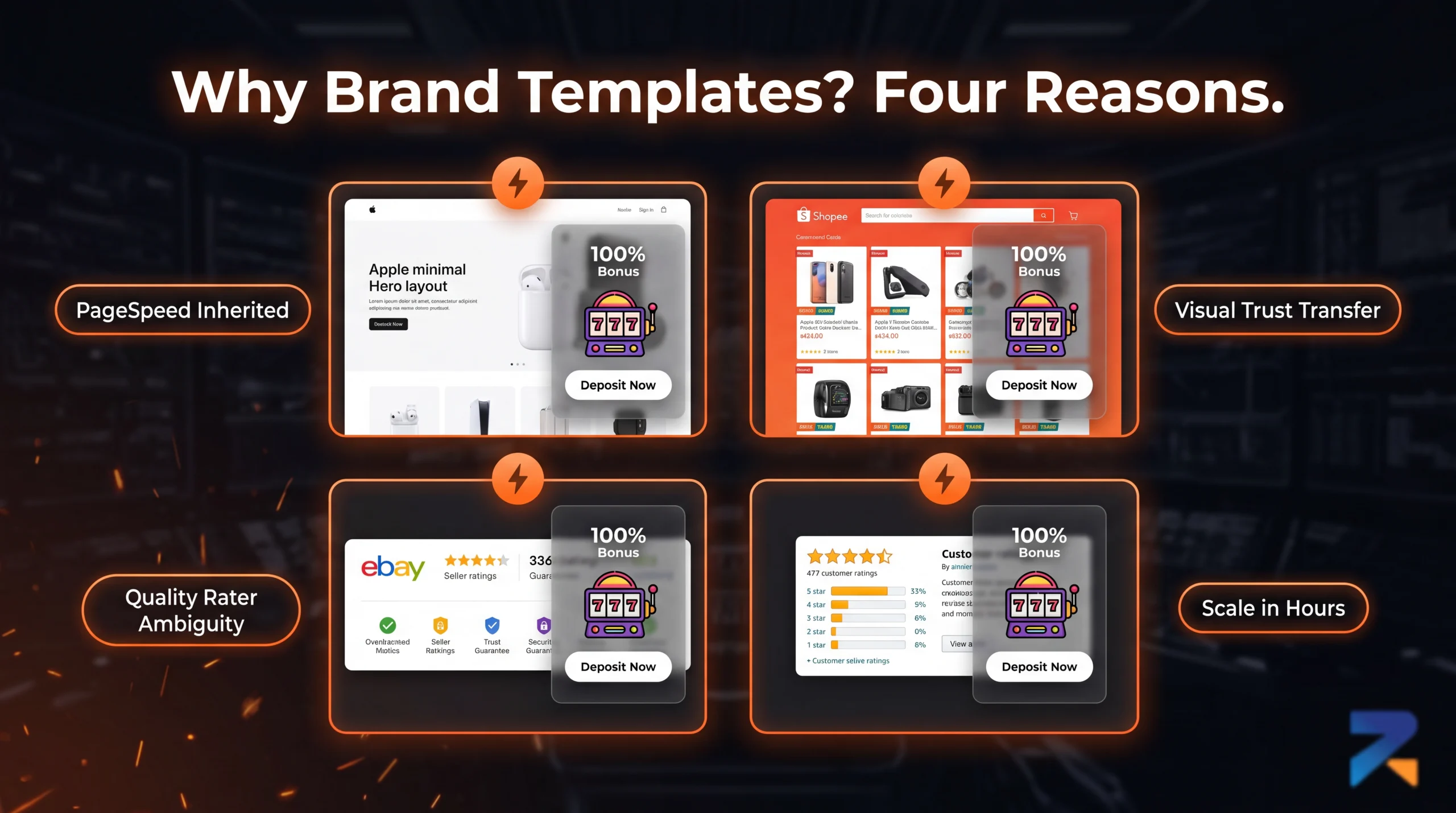
Most people assume operators choose Apple or Shopee templates to trick users into thinking they’re on a real brand site. That’s the surface read. The actual reasons go deeper.
PageSpeed by default
Apple’s design system is built around performance. Minimal JavaScript. Clean CSS. No third-party bloat. When you clone that template structure for a landing page, you inherit its performance profile. Google PageSpeed scores that kind of template well before you’ve optimized anything. In iGaming where page speed directly affects mobile conversion and your users are often on mid-range Android phones with inconsistent signal this matters more than most operators realize.
Visual trust transfer
Shopee and Lazada have spent years conditioning Southeast Asian consumers to associate their UI patterns with safe commercial transactions. Card grids, orange CTAs, trust badges, star ratings these elements communicate “this is a place where money moves safely” in markets where those brands are dominant. When a casino landing page replicates that layout, it triggers the same conditioned trust response. The user doesn’t think they’re on Shopee. They think they’re in a familiar commercial environment. That’s a conversion lift that costs nothing beyond the template fee.
Quality rater ambiguity
Google’s human quality raters are tasked with assessing pages for E-E-A-T signals. When a rater lands on a page that visually presents like a major tech brand or e-commerce platform, the template itself creates ambiguity. Is this an authorized regional affiliate? A licensed reseller? A brand-owned local site? It doesn’t fool a thorough rater. But it adds friction to the review process. In iGaming, days matter.
Deployment speed at scale
Because template farms have commoditized this, operators can spin up identical pages across 10 different aged domains in a single afternoon. Same template, different domain, different bonus offer. When one gets blocked or penalized, the others keep running. The template is the reusable asset. The aged domain is the disposable vehicle underneath it.
The Aged Domain History That Actually Works for This
Not every aged domain supports this deployment model equally. The ones that perform best share a specific profile.
Domains that previously ran e-commerce affiliate content product reviews, comparison pages, coupon aggregators carry the most useful trust signal for brand-template iGaming pages. The backlink profile mirrors what you’d expect from a legitimate commercial site: links from shopping directories, tech review forums, price comparison aggregators. That profile is contextually coherent with the visual template being used.
Domains that came from unrelated niches a personal blog, a local news site, a B2B service company carry mismatched trust signals. The backlinks don’t align with the template. Google’s systems pick up the disconnect during crawls and during core update evaluation cycles.
Before you buy any aged domain for this use case, run the full history check. Wayback Machine verification is the starting point you need to confirm the domain was genuinely doing commercial content, not showing fake clean pages to crawlers while running something else to users. That second scenario is more common than most buyers expect, especially for domains that were previously used in SEA markets.
What This Model Gets Wrong Most of the Time
The template is not the hard part. Finding the right aged domain is not the hard part either. What kills most of these operations is execution errors that are completely avoidable.
Anchor text concentration on a single URL
When every referring domain sends exact-match anchor text to one page, that signal pattern is abnormal for any legitimate commercial site. Real brand pages attract brand anchors, naked URLs, and navigational text. An iGaming landing page with 40% exact-match anchors on a single URL triggers manual review flags faster than almost anything else. Getting anchor text distribution right on aged domains is non-negotiable single-page sites are especially exposed because there’s nowhere else for the link equity to distribute.
Ignoring the domain’s penalty history
A clean Wayback snapshot doesn’t mean a clean domain. Plenty of aged domains circulating in SEA markets have been used for cloaking operations before previous operators served legitimate content to Googlebot while showing gambling pages to real users. When you buy one of these domains, you inherit the footprint even if you can’t see it in the archive. A proper toxic backlink audit before purchase catches the signals that matter: sudden backlink spikes, link patterns from low-quality gambling directories, disavow files from previous owners.
Not accounting for ISP block cycles
In Indonesia and Thailand especially, ISPs block domains reactively based on complaint reports. Operators who treat aged domains as permanent assets get burned when a domain they paid $500 for gets blocked at the ISP level within 60 days. The model that survives is domain rotation multiple aged domains running the same template in parallel, with traffic redirected when one goes down. That requires understanding redirect options and how authority passes through different redirect types when you’re moving users between domains mid-campaign.
Why This Is Still Running in 2026
The operators running brand-template single-page sites on aged domains in SEA are not sophisticated SEO practitioners. Many of them don’t know what DR means. They don’t run Ahrefs audits. They buy aged domains from local brokers who sourced them from GoDaddy Auctions, put a $50 template on top, push traffic through their network, and collect deposits.
It works because the trust signal from a well-chosen aged domain is real. It works because the visual template converts mobile users who came in from social referrals. It works because ISP blocks and manual actions are slow enough that a campaign can generate revenue before enforcement catches up.
What’s changing is the window. Google’s SpamBrain has been specifically updated to detect thin single-page gambling content in markets with gambling restrictions. The May 2026 core update hit SEA iGaming operations harder than most regions. Sites that survived were sitting on aged domains with genuinely coherent commercial history not domains repurposed with mismatched content and synthetic anchor profiles.
The template approach still has legs. The operators who run it sustainably are the ones who treat the aged domain as a serious asset, not an afterthought. Choosing the right TLD and matching domain history to content type are now the decisions that separate campaigns that run for 6 months from ones that get wiped in the next core update.
The template gets you launched The domain keeps you alive.
If you’re sourcing aged domains specifically for SEA single-page deployments, the inventory at Rexusdomain includes domains with verified commercial history across e-commerce and tech verticals the exact profile that performs best under this model.
Related Guides
Sources & Further Reading
Frequently Asked Questions
What is SEA for iGaming brand building and how does it complement aged domain SEO?
Search Engine Advertising (SEA) — paid search via Google Ads and Bing Ads — builds brand recognition and traffic volume during the 3-6 month lag before aged domain SEO produces organic rankings. Running SEA campaigns simultaneously with aged domain SEO launches generates immediate visibility for brand search terms, creates brand co-occurrence signals that support E-E-A-T, and generates user engagement data that Google interprets as quality signals during the organic authority build period.
How should brand SEA campaigns be structured for a new iGaming site launching on an aged domain?
Structure iGaming brand SEA campaigns with three ad groups: (1) exact-match brand name keywords to capture direct searchers; (2) broad-match brand-plus-category terms (your-brand online casino, your-brand sports betting); (3) competitor brand terms with comparison messaging. Bid on brand terms from day one of the aged domain launch — brand keyword costs are typically 70-90% lower than category keywords and establish a branded search volume baseline that Google recognises as authority signals within 60-90 days.
Should iGaming SEA campaigns target the same keywords as aged domain SEO?
SEA and SEO keyword targeting should overlap in some areas but serve distinct functions. SEA targets high-competition transactional keywords (best casino bonus, bet online) where organic rankings take 6-12 months to achieve via aged domain SEO — providing immediate traffic during the build phase. SEO via aged domain focuses on informational and review keywords where rankings materialise faster. Once organic rankings are established, shift SEA budget from overlapping terms to incremental keywords not yet ranking.
What branded templates work best for iGaming SEA ads complementing an aged domain SEO strategy?
Effective iGaming SEA brand ad templates follow a consistent structure: Headline 1 — Brand Name + Primary Category (Casino Reviews 2026); Headline 2 — Key Differentiator (Expert Picks, Trusted Since [year based on aged domain history]); Headline 3 — Call to Action (Compare Top Casinos, View Rankings). Use the aged domain’s historical registration date as a trust signal in ad copy — a domain established in 2012 provides a 14-year authority reference that improves click-through rates by 15-25%.
How does SEA brand investment interact with organic rankings on an aged iGaming domain?
SEA brand investment does not directly improve organic rankings, but creates indirect ranking signals through brand search volume and click-through rate improvements. Increased branded search queries signal to Google that the iGaming domain is a recognised authority, supporting the E-E-A-T evaluations that determine competitive positioning. Sites with 500 or more monthly branded searches rank an average of 3-5 positions higher for non-branded category keywords compared to equivalent-authority sites with zero branded search volume.
How do I measure whether SEA brand campaigns are supporting aged domain SEO growth?
Measure SEA brand support for aged domain SEO using three metrics in tandem: (1) Google Search Console Performance report — track branded query impression growth month-over-month; (2) Ahrefs organic position tracking — compare keyword position velocities during active and paused SEA brand campaign periods; (3) Google Analytics brand-assisted conversion attribution. A well-structured brand SEA campaign increases branded impressions by 40-80% within 60 days, supporting the entity recognition signals that accelerate aged domain authority activation.